


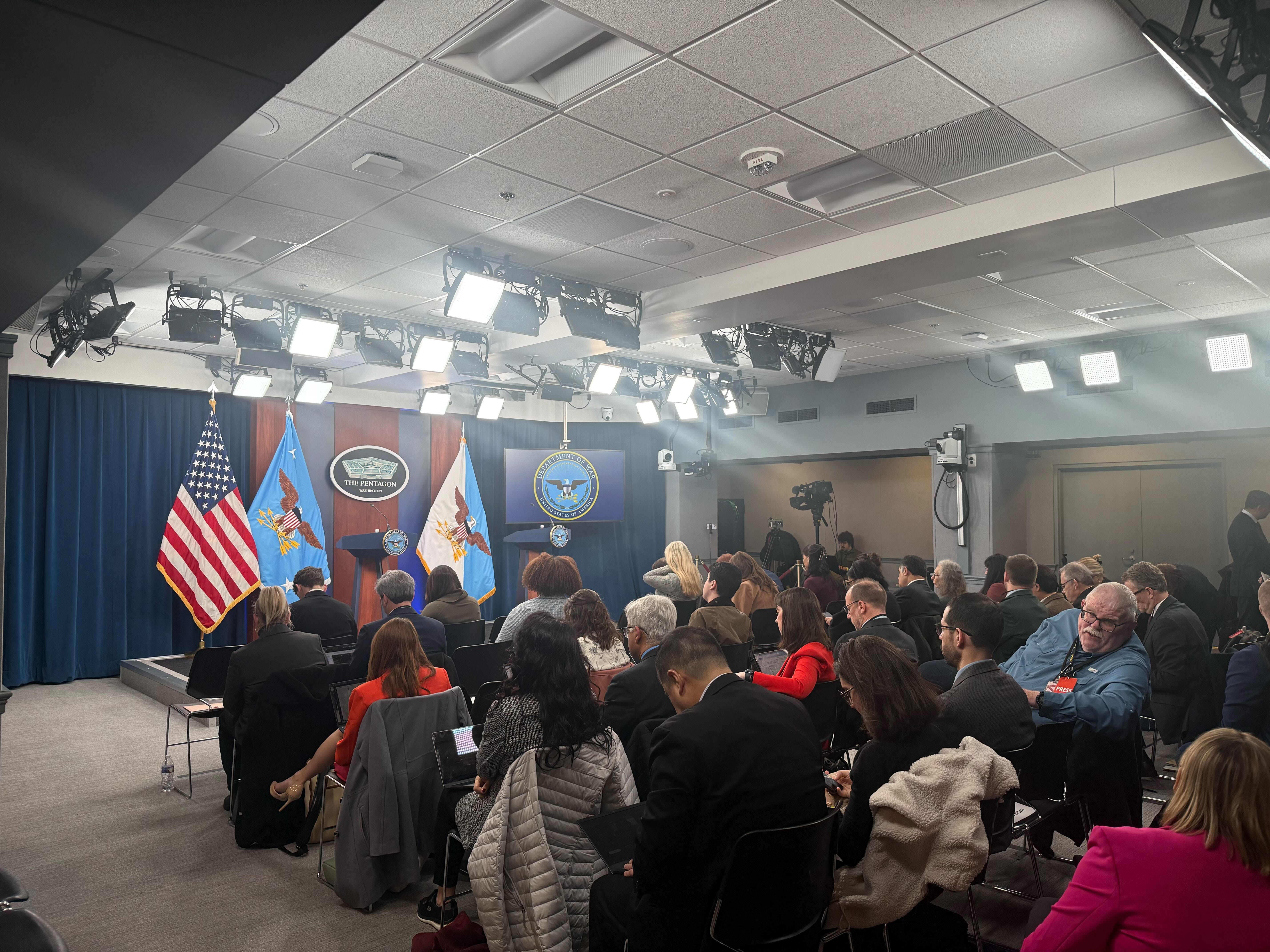
I walked into the Pentagon briefing room last Monday ready to ask about the escalating Iran-U.S. conflict, with questions loaded and notes in hand.
Each seat in the briefing room bore a slip of paper with a reporter’s name and outlet printed on it. Like other outlets that declined to sign the Pentagon’s press pledge, I wasn’t placed in the front row. Still, the second row wasn’t bad. I settled in, opened my laptop, and began reviewing my prep materials.
As more press spilled into the briefing room, the complaints began. Reporters from legacy outlets and some foreign press — most of whom were relegated to rows four and beyond — arrived and immediately voiced their displeasure.
“Hey guys, look we aren’t in the front row!” one reporter remarked to the rest of his colleagues, which was met with some laughs and grunts.
“Can anyone find my seat? Oh! It’s back here! In the back row!” another reporter said while dramatically scanning the room.
The same scene had developed at the other three previous Pentagon briefings since the war began. It’s been uncomfortable, to say the least.
Sometimes the reporters pace the room, eerily inspecting each seat in the first two rows before complaining about having to return to the back. Others have visibly huffed to the rest of us in the front.
The other day, a back-row reporter snapped photos of me and my colleagues in the front. I threw up a thumbs-up and a smile. Several others have done the same. (Someone send those pics!)
Earlier, the same reporter questioned some press officials on the seating arrangement, asking what had happened to “first come, first serve.”
Today, as we were leaving the briefing, one reporter celebrated the fact that the secretary called on more “regular” media outlets this time around, instead of those in the front.
I’ve been a part of the White House press corps for nearly three years now. They are supposed to be the worst of the worst. And sometimes, they are. I’ve written about it before. But in three years, I’ve never seen hostility this petty while just trying to do my job.
CNN’s Brian Stelter captured the frustration on behalf of his peers, noting that in Secretary Hegseth’s first two briefings, he mostly called on “friendly” outlets seated closest. Stelter argued this shortchanges the public, since many back-row Pentagon veterans have years of experience covering the military, compared to some of those getting called on.
I get it — to a point. I’ve never reported from a war zone or spent years on the Pentagon beat. Those reporters undoubtedly know aspects of conflict I don’t.
But that doesn’t make my questions any less valid. They’ve all been fair and worth asking.