


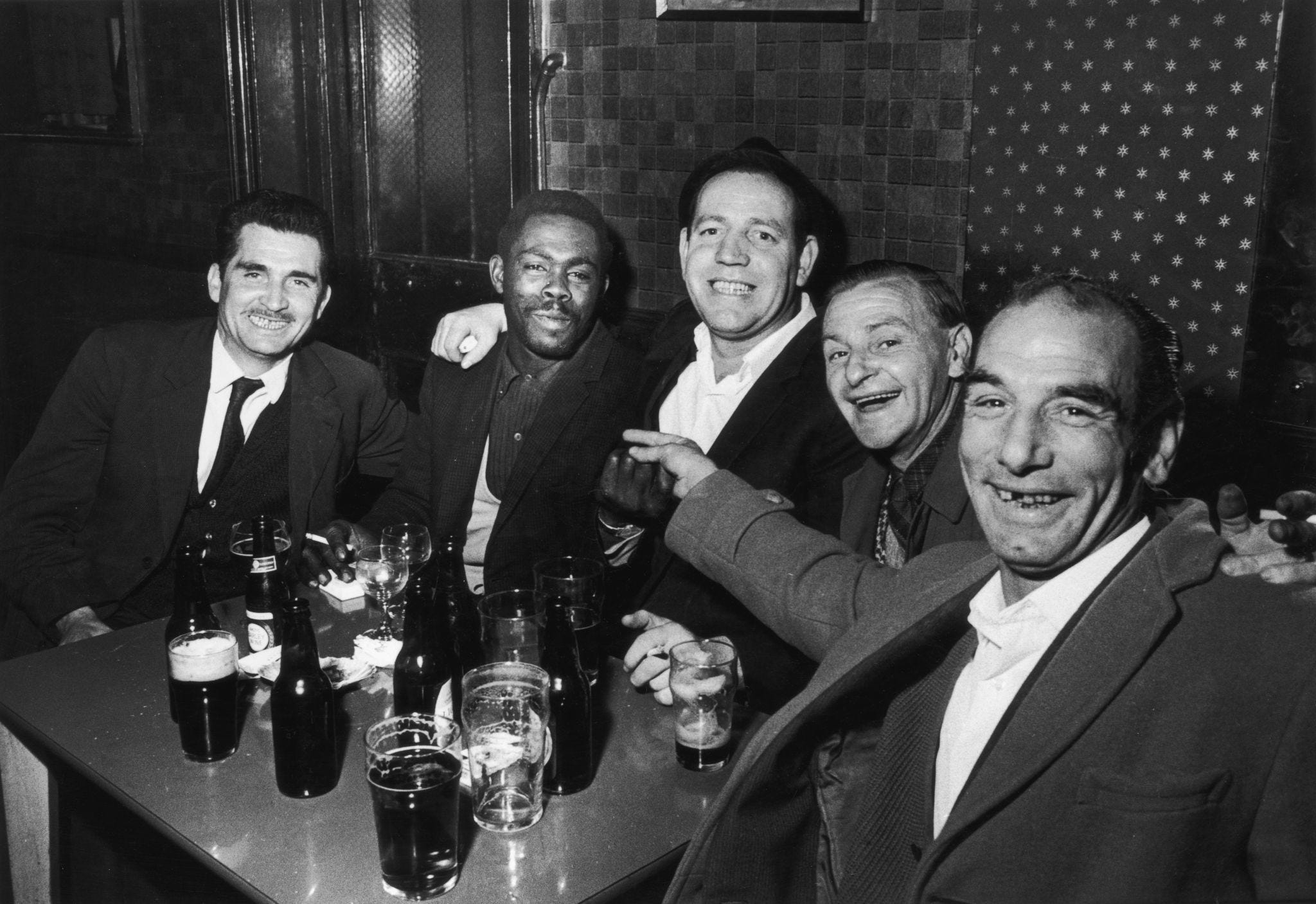
If you haven’t seen the television show Mad Men, set in New York City at the peak of the advertising industry in the 1960s, all you need to know is that every character – from the creative directors to the partners, the copywriters to the secretaries – drinks a lot. And I mean, a lot. Drinks in the morning. Drinks at lunch. Drinks in the afternoon. Drinks in the evening. Nervous drinks before a meeting. Celebratory drinks afterward.
It all sounds terribly dysfunctional. But during this Mad Men era, when many Americans were, in fact, more likely to get zooted at lunch, and it wasn’t so taboo to have a liquor cabinet in your office, GDP was humming at a red hot 5%. We were in the post-WWII golden age. People might have drunk more between 9 and 5, but were still wildly productive, and perhaps drinking made them better problem solvers. Anecdotal evidence suggests that mild intoxication can actually have creative benefits. From a 2017 study:
Alcohol impaired executive control, but improved performance in the Remote Associates Test, and did not affect divergent thinking ability. The findings indicate that certain aspects of creative cognition benefit from mild attenuations of cognitive control, and contribute to the growing evidence that higher cognitive control is not always associated with better cognitive performance.
In other words, a little bit of alcohol makes the creative part of your brain light up. Obviously, it seriously impairs your ability to operate heavy machinery, for example. But it might help in other ways, such as figuring out a complex logistical problem or helping soothe your nerves in a meeting with a potential client.
Years ago, in the Daily Caller office, I had a couple of drinks and was slightly tipsy on a Friday evening. I was about to head home, but a legendary reporter got a major scoop – actually, a very infamous scoop about extracurricular behavior in the Senate room – and the story needed to be rushed to the website before another news outlet beat us to the punch. I got roped into editing it, of course, and unfortunately, I saw things I wish I hadn’t seen. Trust me, there’s a reason why I am not linking to the story. Maybe you astute sleuths know what I mean. I recommend you don’t try to figure it out, however.
Anyways, there was a crucial, necessary balance to be struck between posting the story fast while making sure it was accurate and legally bulletproof. In this hectic scenario, my tipsiness actually worked to my advantage. I entered a kind of flow state, where I could suddenly juggle five different tasks all at once while messaging with the reporter and talking with the editor-in-chief, who was at his desk, practically bouncing out of the chair, cackling hysterically because it was just such an insane and shocking video, and we all knew it was going to break the internet in half. And it did.
My point is, I’m not calling for people to become hardcore alcoholics – that would be grossly irresponsible. But I just want to pose the question: what is really the harm of mild intoxication at lunch time or in the office if a worker doesn’t just stay productive but is actually more productive, creative, and better suited to handling higher-pressure tasks? What if there are real benefits?
The Greek historian Herodotus once observed that the Persians always debated things twice: once while sober, and another time drunk. The Founding Fathers certainly enjoyed their libations while building a new form of government from scratch. Winston Churchill was buzzed all day as he marshalled the world against Hitler. And I once encountered a hilarious anecdote about British traders who would drink beer at lunchtime before the U.S. markets opened because the alcohol gave them the courage of a lion. If I were making 8-figure trades, I would need a pint or two.
Maybe the people running our country could also use a pint or two. Maybe Washington might actually come up with creative ways to solve problems, as opposed to just printing more money, if it still believed in the three-martini lunch. Maybe we should go back to the Mad Men days.
Like what you’re reading? If so, please consider subscribing to State of the Day or sharing this with a friend. You’d be supporting this newsletter and helping keep independent journalism alive.
If you are already a paid subscriber, make sure to join the conversation in our subscribers-only chat below.
