


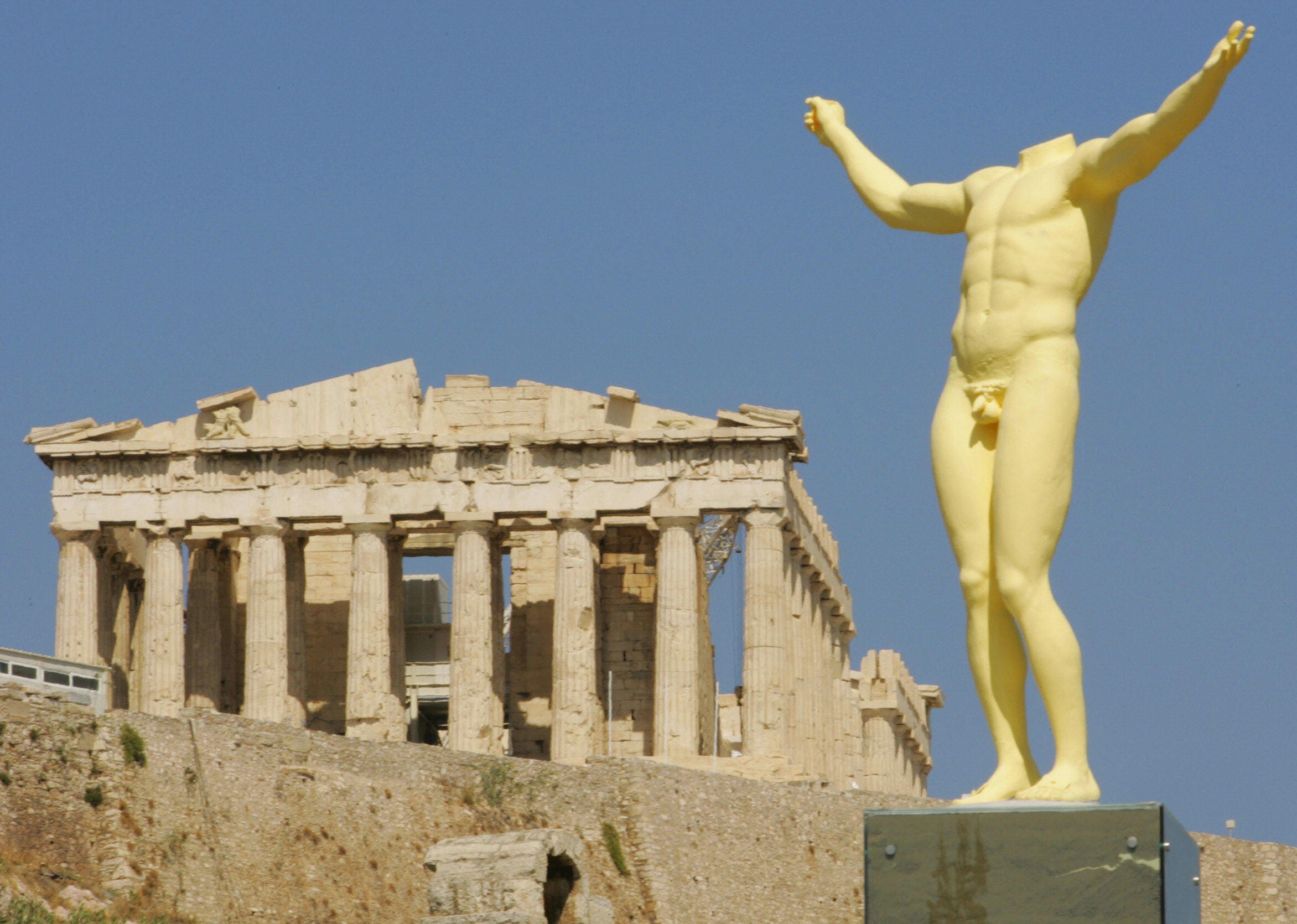
Among the many treasures housed in New York City’s Metropolitan Museum of Art, there are the men and women (and gods and goddesses) of the Greek and Roman galleries.
In the galleries, one might encounter pale Aphrodite, caught surprised as she emerges from her bath. Or the marble bust of the emperor Caracalla, or the marble bust of Caligula, proud and slightly sneering.
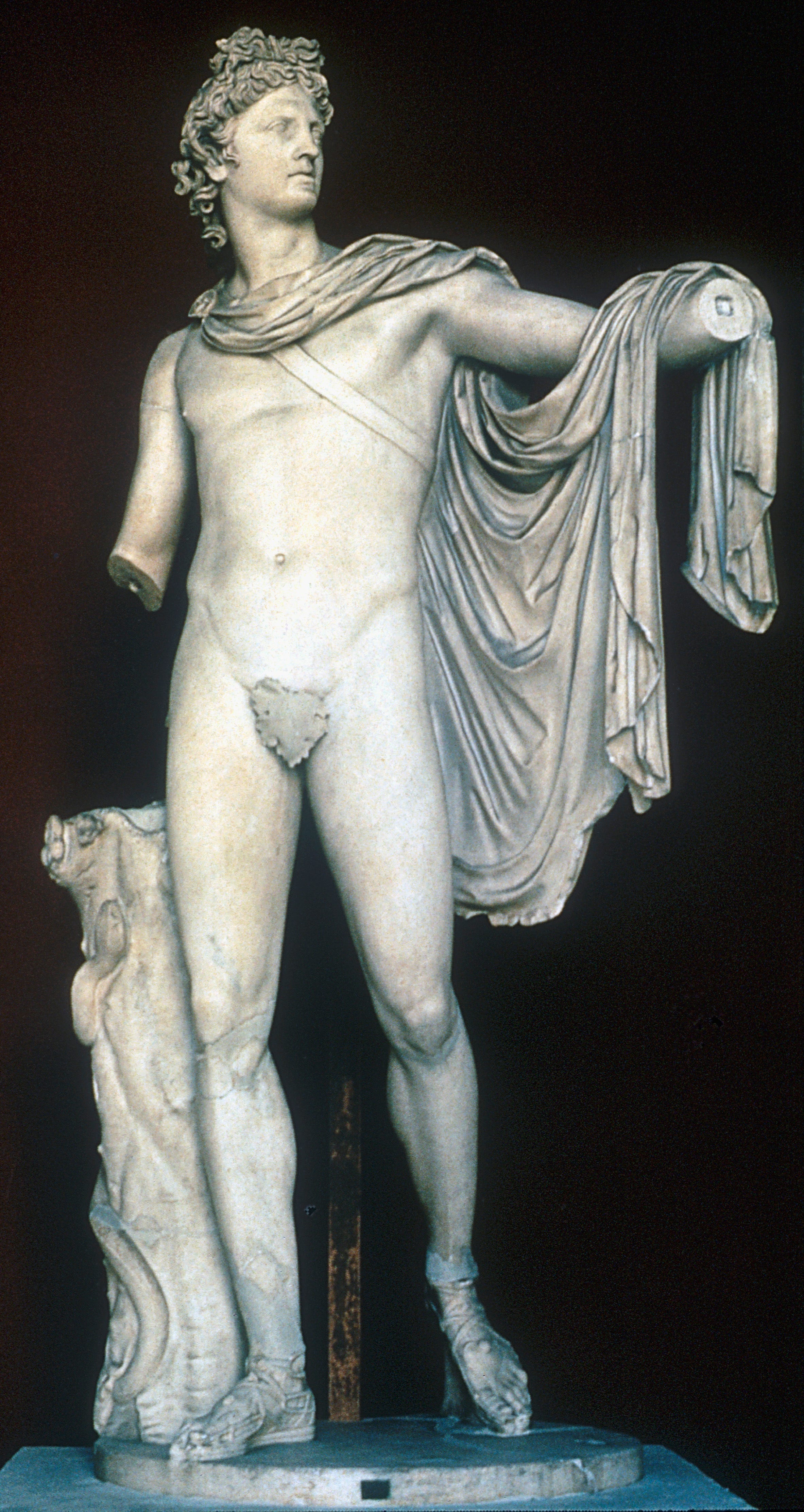
Ancient Greek and Roman art is beautiful. It is immediately so. The sculptors of Classical Greece seemed to transform stone into frozen flesh and blood.
But what if those artists were actually a bunch of rubes?
The Unbearable Whiteness Of Antiquity
So goes the proposal of certain classical scholars.
Certain ancient Greek and Roman sculptures were painted. This is basically certain — when viewed under ultraviolet light, some statues light up with traces of pigment and patterns invisible to the naked eye. These statues were polychromatic (from the Greek poly, meaning “many,” and khrōma, meaning “color”).
There is other evidence of polychromy in statues.
Matthew Gurewitsch, writing for Smithsonian Magazine, cites a passages from Euripides’ “Helen” in which Helen of Troy bemoans her fate:
“My life and fortunes are a monstrosity,
Partly because of Hera, partly because of my beauty.
If only I could shed my beauty and assume an uglier aspect
The way you would wipe color off a statue.”
(Note that several different translations of “Helen” translate “statue” as “picture“ or “painting.”)
The question of polychromy in ancient statues has popped up on my X timeline in recent days. Few contest the claim that certain statues were painted. The question is: How were they painted?
You’ve likely seen polychromatic “recreations” of ancient statues. Gods in Color, a traveling exhibition developed by classical archaeologist Vinzenz Brinkmann, displays recreations of ancient sculptures painted in garish colors.
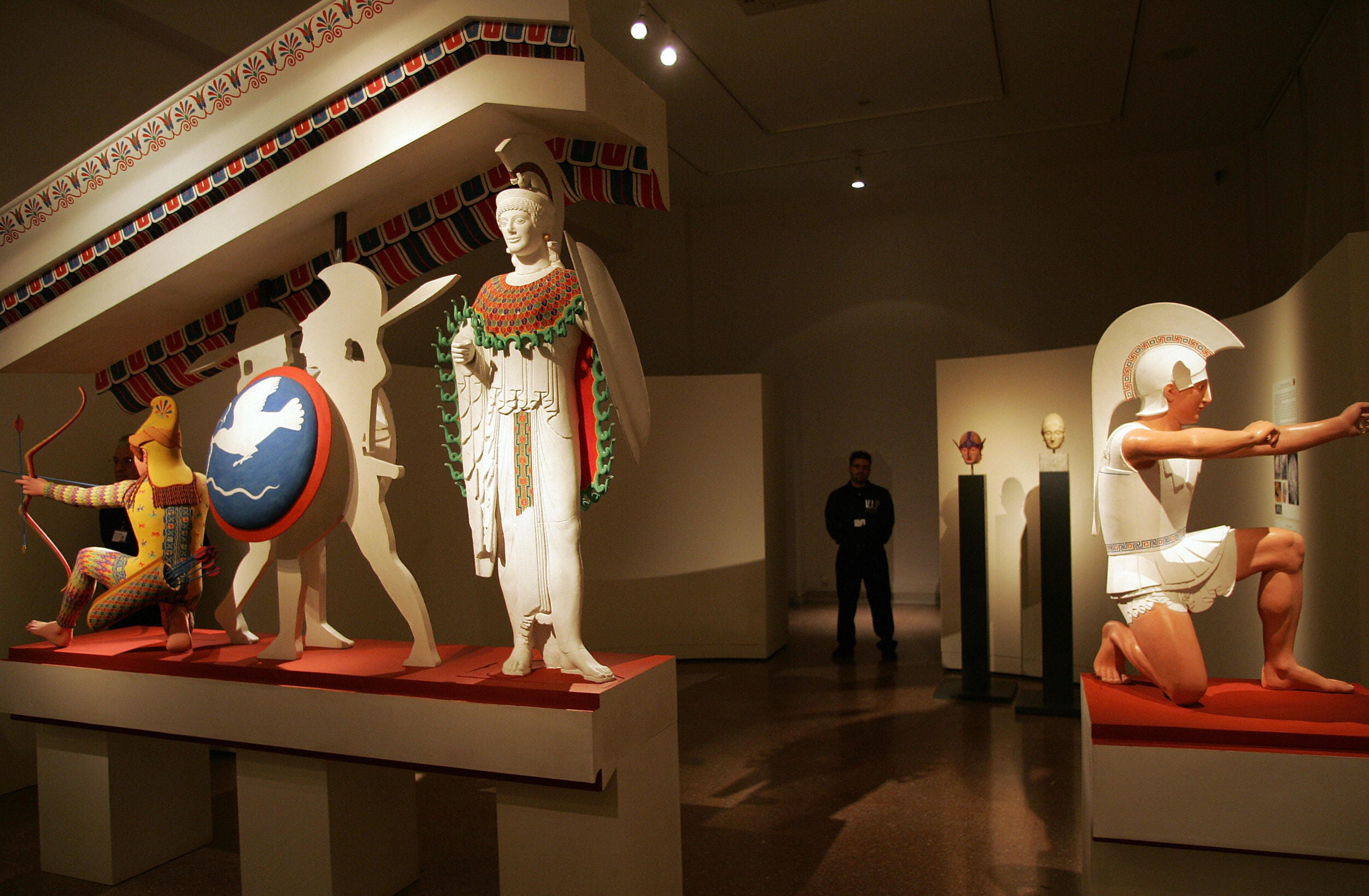
“Museum exhibitions of ancient Greek and Roman sculptures are striking for the dominance of pure white marble. But looks can be deceiving. These figures of gods and heroes were once richly clothed in vivid colors! We’ve known this for centuries – so why does the image of whiteness still persist?” the Gods in Color website asks visitors.
The “image of whiteness” or the “myth of whiteness” — specifically, deconstructing it — is an obsession of art historians.
I invite you to peruse some makeovers, courtesy of Gods in Color, here.
The careful observer may notice that the “after” is, in nearly all cases, uglier than the “before.” They are, in a word, tacky.
Brinkmann is used to such reactions.
“”If people say, ‘What kitsch,’ it annoys me,” Brinkmann told Smithsonian Magazine in 2008, “but I’m not surprised.”
For my part, I can’t help but wonder if the intended effect of Gods in Color was to produce eye-rolls and gasps and such.
Ancient polychromy of the Brinkmann variety suggests that beauty is truly in the eye of the beholder.
How could such an accomplished civilization have such bad taste?
“Well,” the viewer might conclude, “perhaps taste is relative.” This was more or less Brinkmann’s conclusion.
“It turns out that vision is heavily subjective,” Brinkmann told The New Yorker in 2018. “You need to transform your eye into an objective tool in order to overcome this powerful imprint.”
Brinkmann appears to have a vested political interest in producing such garish “reconstructions.” (They might more appropriately be called “reimaginings.”)