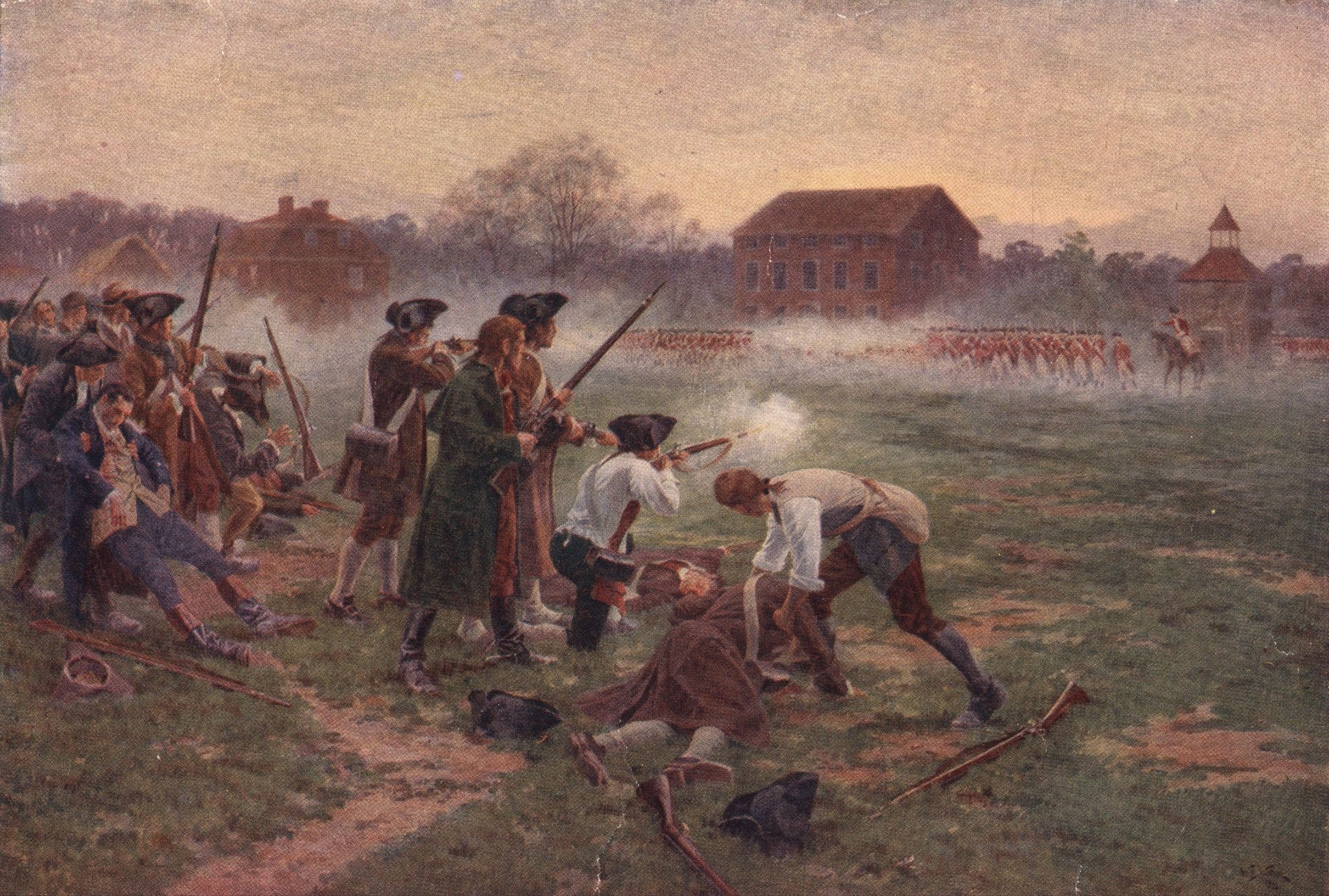
Here’s To The Unsung Heroes Of The American Revolution
And the little guys who made it possible
As Americans, we rightfully revere the heavy hitters of the American Revolution: Washington, Jefferson, Jay, Franklin, Hamilton, Adams, and Madison.
We can’t help it. Unless you are a dim-witted ideologue and bigoteer who hates white men and believes it’s appropriate to use modern-day ethics to cast judgment on people in the past – “The Founders were slave owners!!!!!!” – you get chills thinking about these heroes. They were influential and brilliant, and each played a decisive role in breaking away from the British Empire, forming an independent nation, winning the war, and creating a new system of government.
We also can’t help but tacitly endorse the “Great Man” theory of history, which holds that extraordinary people are the real drivers behind historical events, when we think about the American Revolution and the Founding Fathers. Were it not for this supremely courageous individual, or that genius and gifted individual, none of it would have transpired. We wouldn’t be here today were it not for George Washington’s military leadership. We wouldn’t have a banking system without Alexander Hamilton’s financial acumen and wizardry. Etc. Etc.
But of course, the American Revolution and history in general are so much more complicated than that, and unfortunately, many important people who shaped the course of events are treated as minor footnotes compared to the likes of Washington, Adams, and Jefferson.
Thomas Willing of Philadelphia isn’t a household name, but he was massively influential in financing the Revolution and building what is now one of America’s most powerful institutions: Wall Street. (Admittedly, I did not know Willings existed until the other day.) Adams famously complained that Willings and his banker associates had too much sway over Washington. But without his tremendous financial support and banking skills, maybe the Revolution would not have been successful. Hamilton famously gets all the credit with respect to the financial aspect of America’s founding, but Willings deserves some, too.
The countdown to America’s 250th is on. Shop our USA 250 collection today and take 25% off while the sale lasts.
Use code USA250 at checkout.
This article continues below
When we think of the great Revolutionary pamphleteers, perhaps we think of Thomas Paine and his classic work “Common Sense.” But Alexander McDougall, a New York merchant whom Washington once described as a “pillar of the revolution,” wrote an incredible series of pamphlets, dubbed “The Alarm,” under the pseudonym Hampden in 1773. His writings cast an entirely new light on the Revolution and its main causes, and why many colonists and merchants wanted to rebel against the British Empire: they were afraid that the crown would unleash the British East India Company (EIC), then the most powerful and brutal corporation in the world, on the colonies and turn them into a zone for pure resource extraction, as the company did to India. In 1771, McDougall warned colonists of a horrific famine in India facilitated by the EIC. He loathed how the Empire granted the EIC a monopoly on the colonial tea trade to help them amid financial trouble, and how the EIC corrupted British parliament with bribes and won themselves a bailout, which was paid for, in part, by raising taxes on the colonies.
(Read more about the role of the East India Company in the American Revolution here.)
Speaking of tea and unfair monopolies, the Boston Tea Party was famously organized by the Sons of Liberty and Samuel Adams, a key leader who did not participate in the physical dumping of the product into the Boston Harbor. But what about the people who did actually participate and toss tea chests into the icy December water? There were scores of them from various backgrounds and professions, merchants and artisan craftsmen, of all ages and ethnicities. Gilbert Colesworthy, Ebenezer Stevens, and Abraham Tower – these names will rarely make it into the history books. Yet the importance of their actions cannot be overstated. Without these men and their courage to risk their lives for a greater common cause, one of the lasting acts of rebellion against the Empire would not have been possible. They were not the “Great Men” of history memorialized in countless biographies, but they were great men nevertheless.
Perhaps the most incredible thing about the Revolution is that it could have easily failed. The Founders and Continental Army needed an extraordinary amount of luck, and they got it in spades. Look no further than the weather’s crucial role early on in the war. Famously, when Washington and his troops were trapped in New York and facing total defeat after the Battle of Long Island, a fog rolled in, allowing them to conceal themselves as they retreated to Manhattan and evaded capture by British forces. In an even more famous instance of serendipity, Washington’s surprise Christmas attack on the Hessian forces in New Jersey was greatly aided by freezing temperatures and snow.
Call it divine intervention. Call it luck. Call it whatever you want. But only in hindsight do we craft a clean, linear narrative to organize the events and make them appear inevitable when the very opposite was the case: there was nothing guaranteed. Everyone from Washington all the way down to the Continental soldier fighting alongside him had no clue what the future held. But still, they gambled everything. It just so happened to work out in their favor. And here we are today, celebrating the 250th anniversary of this country’s independence.
Like what you’re reading? If so, please consider subscribing to State of the Day or sharing this with a friend. You’d be supporting this newsletter and helping keep independent journalism alive.
If you are already a paid subscriber, make sure to join the conversation in our subscribers-only chat below.


Thank you for the uplifting report on the "other guys."
