

Investigating Lindsey Graham's Opponent's Weird 'Hit And Run'
The police report may hold the key

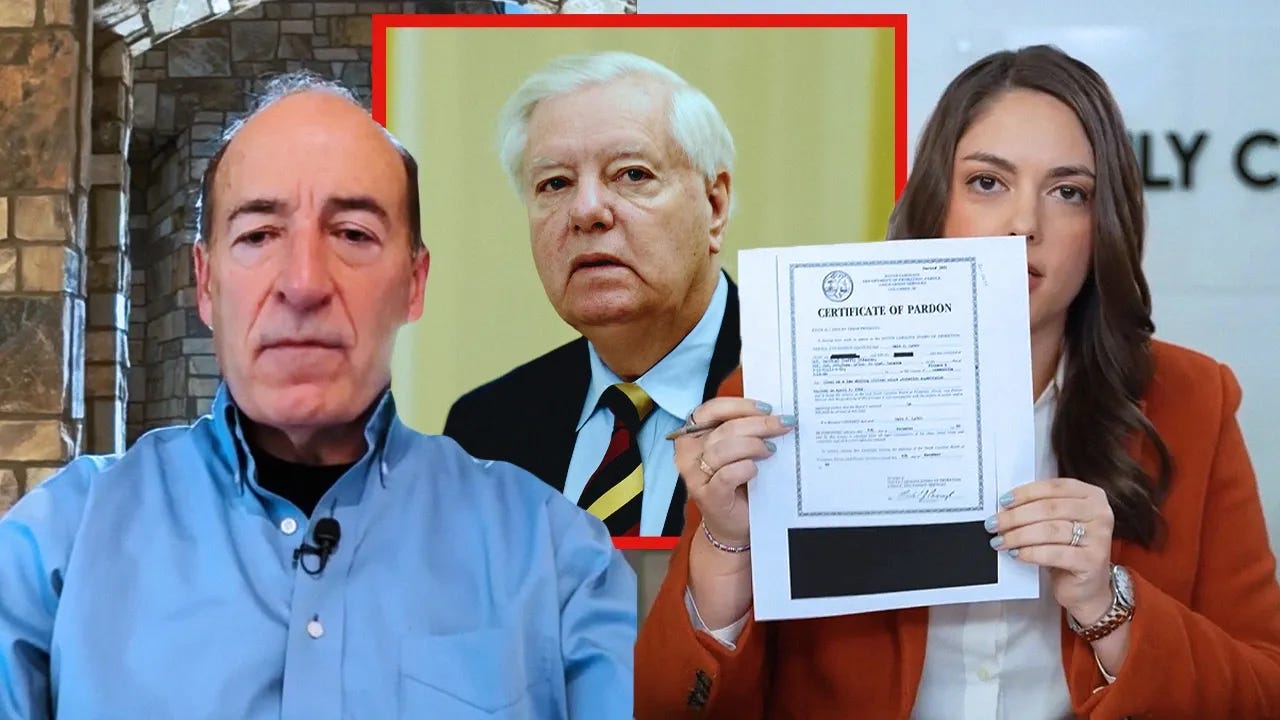
Hey y’all, today we’re taking you inside a story we’ve been working on for the past two weeks — what we found, and what questions remain unanswered.
Investigating Lindsey Graham’s Opponent’s Weird ‘Hit And Run’
Two weeks ago, the Daily Caller got a tip about Mark Lynch, the Greenville businessman and Republican Senate candidate primarying incumbent Sen. Lindsey Graham.
Something about his admitted criminal past didn’t seem to add up.
The case that jumped out was a 1985 accident involving Lynch and a man named David G. Bailey. Greenville County court records show Lynch was indicted in 1986 for leaving the scene of an accident involving personal injury or death.
The indictment alleged that, on or about July 22, 1985, Lynch failed to remain at the scene of an accident involving his vehicle and “that of one David Bailey,” that Bailey was injured, and that Lynch failed to provide information or render aid.
Lynch says the traffic ticket and indictment are wrong.
In an interview with the Daily Caller, Lynch told me Bailey was not driving another car. He said Bailey was riding in the passenger seat of Bailey’s Camaro, which Lynch was driving at the time.
Lynch said he had never driven the car before, took an S-curve too fast, hit a tree, lost consciousness, broke his sternum and “almost died.”
“It wasn’t a hit and run,” Lynch said. “We hit a tree. There was not another car involved, and it was David’s car that I totaled.”
The traffic ticket appears to support parts of Lynch’s account. It lists the same address for Lynch and Bailey, which provides some evidence for Lynch’s claim that the two men lived together or left from the same home before the crash.
But the ticket does not explain why prosecutors later alleged Lynch failed to remain at the scene, provide information or render aid.
The hit-and-run indictment was later dropped. A court form says the indictment was “pros ended,” with the handwritten reason: “Pled to other charges.” The South Carolina Law Enforcement Division (SLED) criminal-history report ties the same July 22, 1985, incident to a conviction for “driving after being declared traffic offender,” with a Feb. 18, 1986, disposition date, a $500 fine, a five-year suspended sentence and five years probation.
Lynch told the Daily Caller the indictment was ended because the case was not a hit-and-run.
“I believe so,” Lynch said when asked whether the plea process reflected that the hit-and-run charge was not legitimate. “The indictment pros ended … It was as if it never happened, because it wasn’t a hit and run. It was our single car accident, hitting a tree.”
But the court form does not say the indictment was ended because it was false. It simply says Lynch “pled to other charges.”
The solicitor who signed the indictment told the Daily Caller that, generally speaking, a hit-and-run case involving personal injury might be pleaded down if the parties reached some sort of settlement. He did not provide records showing whether that occurred in Lynch’s case, noting that he could not recall the incident.
Lynch identified the injured man as David G. Bailey, as listed on the traffic ticket, and described him as a close friend.
“David’s one of my best friends,” Lynch said. “He was an 82nd Airborne Special Forces — awesome, served our country. He passed away this past summer.”
Bailey is therefore not available to give his side of the story, according to Lynch. The Daily Caller has not yet independently verified Bailey’s full identity, military service, date of death or whether he was the same David Bailey named in the indictment.
I pressed Lynch again later in the interview, reading him the indictment language: that the accident involved “Mark Stephen Lynch’s vehicle and that of one David Bailey,” that Bailey was injured, and that Lynch failed to give information and render aid.
Lynch responded by blaming Graham.
“I know Lindsey’s trying to damage me,” Lynch said. “He’s concerned because we’re going to stop him.”
He then repeated his denial.
“There was only one car,” Lynch said. “I’ll say it again. Let me make it clear to everybody.”
Lynch said the charges had been “expunged,” though SLED still produced a criminal-history report in 2026 showing the underlying record and pardon entries.
When I asked whether the responding officer would say the original report was wrong if he remembered the incident, Lynch said: “If he’s alive … speak to him.”
The Daily Caller reached out to Michael Gardner, the South Carolina Highway Patrol officer listed as a witness in the indictment materials, but has not yet received a response.
The police report may answer the key factual question: whether the official crash record listed Bailey as a passenger, driver, vehicle owner, injured party or the owner of a separate vehicle. The Daily Caller submitted a public-records request for that report and has not yet received it.
The 1985 accident is not the only unresolved issue in Lynch’s past.
Lynch has also claimed he received a presidential pardon. The public description for an April 15 episode of Straight Talk With Bill Frady says Lynch explained that, 42 years ago, he was arrested for cocaine trafficking and “was able to get a Presidential Pardon and his record was erased.”
But the pardon document the Daily Caller reviewed is a South Carolina state pardon, not a presidential pardon.
A South Carolina certificate of pardon says Mark S. Lynch was pardoned effective Dec. 4, 1990, and lists offenses including DUI/habitual traffic offender and possession with intent to distribute cocaine. The SLED report also lists pardon entries dated Dec. 4, 1990, including for the possession with intent to distribute cocaine conviction and the later driving after being declared a traffic offender conviction.
When I asked Lynch directly whether the presidential pardon was real, he said his attorney was looking for it and that he could not find it.
“Yes, I have our attorney looking for that,” Lynch said. “I can’t find it in my safe — we’ve moved twice in our marriage — but yes, I am pardoned.”
He then pointed to his gun ownership and concealed-weapons permit as evidence that “all that’s been expunged.” Moments later, however, Lynch said, “I received my pardon in 1990,” which matches the date of the documented South Carolina pardon.
The Daily Caller has not located a record of a presidential pardon, and Lynch has not provided one. A Justice Department list of pardons granted by President George H.W. Bush from 1989 through 1993 does not appear to include Lynch. The DOJ page lists Bush pardon dates in August 1989, March 1991, July 1991, December 1992 and January 1993; it does not list any 1990 pardon date.
Lynch may be referring to some other clemency action not reflected on that DOJ list, but the Daily Caller has not verified that explanation.
The case is surfacing as Lynch attempts to turn South Carolina’s Republican Senate primary into a serious challenge to Graham.
Graham has the backing of President Donald Trump, who endorsed him in April. Lynch has tried to run to Graham’s right, attacking him on foreign policy, immigration and his relationship with the Republican base.
A March poll commissioned by Lynch’s campaign — and reported by Breitbart — showed Graham at 41 percent, Lynch at 21 percent, Paul Dans at 11 percent and 22 percent of likely GOP primary voters undecided. Dans later dropped out and endorsed Lynch.
The race has also taken on a major foreign-policy dimension. Graham has long been one of the Senate’s most hawkish Republicans, and his stance on Iran has drawn fire from the America First right. Lynch leaned into that contrast in our interview, accusing Graham of having “an addiction to war” and saying he is running to keep American children from being sent overseas.
For now, the record is mixed but incomplete. The shared address and vehicle information support parts of Lynch’s account. The indictment, arrest notation and plea to another charge still raise questions about why law enforcement and prosecutors treated the crash as a personal-injury hit-and-run before the charge was dropped.
The answer may be in the police report — if it still exists.
Check out my full interview with Lynch:
Enjoyed this post? If so, please consider subscribing to State of the Day or sharing this with a friend. You’d be supporting this newsletter and helping keep independent journalism alive.
If you are already a paid subscriber, make sure to join the conversation in our subscribers-only chat below.
