


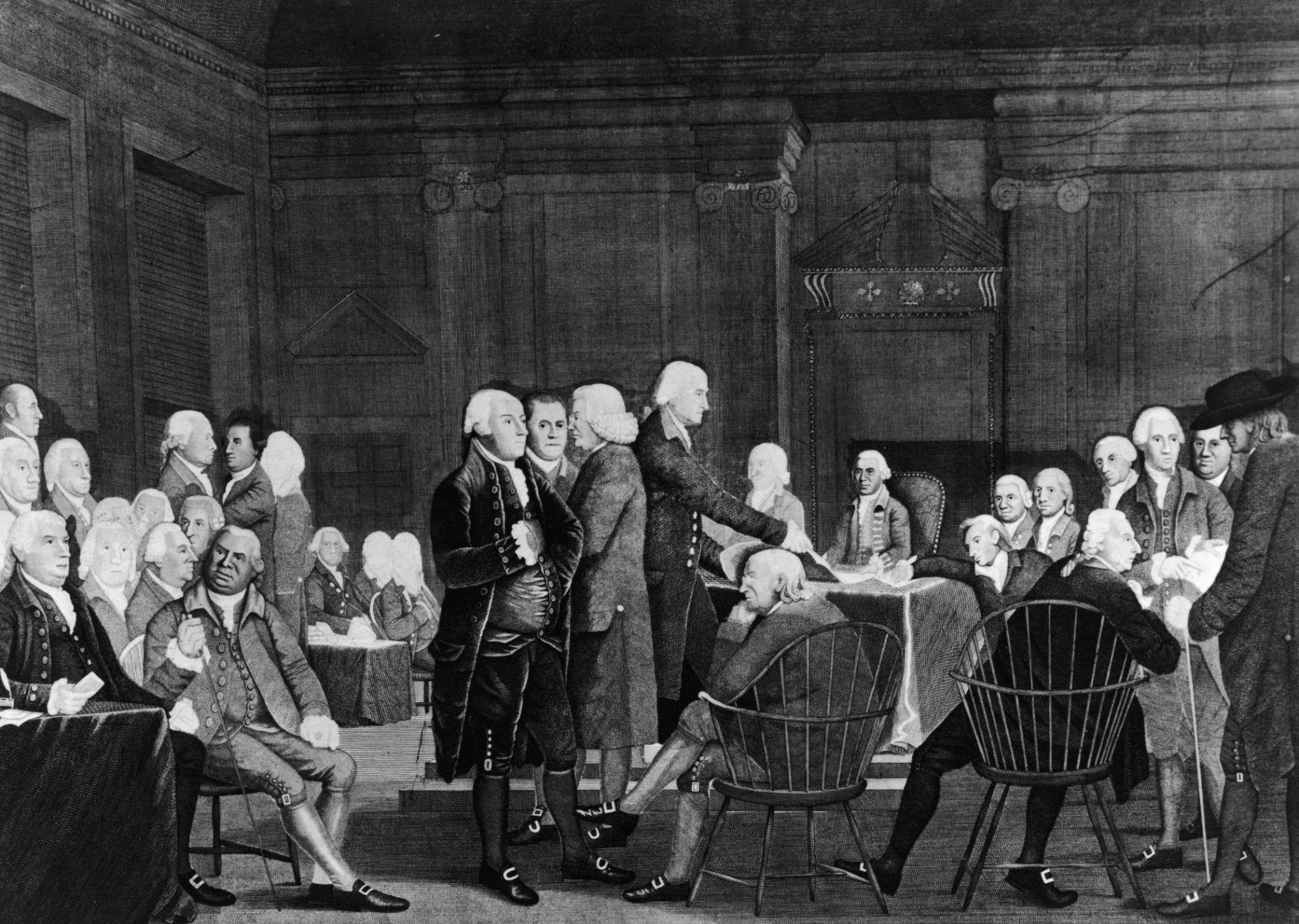
The year is 1776 …
… And the day is July 2. Delegates from the 13 colonies gather in the assembly room of the Pennsylvania State House in Philadelphia as part of the Second Continental Congress. John Adams, Benjamin Franklin, Thomas Jefferson, John Hancock, Samuel Adams, as well as 50 to 60 other delegates, are here. They pass a formal assertion known as the “Lee Resolution” – named after Richard Henry Lee of Virginia – or “The Resolution for Independence.” The colonies are now officially free and independent states severed from the British Empire.
The resolution declares that America will now approach foreign relations and build alliances, vital to winning the war against Britain, and that it will establish a plan on how the states will be joined together in a confederation:
Resolved, That these United Colonies are, and of right ought to be, free and independent States, that they are absolved from all allegiance to the British Crown, and that all political connection between them and the State of Great Britain is, and ought to be, totally dissolved.
That it is expedient forthwith to take the most effectual measures for forming foreign Alliances.
That a plan of confederation be prepared and transmitted to the respective Colonies for their consideration and approbation.
The Declaration of Independence, primarily written by Jefferson, will be released two days later, on July 4, and will make the case to the public why the states are no longer subject to British colonial rule. It will go on to be the founding document of the United States and one of the most important and influential documents in the history of the world.
John Adams predicted in a letter to his wife, Abigail, that July 2 would be remembered as an historic day and turned into a “great anniversary festival” by future generations of Americans:
The second day of July, 1776, will be the most memorable epoch in the history of America. I am apt to believe that it will be celebrated by succeeding generations as the great anniversary festival. It ought to be commemorated as the day of deliverance, by solemn acts of devotion to God Almighty. It ought to be solemnized with pomp and parade, with shows, games, sports, guns, bells, bonfires, and illuminations, from one end of this continent to the other, from this time forward forever more.
He was off by two days. But he was spot on that Americans would forever celebrate Independence with parades, games, guns, and fireworks.
Like what you’re reading? If so, please consider subscribing to State of the Day or sharing this with a friend. You’d be supporting this newsletter and helping keep independent journalism alive.
If you are already a paid subscriber, make sure to join the conversation in our subscribers-only chat below.


