



Hey y’all, welcome back to Unfit to Print.
I mentioned that I was in southeastern Missouri for a hunting trip this past weekend.
My husband and I co-wrote the following reflection on our drive from Hayti to the Memphis airport on the last day of our trip.
NATIONAL DECAY OF STANDARDS
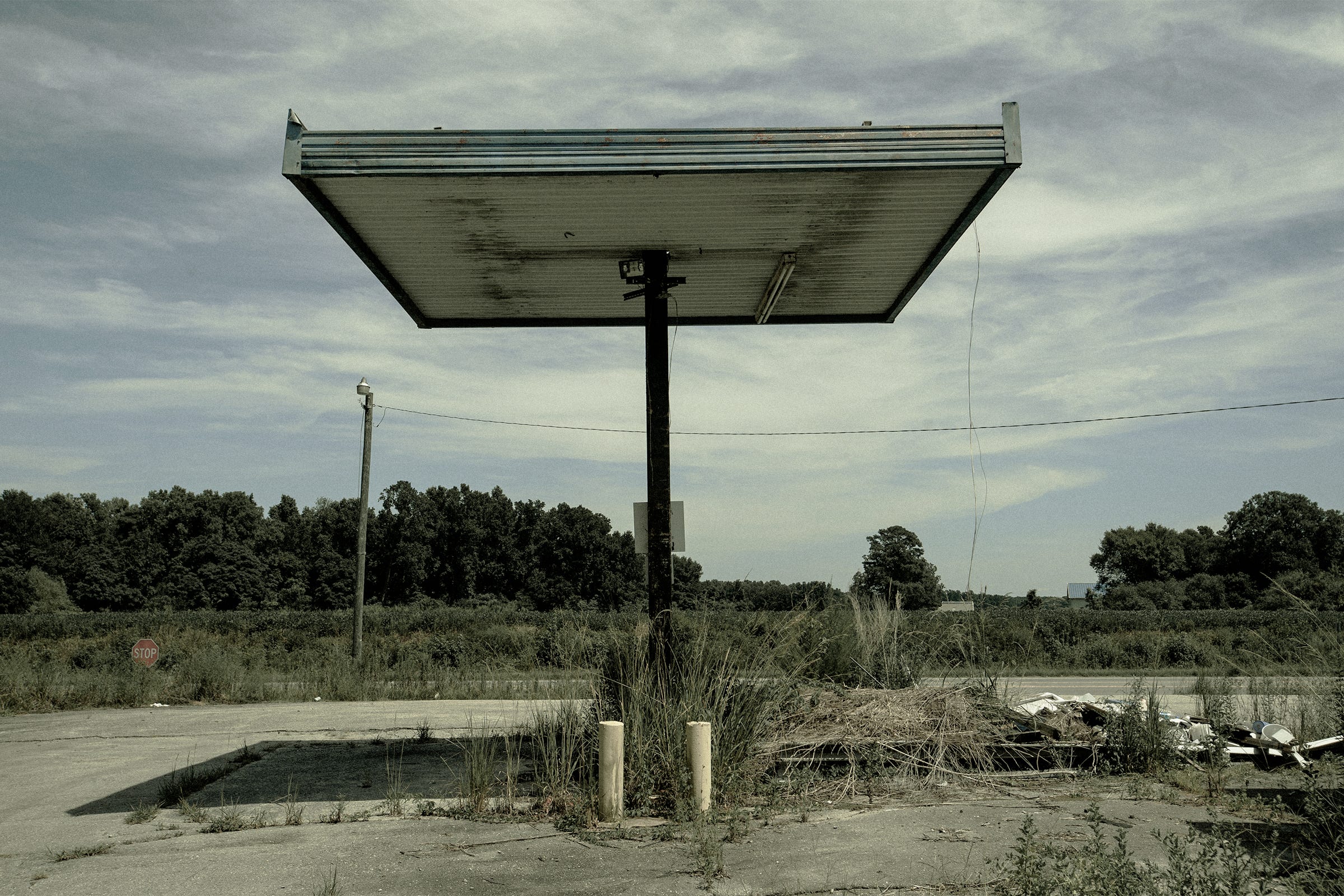
There are stretches of America where the road feels less like infrastructure and more like evidence.
Driving I-55 from Missouri through Arkansas to Memphis, Tennessee, is one of them.
Nothing dramatic. Just the slow accumulation of things that don’t work. Gas pumps that won’t start. Bathrooms locked or filthy. Lights half on. Card readers broken. Signs faded. Roads patched, then patched again.
Sometimes you stop at several stations before you can fill up and buy a bottle of water.
Even the places that appear “fine,” according to Google reviews, come with their own warnings: double charges, pumps that run while the tank stays empty, prices that jump for “outsiders.” It isn’t collapse. It’s malfunction as the baseline. After enough miles, you stop being surprised.
That may be the most unsettling part — not the disrepair itself, but the sense that no one expects things to function properly. The Mississippi Delta feels caught in a loop where decline isn’t a problem to be solved but an assumption everyone just accepts.
The region has absorbed economic shocks for decades — mechanization, out-migration, shrinking tax bases, capital flight. What remains is just barely teetering on the edge of serviceable.
From the outside, it looks like nobody cares. But it’s more likely just straight-up exhaustion. When institutions fail long enough, people lower their expectations. “Good enough” becomes the new normal.
That’s an understandable response to sanctioned atrophy. It’s also dangerous.
Because once an attitude of defeat hardens, recovery becomes harder than repair.
Infrastructure can be rebuilt. Capital can come back. But a culture that no longer expects things to work is far more difficult to reverse.
A small moment back in Northern Virginia clarified this. A pedestrian stepped into traffic while jaywalking toward the Metro. Jonathan braked hard. Yet the pedestrian responded with anger, as if Jonathan were the problem. It lasted seconds, but the feeling that something was off lingered.
It was a breach in something we used to understand implicitly — the quiet agreement that we share responsibility for societal order.
It’s a small breach. So are broken gas pumps, dim interiors with flickering lights, missing signage. But civic erosion rarely begins with some catastrophic moment. It’s the slow, quiet degradation of basic standards. Inconvenience becomes normalized, frustration replaces obligation, and accountability for anything is rare.
The point isn’t to moralize or assign blame. The Delta’s contraction is decades in the making. But what’s striking along I-55 isn’t only poverty or underinvestment. It’s the resignation. The sense that nothing works and nothing ever will.
And it isn’t confined to poor areas. The D.C. Beltway is home to some of the wealthiest counties in America. Yet when we were recently hit with a combination snow and ice storm, there was a blanket understanding that travel would be difficult, if not impossible, for at least a week.
People traded complaints about turn lanes covered in “snowcrete,” sidewalks leading to daycares and doctor’s offices that hadn’t seen the hint of a shovel, and snowplows and tractors sitting idle on the side of the road. No one, though, really expected anyone to do anything about it.
Nothing gets better until people stop settling for the status quo. Basic shared standards aren’t just for show — they’re what keep a place functional.
Roads work because drivers expect compliance. Markets work because contracts are honored. Communities work because enough people insist that how we behave matters.
The Delta doesn’t have to be America’s destiny. It should be read as a warning about what happens when expectations decay alongside infrastructure.
The smallest civic norms, like fixing the pump, honoring the crosswalk, and maintaining the sign, are not trivial. They are signals that somebody, somewhere, gives a damn.
Change begins not with grand speeches but with a simple insistence: this should work. And we will not accept less.
That’s it for the free portion of today’s Unfit to Print.
The full subscriber edition continues below with expanded analysis and additional context.