


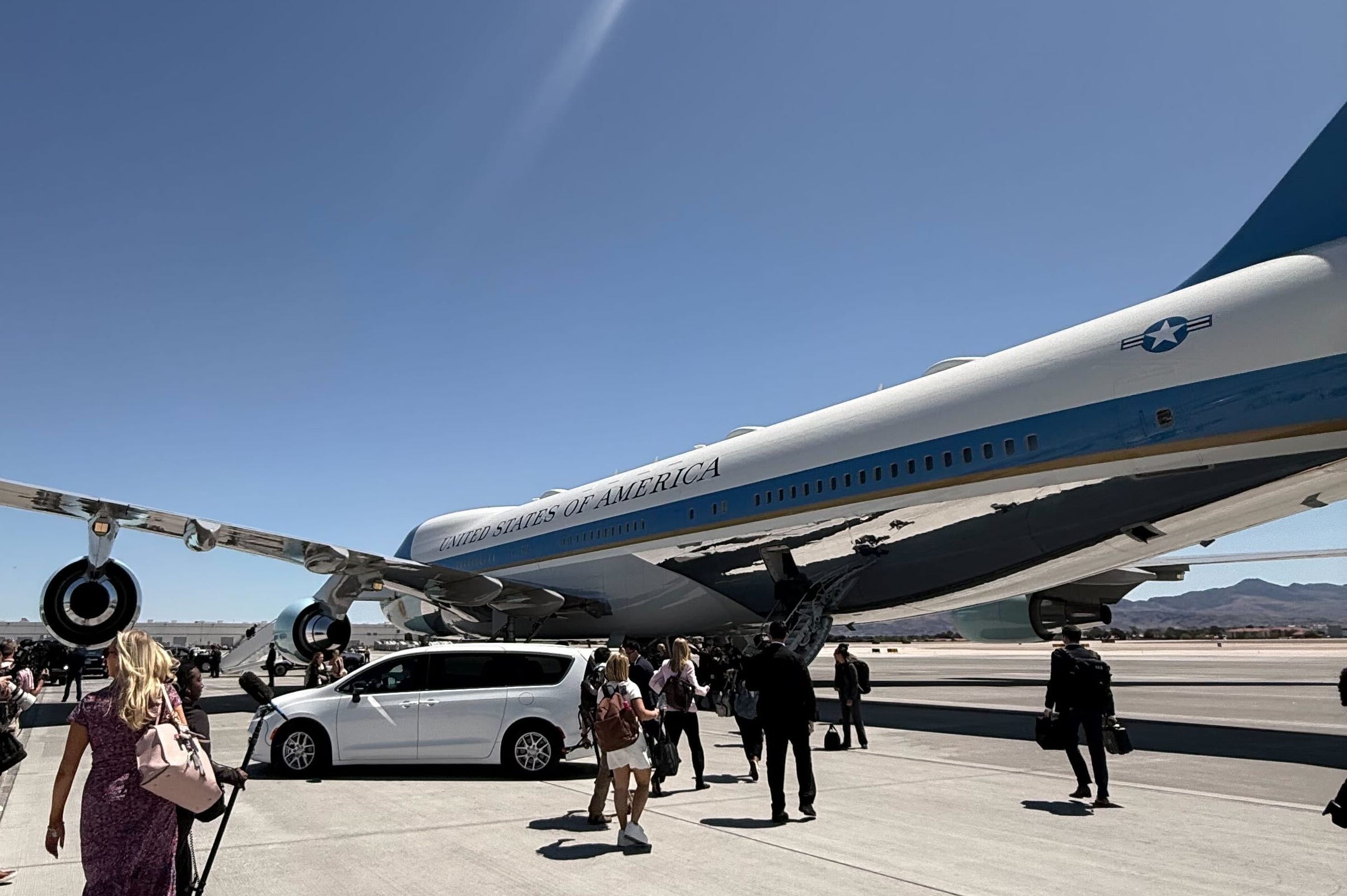
Flying with the president of the United States is nothing like flying commercial.
No one announces takeoff. A basket of snacks sits in the back, free for the taking. There’s no wifi for the press. And at any moment, the president might walk down the aisle to chat.
I covered my first overnight trip with President Trump last week. We went to Las Vegas for a “No Tax On Tips” roundtable, then Phoenix for a Turning Point USA rally. The whole time, one question hung over our small press pool: when would he take questions?
The trip started with a near-miss.
Prior to the trip, big foreign policy news broke. Israel and Lebanon had agreed to a 10-day ceasefire. Excited about the news, the president took questions from reporters at the White House for 20 minutes.
The problem: those of us traveling with him were already at the airport, having cleared the hours-long security process required before boarding. We watched the presser from our phones while waiting under the wing of the plane.
Finally, the president arrived via Marine One. Some of my colleagues shouted out questions in hopes of luring the president over for a chat. He just waved and climbed up the stairs.
A few of the veteran reporters I was with had done long trips with Trump before, like the one we were on, and shared that the president seems to prefer to take questions on the plane.
The press cabin is cramped, reporters largely stay seated when the president visits, but that smallness creates a surprisingly casual dynamic. Trump tends to open up more. So that’s what we were counting on.
Vegas came and went without questions. So did the flight to Phoenix, even after Trump announced that Iran had “agreed to everything.” Surely, I told my colleagues, he’d want to discuss that with us.
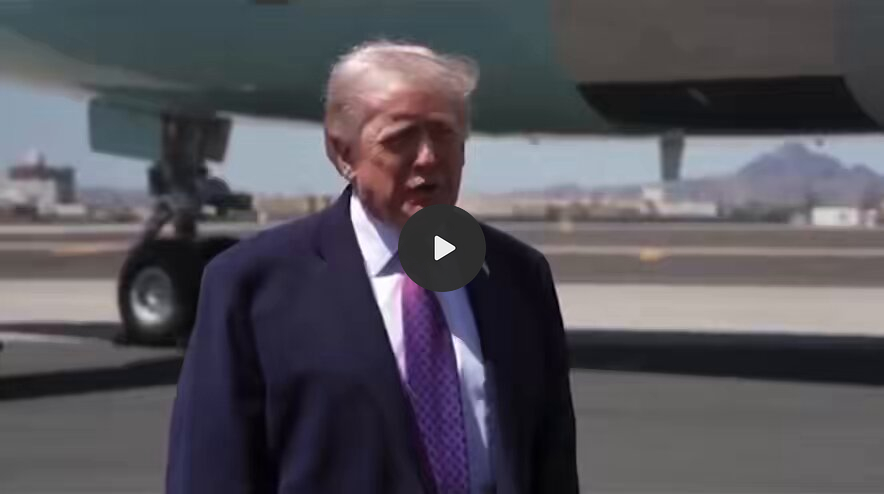
When we touched down in Phoenix, right before getting in “the Beast,” the president paused. My breath caught. Trump turned around and walked over to where we were standing under the plane.
He took three questions. We were running late, so that was it. And then just as quickly as he came and went, we were off sprinting to the press vans to try to make the motorcade.
I got one of those questions in, asking what it would take to end the blockade on the Strait of Hormuz.

I exhaled. At least I had something. But the trip wasn’t over.