


How many times have you heard the buzz phrase “saving Western civilization,” or “we need to save Western civilization,” in the past few months or years?
Probably a lot. Personally, I hear it so often that it has completely lost its punch. What does that even mean? What exactly are you referring to? Do you have the faintest clue what you are talking about? It almost seems like every political issue, no matter how big or small, is framed in terms of how the issue or a possible solution is “saving” Western civilization or, conversely, destroying it.
Secretary of State Marco Rubio invoked “Western civilization” during a speech in February.
“We are part of one civilization – Western civilization. We are bound to one another by the deepest bonds that nations could share, forged by centuries of shared history, Christian faith, culture, heritage, language, ancestry, and the sacrifices our forefathers made together for the common civilization to which we have fallen heir,” he told the audience at the Munich Security Conference in Germany.
Stephen Miller has used it often, as well.
And here’s right-wing podcaster Matt Walsh discussing a once-hot culture war issue in 2023:
“I truly see the fight against gender ideology as the last stand for Western civilization... Because if the sane side loses this, it’s over.”
Is it really, though?
I am not here to give you an answer as to what “Western civilization” means, because I really do not know. I do not think Rubio, Miller, or Walsh know, either. I just want to point out how political figures use words as heavy ideological clubs to make you think or feel a certain way.
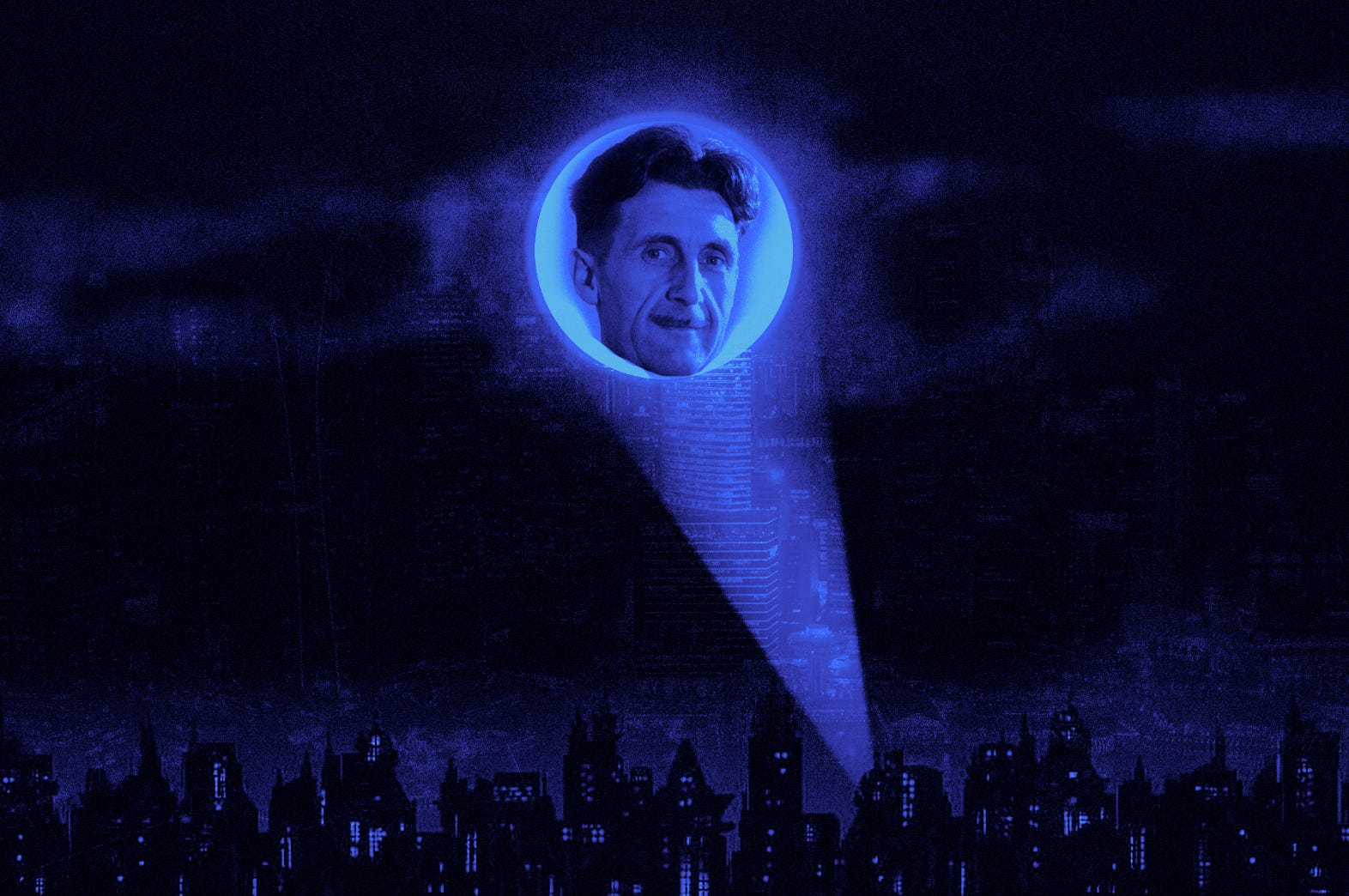
In his 1946 essay, “Politics and the English Language,” George Orwell wrote about this. He argued, correctly, that all political language is fakery “designed to make lies sound truthful and murder respectable, and to give an appearance of solidity to pure wind.”
The word Fascism has now no meaning except in so far as it signifies ‘something not desirable’. The words democracy, socialism, freedom, patriotic, realistic, justice, have each of them several different meanings which cannot be reconciled with one another. In the case of a word like democracy, not only is there no agreed definition, but the attempt to make one is resisted from all sides. It is almost universally felt that when we call a country democratic we are praising it: consequently the defenders of every kind of régime claim that it is a democracy, and fear that they might have to stop using that word if it were tied down to any one meaning. Words of this kind are often used in a consciously dishonest way. That is, the person who uses them has his own private definition, but allows his hearer to think he means something quite different.
Wow. Does Orwell ever miss? Of course not. He was right then, and he is right now. He will always be right. He was monstrously original, ahead of his time, and we badly need his wisdom to decode the oftentimes poisonous language of our modern politicians, government officials, military leaders, CEOs, etc., etc., etc.
Because, today, we are drowning in buzzwords and “newspeak,” a word coined by Orwell in his novel 1984. It is a tsunami after tsunami of euphemisms and sloganeering. As Orwell argued, this corrupted language corrupts our thoughts, clouds reality, and allows people in power to, literally in some cases, get away with murder.
Aside from “Western civilization,” here are some examples that drive me crazy:
“Free Markets”
The term “free markets” has no meaning. But if it means anything, it means “deregulation.” When you hear people say, “We need to support free markets,” it means, “We want to deregulate this or that industry.” Okay, that’s fine. That could be a good thing, or that could be a bad thing. But is any market actually free? Of course not. We have laws. We do not live in an Adam Smith utopia. The next time you hear the stock market cited as a prime example of a “free market” working smoothly without government interference, ask yourself: but isn’t it regulated?
“Defang” or “Degrade”
You might have heard these words since the start of the Iran War. I heard a lot of hawks use the word “defang” right at the beginning when the U.S. and Israel vaporized the Iranian Supreme Leader Ali Khamenei. I saw it a lot in the digital pages of National Review because it sounds fancy. It’s a great word, admittedly. It’s easy to pronounce. A nice Latin prefix and an Old English word. But it’s deceptive. The U.S. did not “defang” the Iranian regime. It assassinated some of its leaders in a surprise sneak attack.
“Degrade” is similar. How many times have you heard the Pentagon use the phrase, “We have degraded Iran’s military capabilities?” So, you blow up a rusty piece of scrap metal that has zero effect on whether the Strait of Hormuz will reopen?
Speaking of the Pentagon …
Anything the Pentagon Says
This right here is a gem:
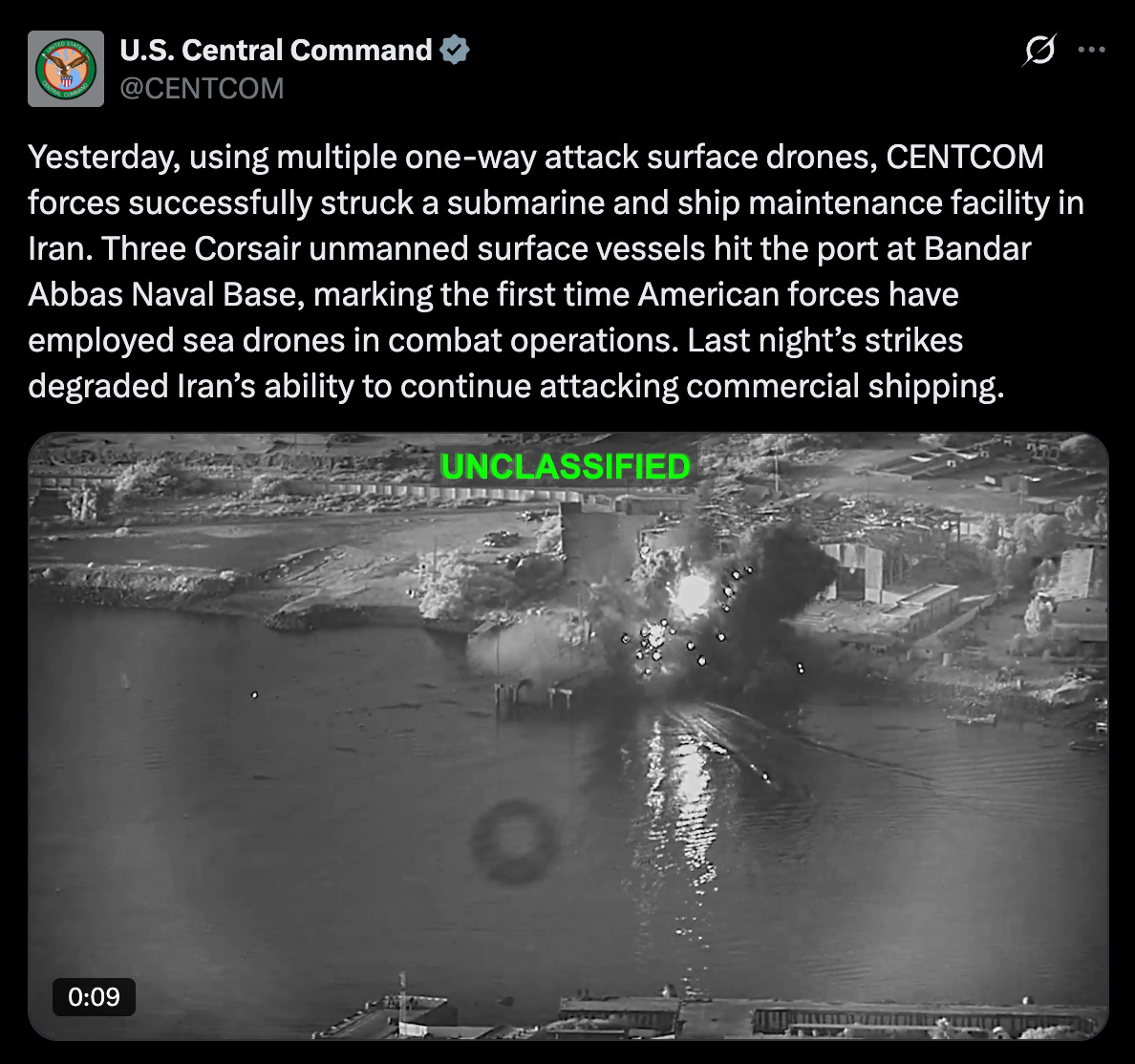
“One-way attack surface drones.” “Unmanned surface vessels.” “Employed.” “Degraded Iran’s ability.”
The U.S. military bureaucracy speaks entirely in newspeak. That post translated into plain English: “We blew up some sh*t with a kamikaze RC boat, and we have no clue if this does anything to help, but we will pretend that it does so you think we are not losing and release this footage so you know your tax dollars are not being wasted.”
***
I’ll be the first to admit: I have used buzzwords before. I have used them when I felt stuck. I might even have used some in this article. I try not to, but sometimes your mind is tired, and you’re running out of time, and you use them - unwittingly or consciously. When I read Orwell’s essay for the first time, I felt shame. I’ve done that myself, haven’t I? I suffered an “existential crisis,” as they say.
But it was nevertheless a good lesson (that always needs re-learning, apparently) and a good reminder to try to see the true meaning of things.
So, what do politicians really mean when they say “Western civilization”? I’m not sure. But I know what it is not. It is not carbonized Ancient papyrus scrolls that were buried by the eruption of Mount Vesuvius. It is not the smooth texture of Michelangelo’s marble statues. It is not the smell of the Globe Theatre during a Shakespearean performance on a cold, rainy day.
Like what you’re reading? If so, please consider subscribing to State of the Day or sharing this with a friend. You’d be supporting this newsletter and helping keep independent journalism alive.
If you are already a paid subscriber, make sure to join the conversation in our subscribers-only chat below.


Secretary Rubio provided his definition of "Western civilization." To me, it was quite good. Your mileage may vary, to use a hackneyed phrase.