

A Band You Should Know Forced To Deal With Dumbest Controversy You Definitely Don't Know
A frontman tilts at windmills.

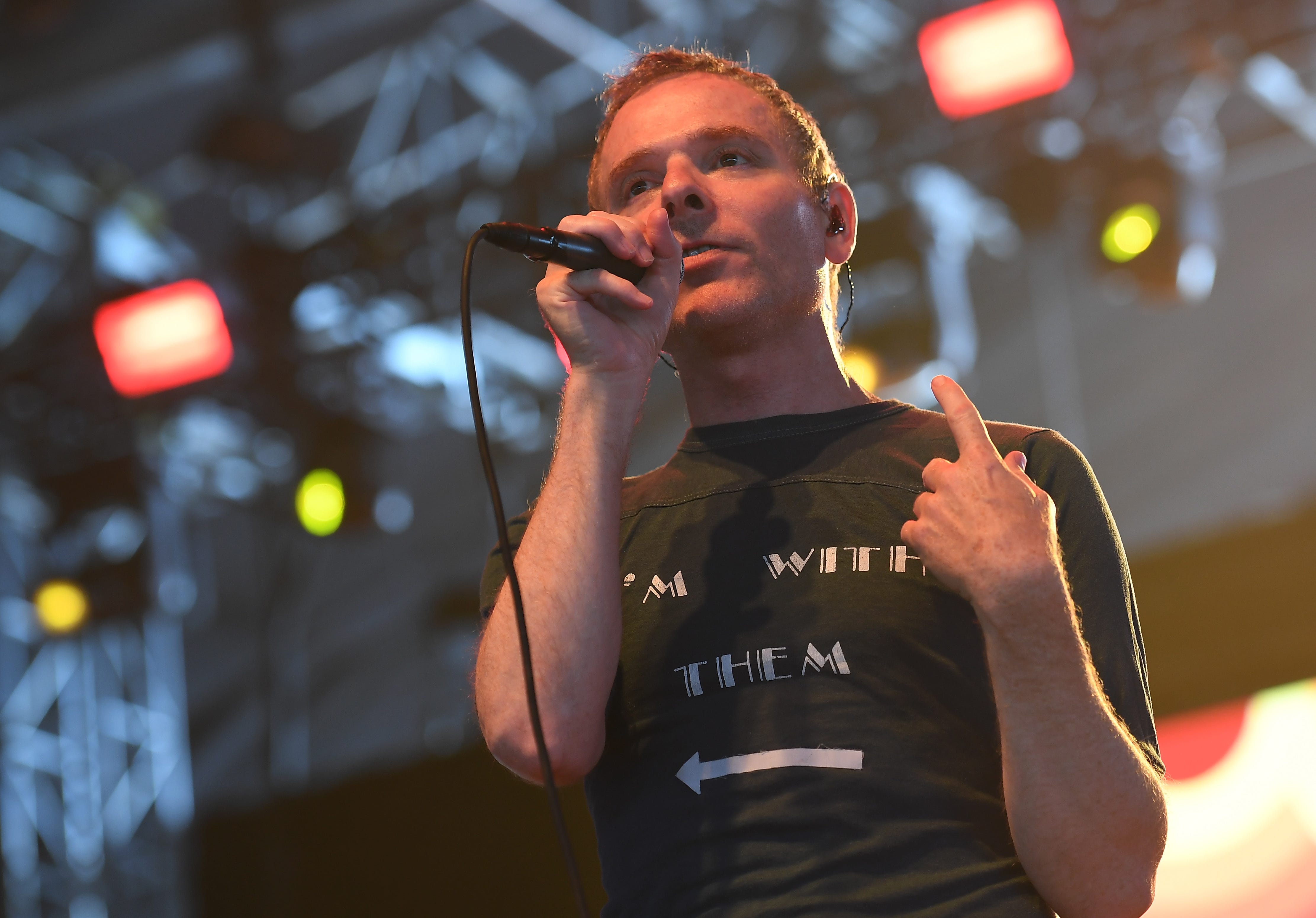
I had the pleasure of seeing Belle and Sebastian in concert the other night.
Belle and Sebastian is touring North America and Europe for the 30th anniversary of its albums “Tigermilk” and “If You’re Feeling Sinister.”
The band put on a fantastic show. They played “Sinister” in full, then an assortment of deep cuts and fan favorites, pulling concertgoers on-stage to dance during “The Boy With The Arab Strap.” I left the venue convinced of frontman Stuart Murdoch’s lyrical brilliance.
The audience was energetic — more so than the audience at the previous day’s performance of “Tigermilk,” a middle-aged couple informed me. The crowd skewed Gen X and millennial, with a solid sprinkling of Zoomers swaying on the general floor. The men wore band t-shirts. The women wore long dresses.
“Rock Against Racism”
Toward the end of the concert, Murdoch danced downstage right, permitting me to read the text on his t-shirt.
“Rock Against Racism.”
Rock Against Racism (RAR), I have since learned, is an English non-profit “consisting of musicians, artists, and music industry leaders committed to combatting systemic racism.” RAR’s website claims it “emerged in 1976 as a political and cultural movement in response to a rise in racist attacks in the United Kingdom.” RAR takes an instrumental view of music: Music is a tool to further “racial equity,” which, practically defined, means the disenfranchisement of white people.
RAR gave birth to Love Music Hate Racism, which staged a free concert in 2006 at which Belle and Sebastian performed.
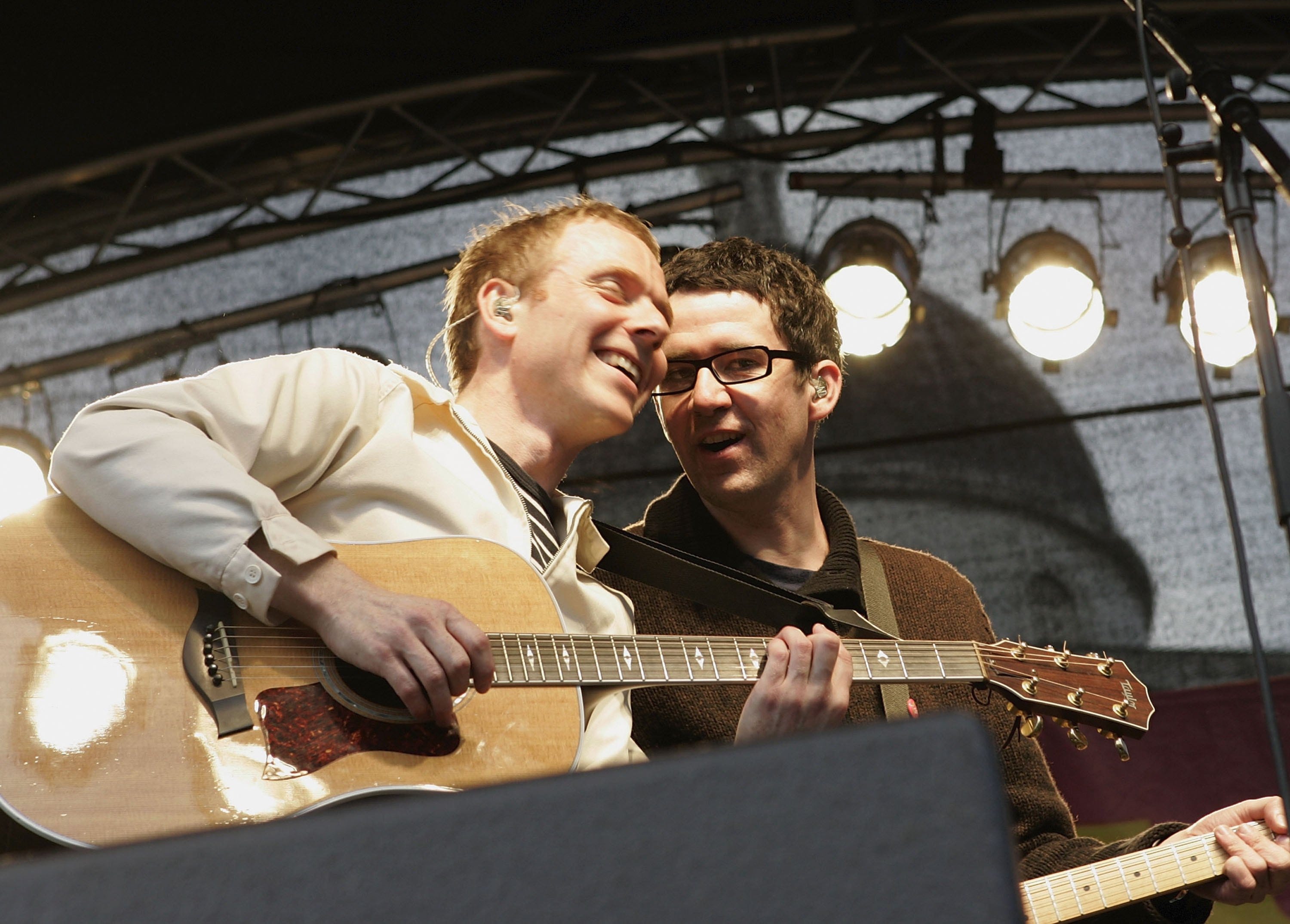
Murdoch’s shirt struck me as sad. Not that I’d ascribed any right-wing beliefs to the musician on the basis of his songs (his biggest hits concern girls and sorrow and longing). But it tugs on the heartstrings to witness a nearly 60-year-old man tilting at windmills. I have some idea of the sort of racism Murdoch and other lefties of his generation tend to concern themselves with: social slights against non-white immigrants or their descendants, employment discrimination, academic discrimination. A general sense of unwelcomeness and hostility — however subtle — inflicted on non-whites by whites.
This does not accurately describe the state of affairs in the West. If Henry Nowak’s murder reveals anything, besides the evil of his murderer, it is that white people are second-class citizens in Britain. A plea for medical attention from a dying white person is less important than a non-white person’s accusation of racism.
But the Nowak murder only confirmed what most honest observers already knew.
One could, in the 2010s, espouse openly anti-white sentiments without hurting one’s chances of getting into a prestigious university, going to law school, or gaining employment in a well-paying job. In some cases, espousing openly anti-white sentiments would bolster one’s chances of success in those endeavors. Dunking on “white guys” was a favorite pastime of more than a few public figures. Jacob Savage catalogued the wholesale exclusion of millennial white men from the entertainment industry and journalism in the late 2010s.
In fact, Belle and Sebastian had their own run-in with “woke” (anti-white) culture in the 2010s.
“Music critic” Sarah Sahim wrote a venomous diatribe against Belle and Sebastian for Pitchfork in 2015, titled, “The Unbearable Whiteness of Indie.”
We should first note that Sahim is basically correct: Indie music is white music. Indie rock and indie pop have their origins in Britain. There is nothing wrong with this, just as there is nothing wrong with the fact that mariachi originates in Mexico, and that mariachi players are overwhelmingly Mexican. Would anyone dare write an article titled, “The Unbearable Brownness of Mariachi”?
Sahim takes Murdoch to task for his “blindingly white film,” “God Help the Girl.” Well, “God Help the Girl” is set in Glasgow. Scottish people are, traditionally, white.
Sahim rails against the “Whiteness” of Western art, accusing Belle and Sebastian of “perpetuating Whiteness through indie rock.” The implicit line of argument is that being white is bad, and white people who fail to explicitly condemn their race are bad.
Sahim writes: “White art additionally dilutes and flattens aspects of other cultures’ music that it adopts in the process of making them more ‘accessible’ for those whose curiosity does not extend beyond the parameters of Europe and North America.”
Again, I’ll bring up the example of mariachi. The sound of mariachi was heavily influenced by German, Polish, and Czech immigrants. See this video to test if you can tell a Czech song apart from a Mexican song.
If we apply Sahim’s standards, we must conclude that Mexican art “dilutes and flattens” aspects of European music in order to make it more “accessible” for incurious latinos.
This is stupid. Of course.
Murdoch responded to Sahim’s article, tweeting, “aw, fuck off pitchfork[.]”
He added: “i wish i was in a band that looked like the brazil team in the 70s
but we formed in glasgow[.]”
In a follow-up tweet, Murdoch wrote, “god knows i’ve yearned to know and love women and men of many nations, but being a poor sick white boy from scotland has dashed my ambitions[.]”
Murdoch never learned the fundamental rule for dealing with raging ethnonarcissists: You cannot appease them. Any apology, any hint of self-pity, any attempt to prove you are not racist, will only excite their appetite for destruction.
Murdoch offered to get coffee with Sahim, but she seems to have rudely rebuffed his olive branch, based on what I can tell from some old Reddit threads.
All this to say, Murdoch is out of touch. There’s nothing wrong with being out of touch. I might even recommend it, since the zeitgeist is mostly not worth touching. But there is something awkward about witnessing an aging rebel raging against a non-existent machine. Especially given Murdoch’s own run-ins with the existent machine.
Raging Against The Machine
During the concert, Murdoch made a reference to “the people” triumphing over some unnamed Goliath. Murdoch, like most indie or rock musicians, probably likes to think of himself as part of the vanguard.
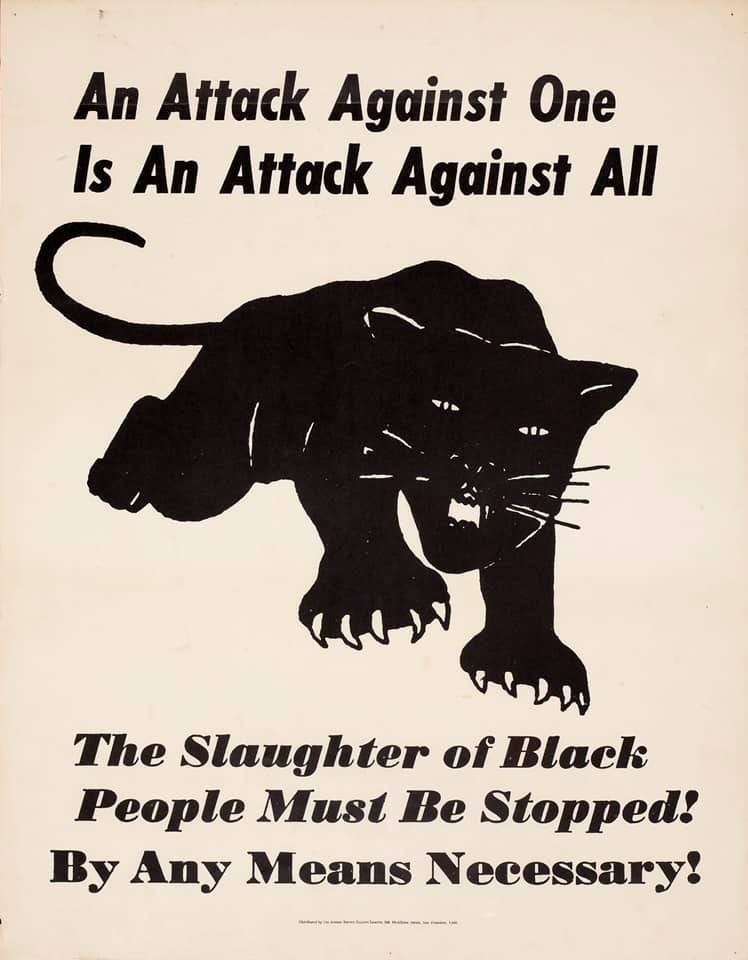
Think of rock band The Black Crowes posting in support of Black Lives Matter in June 2020. The band posted the following picture to Facebook:
I’m reminded of that infamous Archie-style drawing of a “punk” girl covered in tattoos, pointing at a sign: “YOU CAN’T BE PUNK AND ALSO BE RACIST SEXIST HOMOPHOBIC OR TRANSPHOBIC! IT’S IMPOSSIBLE”
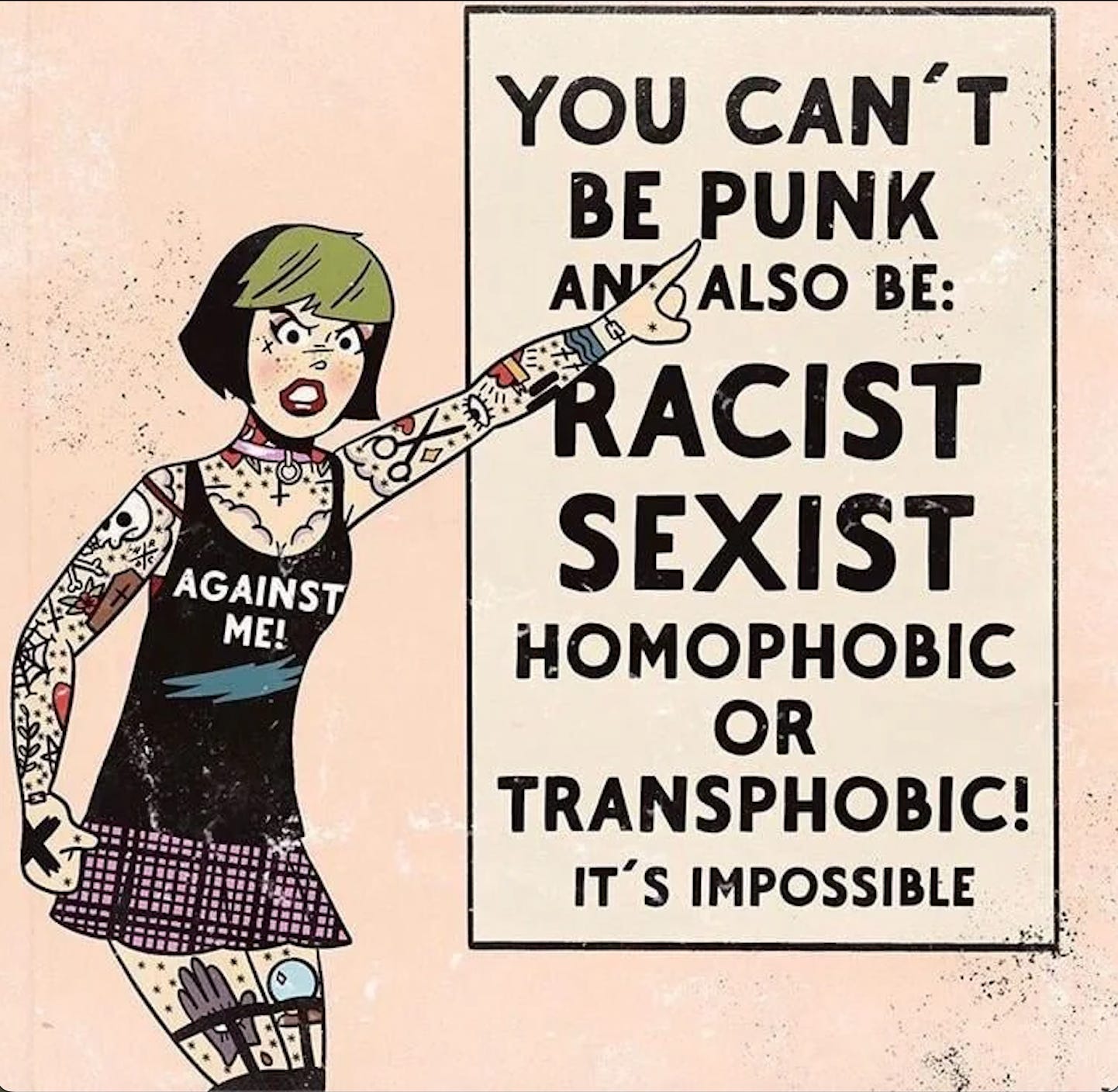
Antiestablishmentarianism means adopting the same outlook as the Target Corporation, as everyone knows.
Think, too, of Rage Against the Machine’s effort to break down “the fiction known as whiteness” in their 2021 documentary.
“Alternative” musicians who achieve mainstream success are in a bit of a bind. Actually breaking with left-wing orthodoxy would likely mean taking a reputational and financial hit. How are they to maintain their “alternative” status? By transgressing in a pre-approved manner, ala the “Two Minutes Hate.”
Moreover, I’m sure the likes of The Black Crowes and Rage Against the Machine actually believe they are straddling the bleeding edge of cultural commentary.
Belle and Sebastian never quite promoted themselves as “speaking truth to power,” but they are (or were) perceived as outsiders.
“If You’re Feeling Sinister” contains a liner-note biography which begins, “Belle And Sebastian were the product of botched capitalism. It would be nice to say they were the children of socialism, but it would be a fib.”
At Belle and Sebastian’s conception, Murdoch had been suffering from chronic fatigue syndrome for years. Murdoch and his future bandmate, Stuart David, reportedly enrolled in a Scottish social welfare program for unemployed musicians, which David described as a “refugee camp for unemployed musicians,” according to socialist magazine Jacobin.
Recalling Belle and Sebastian’s origin, Murdoch told The Guardian’s Dorian Lynskey in 2014, “We were a loose assembly of men and women who fell together to make a record for a college project.”
When asked which adjectives he never wants to hear applied to the band again, Murdoch said to Lynskey, “Ach, I think we’re everything everyone says we are and it’s probably my fault. You know, this is a pop band that sprang out of infirmity. There’s no doubting that.”
Belle and Sebastian’s studied image has not gone unnoticed.
In a 2009 profile for The New York Times Magazine, journalist Stephen Rodrick stressed a tense moment between Murdoch and Murdoch’s wife, Marisa Privitera. The couple were driving Rodrick back to his hotel, when the journalist mentioned Jeepster Records, the independent record label under which Belle and Sebastian released their first three albums.
“Jeepster was the label the band left just when you started doing interviews and making more commercial records,” Privitera said to her husband, according to Rodrick.
Rodrick writes: “For a second, I thought Murdoch was going to pull the car over. He seemed furious that his wife had diverged from the script and implied that he was more career-oriented than his public image suggests. ‘No, that’s not how that happened,’ Murdoch said, giving Privitera a sharp look.
What is Murdoch’s public image? He is the perpetual misfit, a sensitive observer who preserves little moments in lyric, like a lepidopterist pins a butterfly to a board.
There is truth to this image. I would say it’s disillusioning to see such an evidently talented person embrace such a hollow ideology, but Murdoch’s politics are in keeping with what I expect from musicians. Great artists are often revealed to be naive when they venture outside their domain of expertise.
All that being said, give “If You’re Feeling Sinister” a listen if you haven’t already. It’s worth your time.
Like what you’re reading? If so, please consider subscribing to State of the Day or sharing this with a friend. You’d be supporting this newsletter and helping keep independent journalism alive.
If you are already a paid subscriber, make sure to join the conversation in our subscribers-only chat below.

I personally am not aware of even who these people are. I am a grandmother and my music education was influenced by the band NIRVANA, WHICH ended way too soon because its lead singer was serious drug addict (though he actually died from shooting himself). I enjoy all types of music and people are free to make the music they want to make. HOWEVER I DO NOT CARE AT ALL ABOUT THE POLITICAL POSITIONS OF ANY MUSICIAN WHOEVER THEY ARE AND WHOEVER THEY SUPPORT. They could be the best musicians in the world, but that does not give you any credibility whatsoever about any opinion on politics. SAME THING FOR ACTORS, THEY MAY PLAY POLITICIANS BUT THEY HAVE NO EXPERIENCE AT ALL IN IT JUST FROM THEIR ACTING ACTIVITIES!!!