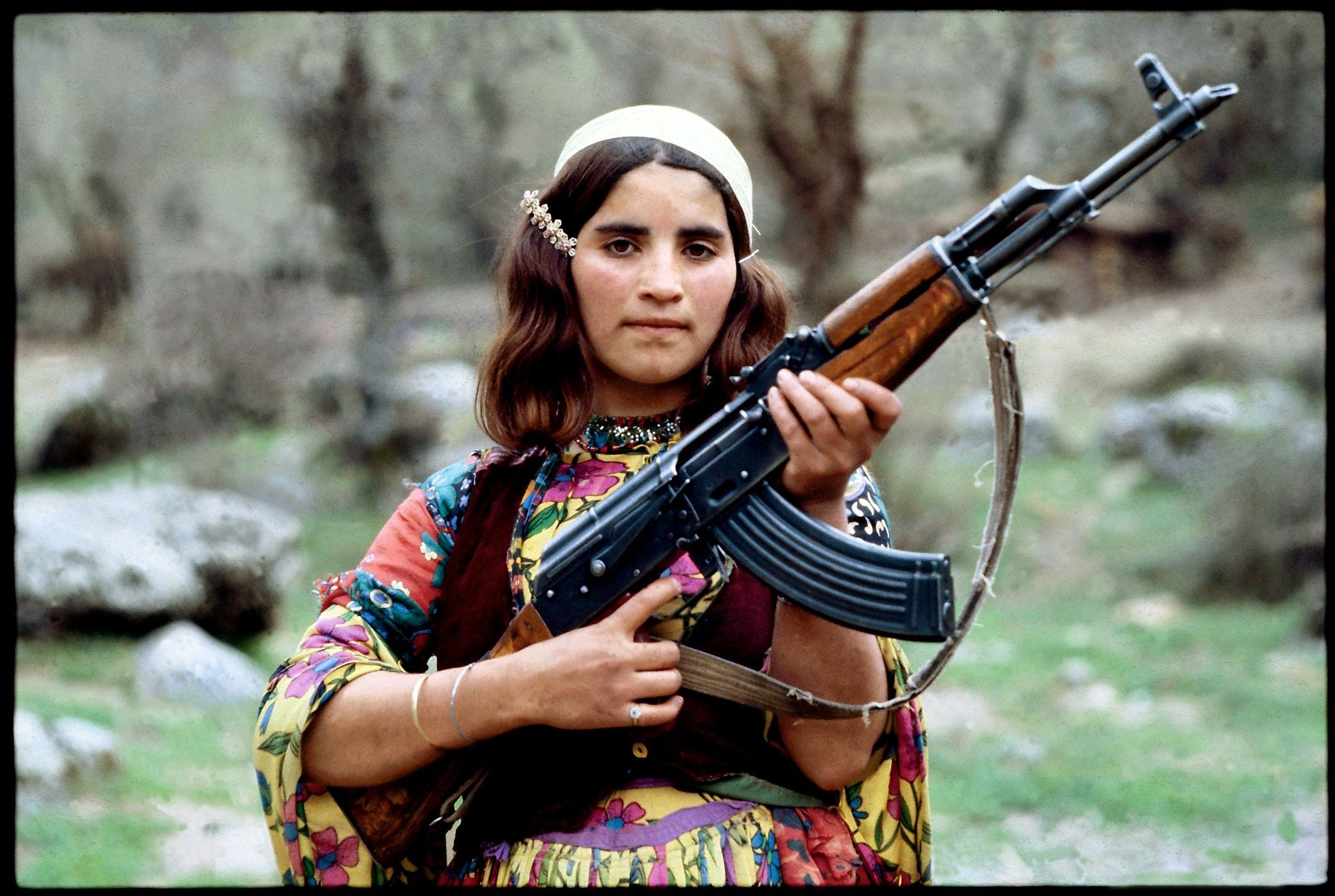
The year is 1947 …
And the AK-47 – now the most famous assault rifle in the world – goes into production in the Soviet Union. The weapon is the brainchild of Mikhail Kalashnikov, a Soviet military officer, engineer and small-arms designer who was born to peasants in a remote village. It goes on to shape scores and scores of conflicts throughout the Cold War, the War on Terror, and the 21st century, including the Vietnam War, the Troubles, the Rhodesian Bush War, the Cambodian Civil War, the Yom Kippur War, the Iran-Iraq War, the Soviet-Afghan War, the Gulf War, the Yugoslav Wars, the wars of Iraq and Afghanistan, the Libyan Civil War, and the Russian-Ukrainian War.
In his 2010 book about the AK-47 and its effect on modern warfare, investigative journalist C.J. Chivers said the gun’s widespread availability, reliability, and ease of use made it a choice weapon for insurgents, terrorists, and drug traffickers. It was cheap and rarely jammed.
“It let them – for the first time really in history – fight the most powerful nations on the earth, and fight them effectively, fight them to a standstill even,” he told NPR in 2010.
Before this newsletter continues, here’s a word from today’s sponsor.
PRESENTED BY:
Insurance premiums up. Coverage down. Sound familiar?
America’s HealthShare offers a different way to handle medical costs — member to member, without the insurance company markup.
Use code STATEOFTHEDAY to get your first month for free.
Today’s newsletter continues below
Not only did the AK-47 have a tremendous impact on the fates of great empires and colonial powers throughout the 20th and 21st centuries, but it also lingers in our collective consciousness as a symbol of rebellion and terrorism, and has since become synonymous with Third World revolutionaries, pro-communist states, and anti-Western ideologies. In his infamous video after the 9/11 attacks, Osama Bin Laden touted an AK-47. Hezbollah’s flag features the gun, as does Mozambique’s.
Kalashnikov expressed regret for the weapon’s vast, unchecked distribution and how it came to be used by terrorists and drug traffickers, claiming he only intended it to be used by Soviet soldiers in the defense of the “Motherland.”
“This is a weapon of defense,” he said. “It is not a weapon for offense.”
As is so often the case with a major technological advance, few can ever predict its far-reaching and unintended consequences – not even the inventor who made it happen.
Like what you’re reading? If so, please consider subscribing to State of the Day or sharing this with a friend. You’d be supporting this newsletter and helping keep independent journalism alive.
If you are already a paid subscriber, make sure to join the conversation in our subscribers-only chat below.


