


Hey everyone,
Welcome to State of the Day,
What makes us human? A question philosophers have wrestled with for centuries,
Now we’re asking chat.
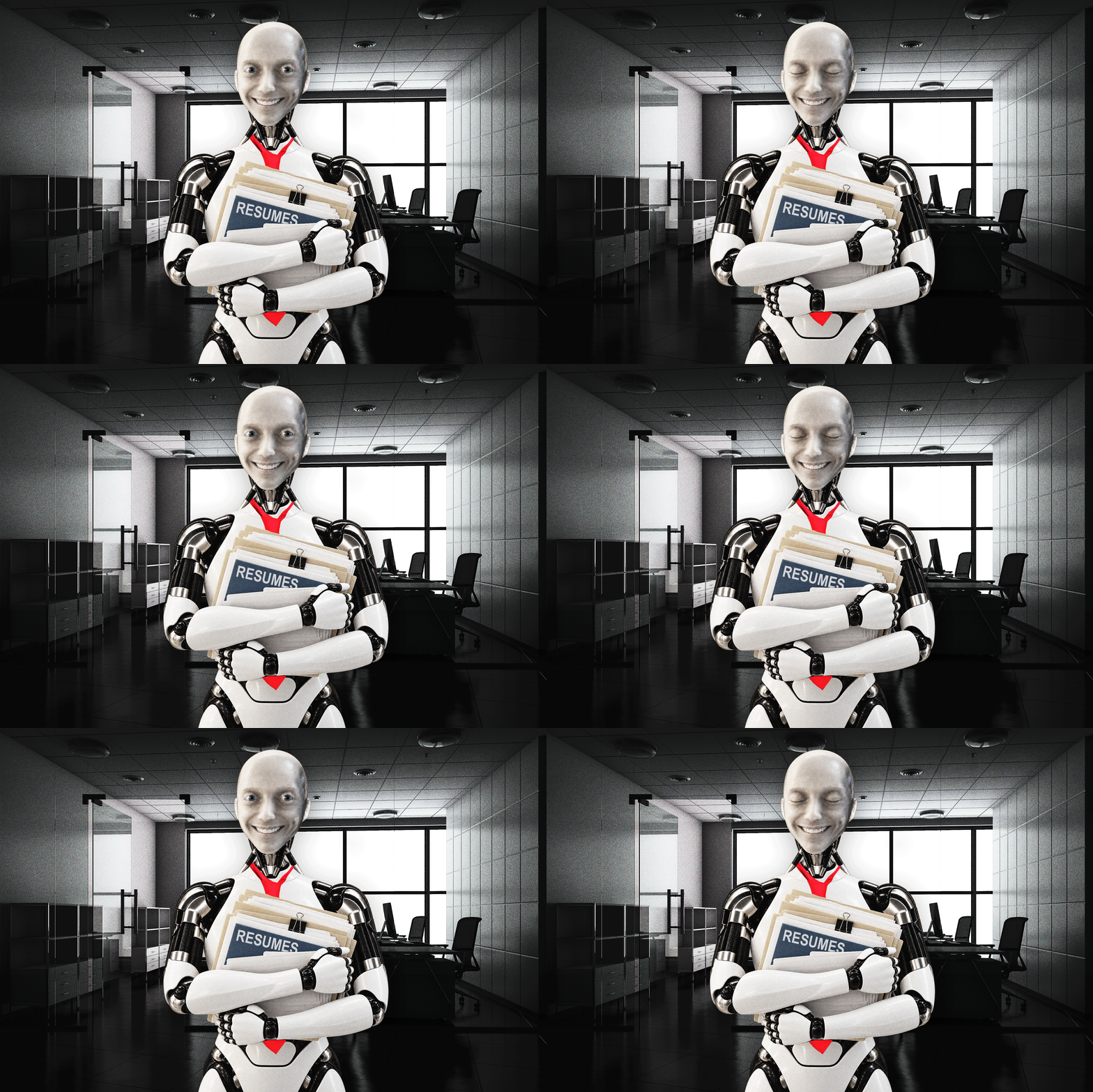
McKinsey Wanted Humanity — It Hired A Robot
“What is the heart of this person? Who really is this person?”
That’s what Saleem Zafar, a partner at McKinsey’s Dallas office, wants to know about potential recruits, according to The Wall Street Journal.
How do they plan on finding out? Asking entry-level candidates to sit through a 10-minute conversation with AI pretending to be a client.
In all fairness, the AI isn’t actually grading the candidates. Human interviewers watch the exchange and evaluate how applicants handle the interaction. Which makes the whole thing even funnier: McKinsey is using a machine to stage a test of humanity, then having actual humans decide whether candidates can convincingly flaunt their humanness.
To be clear, consulting is a made-up field. Its biggest contribution to society is scarfing up graduates from top universities, paying them six-figure starting salaries, and setting them loose to spend their lives turning out pitch decks and memos. Meanwhile, the entire industry faces the possibility that AI swoops in and eats the work these firms charge so much to do.
The scary part is we’re at the point where companies are using AI to determine whether the people they hire have the qualities that differentiate them from bots in the first place.
Last I checked, Grok, Claude, and ChatGPT can build websites, hack into servers, and blackmail their own developers. I doubt putting together a pitch deck would be much of a lift.
So why don’t these consulting firms just hand all their work over to AI agents?
In short, human touch.
Understanding this, they asked themselves: how do you find people with said humanity?
Naturally, they concluded that having them talk to a robot would work.
Just a few weeks ago, on another corner of the internet, folks were getting worked up over one of the great questions of our time: Should you bring an iced coffee to a job interview? One recruiter thought the answer said something meaningful about Gen Z’s professionalism, and suddenly a plastic cup became a referendum on a generation’s work ethic.
So while we’re arguing over whether a plastic cup says something about someone’s industriousness, McKinsey is trying to figure out whether a chatbot can uncover someone’s soul … truly the state of our day.
But why stop there? If the goal is to eliminate human bias, as Zafar said, the next step should be an AI agent reviewing the interview between the applicant and the first AI and scoring how convincingly the candidate played human. Then another AI could review those scores, weigh the results, and make the final hiring decision.
Congratulations, we’ve found a way to make even humanity an efficiency problem for AI to solve.
The irony is thick when you consider the same firms building these elaborate systems to identify irreplaceable human qualities are staring down the barrel of a technology that could, with a few human-like advancements, automate much of the work they pay those humans to do.
The wolf isn’t at the door anymore. It’s sitting in their corner offices, selling executives on the efficiencies of eating their own workforce.
McKinsey knows its clients aren’t shelling out bags of cash to talk to a robot. But apparently, the firm thinks a bot is perfectly suited to finding the “heart” it wants in its employees.
If AI can make those pitch decks, crunch the numbers, and simulate client conversations, the question isn’t just whether a candidate has heart. It becomes a question of whether McKinsey will still value the humans it hires when replacing them becomes more profitable.
Spoiler warning: they won’t.
From The Editors’ Desk
Florida House Race Offers Window Into National Data Center Fight, Daily Caller, Ashley Brasfield
The Daily Caller’s Ashley Brasfield reports on the contentious back-and-forth accusations between Florida Democratic Rep. Kathy Castor and her Republican challenger, Mike Beltran, over each’s alleged support for pro-data center legislation. Data centers have become a hot political issue ahead of the 2026 midterm congressional elections next month, with candidates — like Castor and Beltran — trying to paint their opponents as being supportive of the industry and being aligned with Big Tech companies.
Boomers Get A Bigger Check While The Rest Of Us Pay The Price, Daily Caller, John Loftus
This Wednesday, the Social Security Administration announced that 72 million retirees will receive a 3.6 percent increase in benefits next year, while inflation continues to eat away at the wages of those currently in the workforce. Social Security is a pay-as-you-go system. Payroll taxes collected from today’s active workers are not saved or invested in an individual account for them. Rather, they are used immediately to pay current benefits to retirees and disabled workers. Taxes that are not immediately paid out are managed by the U.S. Treasury Department and invested in special-issue Treasury bonds.
AI Companies Play Cat-and-Mouse With Secret-Stealing Spies, The Wall Street Journal, Georgia Wells, Erin Woo, and Meghan Bobrowsky
The rise of AI has made employees at the biggest labs targets for spies. After an OpenAI employee was charged with allegedly trying to secretly record confidential meetings, Silicon Valley is getting a taste of the Cold War, with the industry’s most valuable secrets in the crosshairs. Read more about the spy thriller taking hold in the tech mecca in The Wall Street Journal.
EXCLUSIVE: White House To Honor First Responders At Rose Garden Luncheon, Daily Caller, Reagan Reese
President Donald Trump hosted a luncheon in the Rose Garden honoring the nation’s first responders, with members of more than a dozen major firefighter and law enforcement organizations in attendance Thursday. The lunch with the first responders comes as the White House is hoping to emphasize Trump’s tough policy agenda on crime just weeks out from the midterms.
Like what you’re reading? If so, please consider upgrading to a paid State of the Day subscription or sharing this with a friend. You’d be supporting this newsletter and helping keep independent journalism alive.
If you are already a paid subscriber, make sure to join the conversation in our subscribers-only chat below.
