


Greetings, Dear Reader,
Big, big risk. Trump’s biggest yet. Will it pay off? How is it America First? And who the hell is in charge?
Let’s get after it!
THE TRUMP DOCTRINE
Ten minutes after Trump posted a statement to social media acknowledging the strike in Venezuela, a New York Times reporter cold-called his personal cell phone. It was around 4:30 in the morning.
After three rings, the president picked up.
—
Trump’s first covert order as commander-in-chief occurred just nine days into his presidency and did not pan out well.
A group of SEALs and UAE special forces launched a joint raid in Yakla, Yemen, a home base of AQAP, Al Qaeda in the Arabian Peninsula. The goal was primarily to gather intelligence, disrupt operations, and potentially kill or capture a top Al Qaeda operative. It was an extremely low-visibility, high-risk, high-reward operation, which would become a trend for Trump.
The operation was supposed to remain covert for as long as possible, but it went to shit almost as soon as they landed. Al Qaeda was alerted immediately, and more outfitted and organized than expected. What was supposed to be a quick hit-and-run on a weak and surprised enemy turned into an hours-long battle with entrenched and determined terrorists.
The results were civilians dead, civilian structures destroyed, and locals enraged. Worse, one SEAL was KIA and a damaged MV-22 needed to be destroyed on site during the exfil.
Sure, some terrorists were killed, but the operation could not have panned out more poorly for the fledgling administration. By all accounts, even those from folks on the ground, it was a disaster.
Meanwhile, Trump – and his SecDef, James Mattis – claimed victory regardless.
My guess is Trump learned some valuable lessons in that defeat, as his next major efforts would prove.
—
I picture it like a reverse image of Bush getting notified that a commercial plane had rammed into the Twin Towers.
Chinese President Xi is cutting into his chocolate cake at Mar-a-Lago, sitting across from President Trump, when a member of the Secret Service calmly walks up and whispers in Trump’s ear.
It was April 2017, still early in Trump’s presidency, so there was likely still griping in the media about Trump taking meetings at Mar-a-Lago. The two had the sit-down on the books and Trump had decided to hold it at his own resort.
If you ask me, this is when the Trump Doctrine really started to emerge.
Xi is chewing on Mar-a-Lago chocolate cake when Trump says he bombed an airstrip Russians were overseeing in Syria.
I wrote about it when it happened here, if you want all the details. The short version is that Trump was shown pictures of Syrian kids dying from sarin gas exposure. Advanced US military radar had pegged a flight around the time of the first reports and tracked it back to its origin.
Trump at first sat on it, but he couldn’t get the pictures out of his head. Then he had an idea.
I picture him saying to Xi, “James Mattis just bombed a Russian airstrip in Syria.”
And just letting it hang to see Xi’s reaction.
Another low-visibility operation, but this time, not very high-risk. He had alerted the Russians to vamoose, and they did. They knew he and Mattis meant business.
And now so did Xi.
—
It’s odd how the reporter at the New York Times both expected and did not expect an answer to his call. As if both would make sense. Trump is old, as old as Biden was when he took office. He’s also Trump, known to tweet at all hours of the night.
The first question was about what happened in Venezuela.
“A lot of good planning and a lot of great, great troops and great people,” Trump said. “It was a brilliant operation, actually.”
It was, actually, from what we know now.
The Times reporter pressed for more details, but Trump said he’d be holding a press conference at 11 a.m.
“The call lasted 50 seconds,” Tyler Pager of the Times wrote.
Four hours later, Pager was waiting in line at security.
Trump and his team would spend more than an hour and a half discussing the raid.
You could barely tell he’d slept less than four hours.
—
Trump’s approach to ISIS in 2017 was in a lot of ways how some analysts expected both Iraq and Afghanistan to go. Unfortunately, as we all know now, we decided to send hundreds of thousands of ground troops into both countries. The results were disastrous and many books have been written breaking down the total cost.
Ground invasions, occupations were never going to happen under the Trump doctrine.
Instead, he favored low-visibility, low-footprint, highly aggressive and targeted actions. He loosened the rules on airstrikes and raids. The war was one of operators and operators only.
These small teams had every bit of American technology at their disposal. Complete weapons-free. Maximize destruction of the bad guys, minimize risk of casualties.
They’d drop bombs, move in, kill people, and evaporate like ghosts. Over and over. Bombs dropping. Ghosts appearing. Killing, capturing, killing some more. Mist, infil, fog, destruction, exfil, absence. And rerack it.
The process culminated in the infamous Baghdadi raid – “he died like a dog,” Trump would say – decapitating ISIS of its leadership.
And just like that, the feared terrorist group that had taken over swaths of Iraq, Syria and Africa collapsed in a cloud of dust, bodies, and dead leadership.
—
A few months later, on his way out of the White House, Trump would hit the most infamous Iranian general with something called a “flying Ginsu.”
Qassem Soleimani was regarded by most military strategists as the most prolific and deadly organizer of Islamic terrorism in the world.
ISIS was merely a piece on the board as far as guys like Soleimani were concerned.
Soleimani was so certain of his untouchableness that he was driving around Baghdad in a soft-skinned vehicle, right out in the open.
Trump would never risk a war with Iran, the thinking went. Also his base would bray in dismay if he did. How is killing Soleimani “MAGA”?
There’s nothing that Trump hates more than dead GIs, however, and Soleimani was still piling them up with impunity. So Trump threw one last rock, and in it came from the stratosphere, unbeknownst to ol’ Qassem.
A “flying Ginsu” is what they call a “kinetic weapon.” There are no explosives. The missile operates like a giant spear, except it spins and when it gets near the target, a series of blades fan out from the spindle.
Trump could have just blown him up, but the Ginsu leaves … pieces … that need to be cleaned up.
The message to Iran was clear.
—
The operation in Venezuela is the absolute crescendo of the Trump doctrine. It achieved so many objectives that it’s going to take weeks to fully unpack.
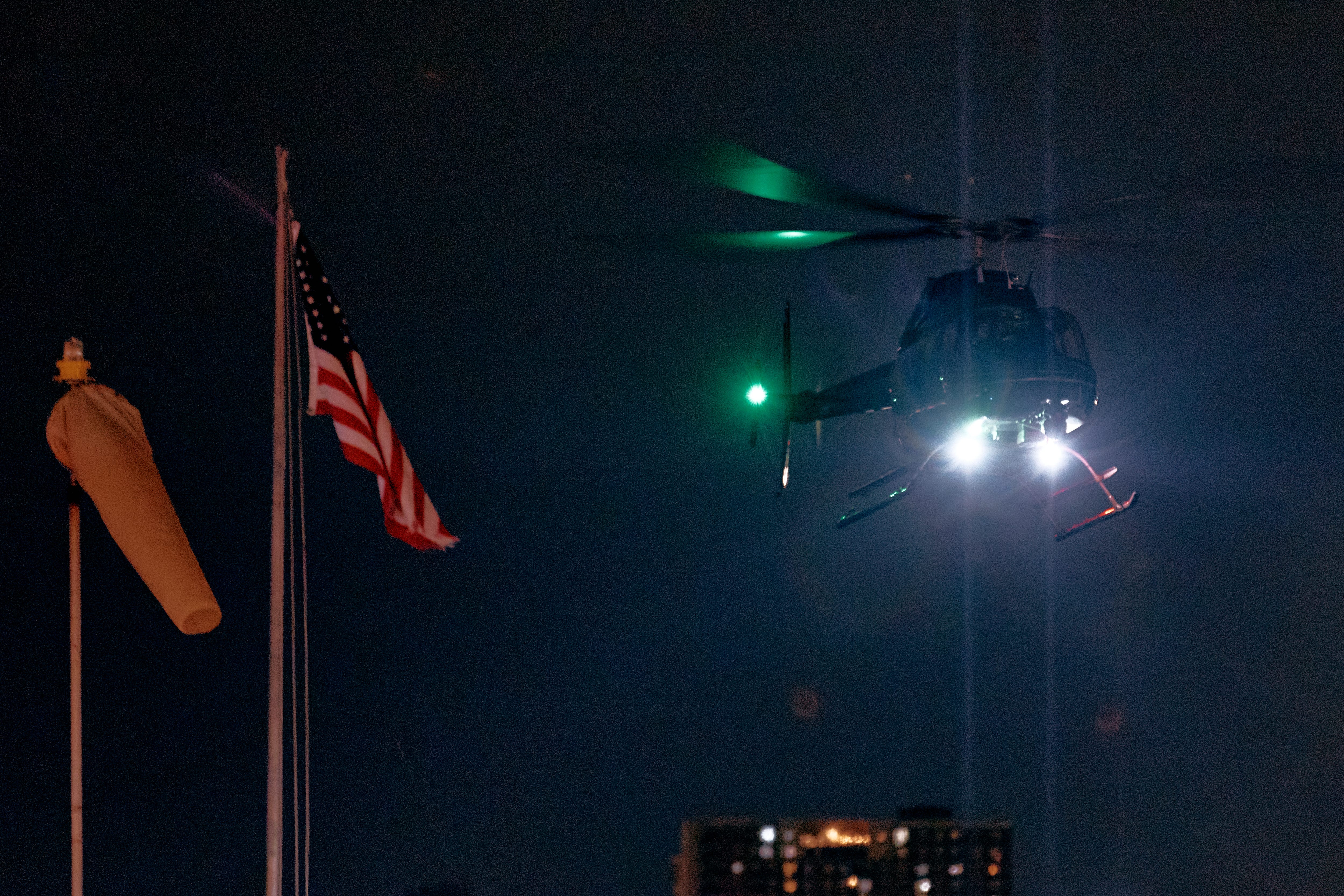
One hundred fifty airframes coordinated in the assault. It was a joint operation helmed by Navy, Marine, Air Force special operators and elite members of the DOJ, likely the DEA. A symphony of precision.
Delta Force had created a full-size replica of the Maduro residence in order to practice.
The operation was executed perfectly. Radar was silenced across the entirety of two continents. Anti-aircraft assets were useless. American air had free rein, and they used it, striking whatever targets they wanted.
On the ground, Delta entered Maduro’s palace and, like clouds of sarin gas, killed all the Cuban operatives sent to keep Maduro in power. Later, Cuba would say 32 of its people were KIA. Not a single casualty on our end.
The ghosts then rendered Maduro to what I assume would be a bird from the 160th containing highly classified technology to keep it basically silent. From there, they hopped to the USS Iwo Jima.
While the press was still imagining a giant war had just started, Trump had tied a bow on the operation altogether.
—
Imagine Xi’s chocolate cake moment and multiply it by … at least $100 billion. China must be reeling.
Trump upped his Mar-a-Lago ante by launching the raid when Chinese envoys were still in Caracas. They were sent as part of an ongoing diplomatic mission in Venezuela. They apparently had front-row seats to the most electric light show this side of Shock and Awe, but without the follow-on invasion.
China has spent upwards of $60 billion this century developing Venezuela into a foothold, mostly in oil and energy. Beijing holds an additional $20 billion of Venezuela’s debt. And that’s just what we know about publicly.
Venezuela was in many ways the crown jewel of China’s “Belt and Road” initiative, a thinly masked effort to upset American hegemonic world order.
So much for that investment, eh? Certainly whoever replaces Maduro will need to renegotiate that agreement.
Venezuela was also outfitted with Chinese radar and some suspected coastal anti-ship missiles. Lot of good those did, eh? (As they say, buy American.)
Adding to China’s diplomatic, strategic, military, and truly stupendous bank account loss: Apparently Team Trump had some inside assets informing them of Maduro’s whereabouts.
This will make Xi quite worried. China had given Venezuela much of its surveillance and suppression technology.
If Xi can’t identify turncoats in Venezuela, what does that say about the efficacy of CCP’s own surveillance efforts?
—
Though China has fared much worse, the situation for Russia and Iran isn’t much better.
Russia had given Venezuela significant air defense and radar assets as well. All basically useless against American cyber and jamming capabilities. As far as anyone can tell, not a single Russian-made fighter made it into the air. They also had military advisers on the ground with Maduro’s people. Where are they now?
For Iran’s part, it knows being a client state of either Beijing or Moscow doesn’t mean much.
—
Domestically Trump secured the biggest troll of all time.
Just as New York City inaugurated its first-ever wannabe socialist despot, the biggest socialist dictator in the world is delivered in zip ties to be tried on Mamdani’s little island of misfit toys.
The poetry is almost cosmic.
And what are national Democrats left to do? Are they going to pull a reverse “Maryland Man” and demand Trump reinstall Maduro as “president” of Venezuela?
As usual, they’re left to defend the 20% in an 80/20 debate.
—
That same NYT reporter, Pager, actually called Biden once as well. He noted in his article about Trump that the reaction was vastly different.
Biden’s staff was alarmed. They harassed Pager, then had Biden’s number changed.
—
The reshuffling of the world order and domestic politics in just a few hours’ work is truly profound. Not a single US asset was lost in the operation. There is no, as of this writing, massive ground force occupying Caracas, Venezuela’s capital.
The vice president of the country has taken control and is flailing. Secretary of State Marco Rubio basically has a gun pointed at Caracas. Correct yourself or it will get worse.
This is the riskiest bet yet of the Trump Doctrine. It’s possible Venezuela descends even further into sectarian violence. It’s also possible that a more stable, American-friendly option emerges.
If that were to occur (and I acknowledge it’s a big “if,” Dear Reader), America and its new steward would together control the majority of the world’s oil reserves. Venezuela was also previously a jewel of South America. If it prospers, it could act as an economic magnet for would-be immigrants to America.
At this point, the Trump doctrine is clear as day. Quick, aggressive, noncommittal and extremely violent actions to achieve well-defined goals. Annihilate military targets. Decapitate leadership. Correct behavior. And send a message to any “near-peer” geopolitical actors, like Beijing and Moscow. Their multi-decade, multi-billion-dollar efforts to turn Venezuela into a literal base of operations went up in smoke, literally, in a matter of hours.
The world now knows that Chinese currency and technology does not buy immunity. Ironically, you can take that to the bank.
Oh, and I hope you enjoyed that cake, President Xi.
I hear it’s the best.
That’s it for the free portion of today’s State of the Day.
The full subscriber edition continues below with expanded analysis and additional context.