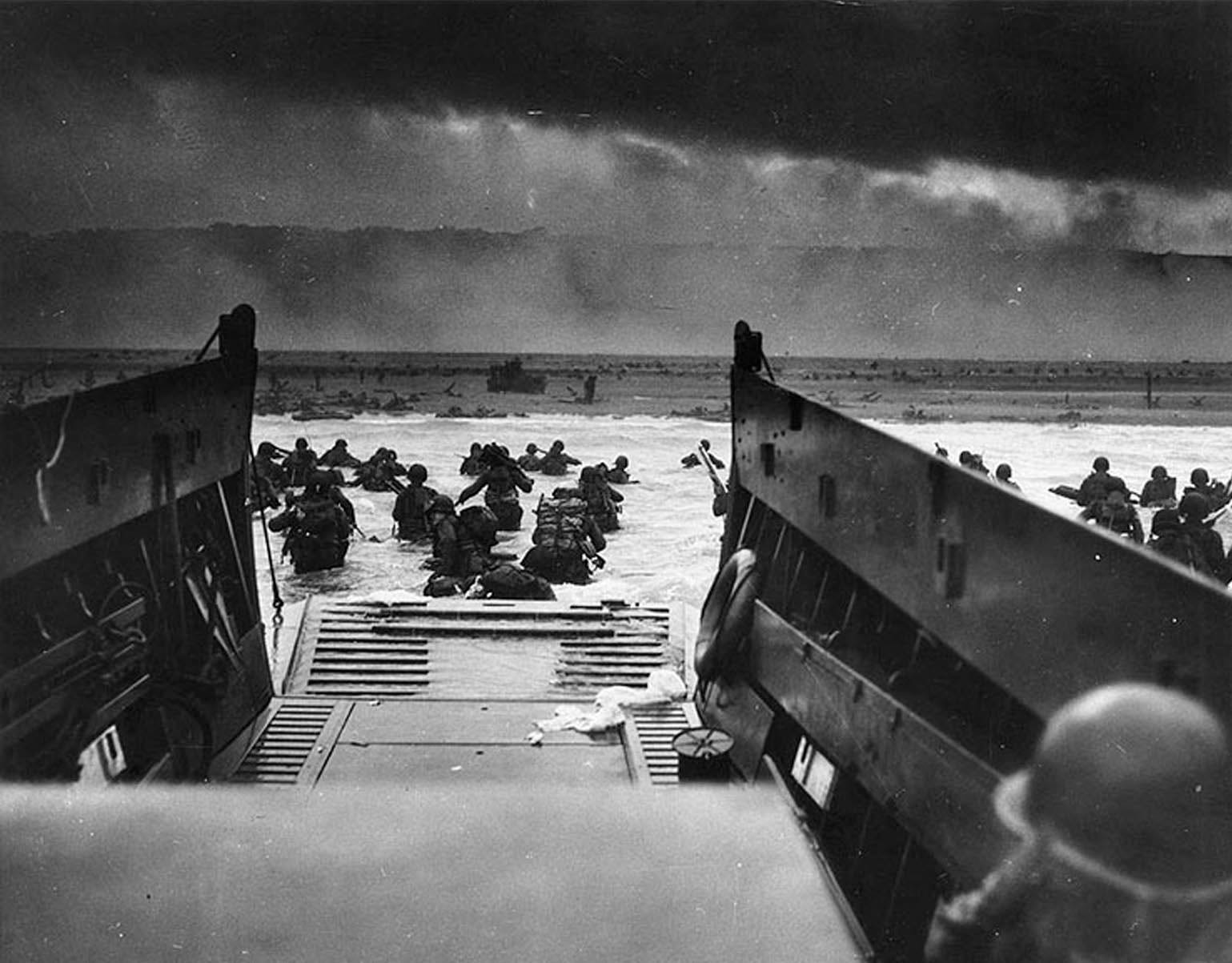
“We stand on a lonely, windswept point on the northern shore of France,” President Ronald Reagan told a group of U.S. Army Ranger veterans. “The air is soft, but 40 years ago at this moment, the air was dense with smoke and the cries of men, and the air was filled with the crack of rifle fire and the roar of cannon.”
Reagan’s 1984 “The boys of Ponte du Hoc” speech, written by Peggy Noonan and delivered in France, was one of the finest moments of his presidency – and one of the best speeches ever by a U.S. president:
These are the boys of Pointe du Hoc. These are the men who took the cliffs. These are the champions who helped free a continent. These are the heroes who helped end a war. Gentlemen, I look at you and I think of the words of Stephen Spender’s poem. You are men who in your “lives fought for life . . . and left the vivid air signed with your honor.”
The speech cast an almost religious light on that day, and indeed, there is something sacred about D-Day. In the minds of Americans, it’s an historical event that transcends and stands above today’s partisan politics. Despite patriotism plummeting for young generations, the Normandy landings still remain untouchable in the eyes of the average American. There are no doubts about its righteousness. No moral scruples. Aside from, perhaps, the occasional amateur “revisionist” historian podcaster, I have yet to encounter anyone – online or in real life – who has even attempted to compare D-Day to other follies of the U.S. empire. It stands apart. Americans may have grown cynical to the point of no return after the invasion of Iraq and the War on Terror, but there is virtually no question that the invasion of Nazi-occupied France was just.
I suspect it has, in part, something to do with the sacrifices made by Allied soldiers. Those heroes have since taken on a sort of mythical status in the American consciousness – and they certainly deserve it. Their actions that day were selfless and courageous, and they witnessed such horrific violence and overcame such hardship that it is nearly impossible to put yourself in their shoes. When you die for your beliefs, you are a martyr. When you die for the collective, such as a European society that was shackled by a hideous tyranny, you take on the status of a saint. If you consider the hell they went through, even for a moment, you feel a deep shame for ever having complained about superficial problems in your life, such as a delayed flight or a cold cup of coffee.
Here is a detailed account from S.L.A. Marshall, a World War II combat historian and veteran who was tasked by the army with collecting information throughout the war, which was published in The Atlantic in 1960. In the very first sentence, he acknowledges, “Unlike what happens to other great battles, the passing of the years and the retelling of the story have softened the horror of Omaha Beach on D Day.” The images and actions he goes on to describe are, truly, terrifying. You can hear the screams and smell the smoke.
Already the sea runs red. Even among some of the lightly wounded who jumped into shallow water the hits prove fatal. Knocked down by a bullet in the arm or weakened by fear and shock, they are unable to rise again and are drowned by the onrushing tide. Other wounded men drag themselves ashore and, on finding the sands, lie quiet from total exhaustion, only to be overtaken and killed by the water. A few move safely through the bullet swarm to the beach, then find that they cannot hold there. They return to the water to use it for body cover. Faces turned upward, so that their nostrils are out of water, they creep toward the land at the same rate as the tide.
Tragically, Americans might look back on this day with an apathetic detachment – a kind of failure of the imagination to grasp not only its significance but also its gory details illustrating the brutality of war, yet at the same time, proving man’s capacity for selflessness and bravery; that people were willing to die for the greater good, for something greater than themselves, while staring down literal hell on earth. As Marshall noted in 1960, the horrors had already been softened then. How soft and vague will they be in 2060?
It is why it is so important, every single year, for Americans to remember “The boys of Ponte du Hoc”; to remind ourselves that no matter how cynical we might feel about our country and its future, there were once Americans who acted in the service of life and freedom, and paid a horrible price so that strangers on a foreign continent could one day live in peace.
Like what you’re reading? If so, please consider subscribing to State of the Day or sharing this with a friend. You’d be supporting this newsletter and helping keep independent journalism alive.
If you are already a paid subscriber, make sure to join the conversation in our subscribers-only chat below.


