The Freak Show Is Back And More Popular Than Ever
The paper of record's legion of freaks marches on.
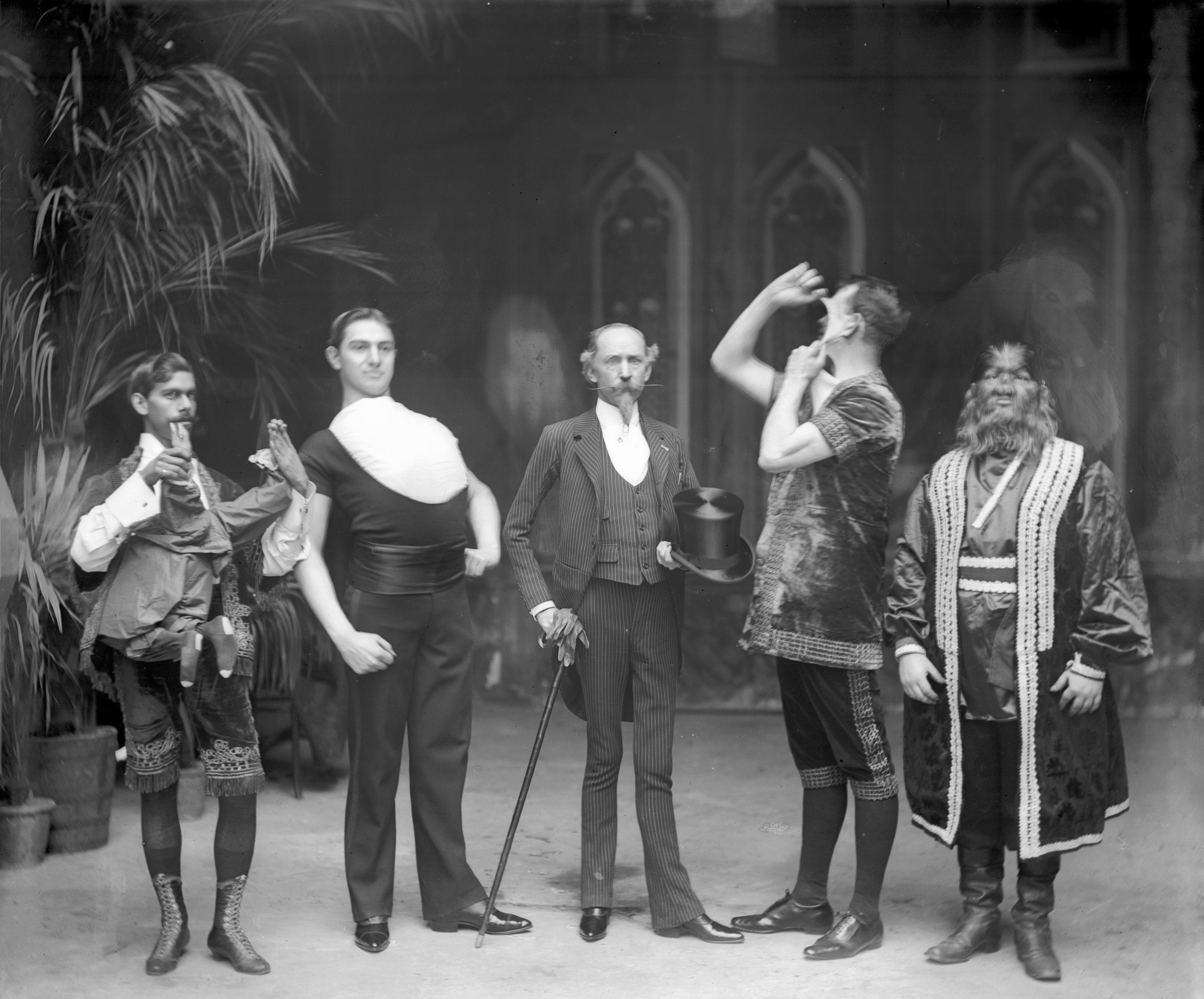
Freaks have always fascinated.
Joice Heth, an African-American woman who claimed she was the 161-year-old former nursemaid of George Washington, was billed as “unquestionably the most astonishing and interesting curiosity in the World!” on promotional posters in 1835. Heth’s recollection of the century before was spotty, but no one could dispute her blindness, paralysis, and abnormally long fingernails. Rumors (perhaps ignited by Heth’s employer, P.T. Barnum) soon spread that she was a robot made in the image of a human being.
Annie Jones, another Barnum creation, gained notoriety for her robust beard. Conjoined twins Daisy and Violet Hilton began as tap dancers, later trying vaudeville and performing at burlesque venues. Staples of the freak show included giants and dwarves, the emaciated and the obese.
Modern moral standards forbid Americans from gawking at the deformed and exotic. The New York Times (NYT) has found a clever workaround to this prohibition. Forget the genetic oddities. Gather, instead, the psychological oddities and screw-ups and never make mention of their freakishness. Let the audience draw their own conclusions.
I speak, of course, of the NYT’s “Modern Love” column, podcast, and television show.
“Modern Love” rarely consists of a young man and a young woman hitting it off, getting hitched, and having a few children, though I suspect such a sequence of events still happens with some regularity.
“Modern Love” petitions their readers for submissions.
“We seek true stories on finding love, losing love and trying to keep love alive. We welcome essays that explore subjects such as adoption, polyamory, technology, race and friendship — anything that could reasonably fit under the heading ‘Modern Love.’”
“Love may be universal, but individual experiences can differ immensely and be informed by factors including race, socio-economic status, gender, disability status, nationality, sexuality, age, religion and culture. We especially encourage Black and Indigenous people and other people of color to submit, as well as writers outside of the United States and those who identify as members of L.G.B.T.Q communities.”
The NYT leaves another criterion unspoken: The weirder, the better.
There is a propaganda effort at work here, yes. Modernity means overseas adoption, being poor, missing a limb, having three boyfriends and half a girlfriend, black people and Eskimos. There is no place in modernity for a healthy, upwardly mobile, monogamous white couple.
(An aside: Cathi Hanauer and Daniel Jones, the couple that founded “Modern Love,” are now de-facto divorced. Hanauer penned a brutally selfish essay, titled, “The Case for Ending a Long, Mostly Good Marriage,” for the NYT in November 2025.)
“Modern Love” is only half propaganda. It is also half freak show.
Consider Lindy West, the obese middle-aged white woman who dominated X discourse last week. West went on the “Modern Love” podcast to discuss her reluctant entrance into a non-monogamous marriage.
“So my initial reaction was, I was devastated. Our initial conversation was a lot of me crying and being like, I don’t want anyone else,” West says.
Eventually, West meets her husband’s new girlfriend. West claims the three are now a “romantic triad.”
How did listeners react to West’s story? Let’s look at the YouTube comments section which, miraculously, is still open.
“So far, every ‘Modern Love’ episode I’ve listen[ed to] has left me feeling upset and unsettled in some way.”
“I watch things like this as a reminder I will never be that desperate.”
“I want to be supportive of other women and their choices but in this case, it just doesn’t feel right.”
“There is literally no one listening to this that didn’t click the video specifically to gawk/laugh at Lindy’s self inflicted horror.”
I suspect that the instinct to gawk/laugh drives much of the section’s success.
For example, “How ‘Heated Rivalry’ Thawed Our Chill,” a “Modern Love” story about a gay guy showing his 89-year-old dad a smutty gay hockey soap opera.
Or Helena de Groot, who recently went on the “Modern Love” podcast. De Groot details her laborious, eight-year-long uncertainty over becoming a mother. Her husband eventually gets her pregnant, and after some consideration, she aborts their child. Then she permanently sterilizes herself.
Or, “Were We the ‘Fat Couple’?” a “Modern Love” podcast episode which explores the neuroses of a fat woman dating a fat guy. I encourage you to look at the illustration for this one. I laughed.
Or, from “Tiny Love Stories”: “At 35, I Lost My Virginity.”
Is such content substantially different from that which airs on The Learning Channel? “Modern Love” is only the educated man’s “My Strange Addiction.”
“Modern Love” is designed to titillate, to horrify, to intrigue. Some readers probably come to the column to test their own tolerance for the strange: “Wow, I wasn’t aware of the racial dynamics within asexual Oregon polycules, but what a beautiful example of our nation’s diversity.”
I have to commend the NYT for their shrewd business instincts. They’ve figured out a means of satisfying the voyeuristic instinct, cloaked in the pretext of “empathy” and “listening” and “learning.” The humiliation is voluntary, to be sure, but I doubt the capacity of mind of some of those on display.
Like what you’re reading? If so, please consider subscribing to State of the Day or sharing this with a friend. You’d be supporting this newsletter and helping keep independent journalism alive.
If you are already a paid subscriber, make sure to join the conversation in our subscribers-only chat below.


