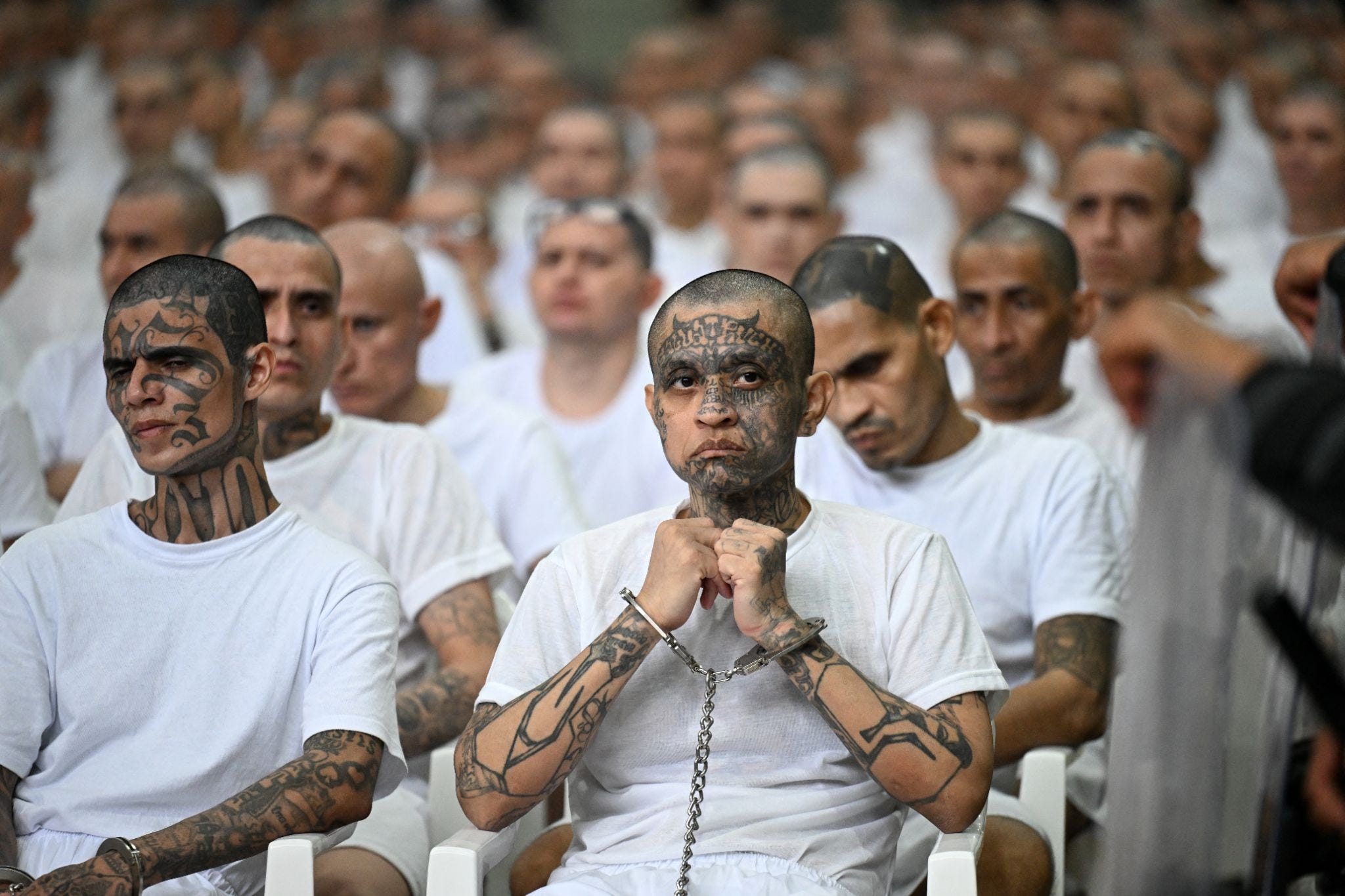
In a new documentary, “Inside CECOT,” the Daily Caller explores the rise of El Salvador’s President Nayib Bukele, chronicles the history of the country’s notorious prison, and highlights the pivotal contribution it made to liberating the Latin American nation from decades of relentless gang violence. The Caller is one of the few Western film crews to ever step inside CECOT, and they made good use of that privilege in a documentary that runs around 70 minutes.
First and foremost, the filmmakers do an excellent job of concisely laying out the broader historical context that led to Bukele’s mega prison, weaving in archival footage and old news reels to give viewers a better sense of what the country was like for decades. This is a crucial part, roughly the first third of the documentary, without which we cannot fully understand why someone like Bukele could sweep into office and maintain such a high approval rating. El Salvador really was stuck in a terrible place, torn apart by violence and gangs, and any solution to this problem seemed all but impossible for years. It’s also the sort of information and context corporate media outlets might omit from their coverage of Bukele and CECOT as they opt for thinner narratives that ignore the past but confirm their progressive worldviews and bias.
In the next segment of the film, the Daily Caller’s Derek VanBuskirk tours CECOT, giving us a glimpse at some of the prison’s procedures that aren’t as well known to the public, such as the routine health check-ups and the measures taken to prepare for possible violence and riots among inmates. We get to visit the prison’s armory, which is jam-packed with shotguns and rifles similar to M-16s. Prison guards also pose in full riot gear. VanBuskirk wryly says he hopes the prisoners are on their best behavior during their tour and that none of the safety measures are needed because, indeed, you would not want to be stuck there amid a violent riot – that is truly the stuff of nightmares.
VanBuskirk also serves as the narrator for his own trip to the prison. He has a knack for it, and he peppers in his observations without letting them bog down the pace of the story. At one point in the doc, VanBuskirk observes just how quiet the prisoners were as he toured the facility. It was a stunning detail — the kind that cannot be captured in a news report written from a desk in an office building a thousand miles away — and not at all what I would have expected. He also gets up close and personal with several inmates whose bodies are covered with gang tattoos — more details, again, that cannot be properly captured by a print news story. These incredibly violent and dangerous men, who only really exist in our imaginations as bogeymen, suddenly become more real, more human, and therefore more frightening, as they show off their ink.
But, in my opinion, the best part of the film was not the actual tour of the prison (though that was certainly eye-opening, informative, and, frankly, bone-chilling) but the interviews with local Salvadorans who have greatly benefitted from Bukele’s crackdown on criminals and gang violence. The scope of the documentary widens toward the end to encompass the beautiful scenery and the local merchants, farmers, fishermen, and everyday citizens who are now free to live more peacefully without the threat of gangs. In lesser hands, the documentary would have focused too much on the conditions of the prison and inmates while ignoring the outside world. This was not the case here, and as someone who really enjoys learning about and observing the more mundane aspects of people’s lives that are radically different from mine, I came away with a better understanding and appreciation of Salvadorans.
It has really been a while since I watched a documentary. There is so much content sloshing around on today’s internet and social media, and sometimes it’s overwhelming to the point where you cannot even decide what to watch, read, or listen to. In my free time, I try my best to avoid screens in favor of books. I also try to avoid topics surrounding the present day, because I spend so much time immersed in the ever-churning daily news cycle during work hours. But this film was well worth the 70-minute running time. It brings viewers on a fascinating and informative journey through CECOT, but more importantly, I think it will spark renewed interest in Latin America, its history, its politics, and its people.
The Trump administration is making big moves in Central and South America (look no further than Venezuela), quietly waging a war against drug cartels, and forming strong and important relationships with countries such as Argentina and Ecuador. For better or worse, these places will all play critical roles in the future of the American Empire, even though they do not draw as much attention as they perhaps should. The Daily Caller’s new documentary helps to fill this void, and does so with great skill.
Like what you’re reading? If so, please consider subscribing to State of the Day or sharing this with a friend. You’d be supporting this newsletter and helping keep independent journalism alive.
If you are already a paid subscriber, make sure to join the conversation in our subscribers-only chat below.


Excellent Review
