


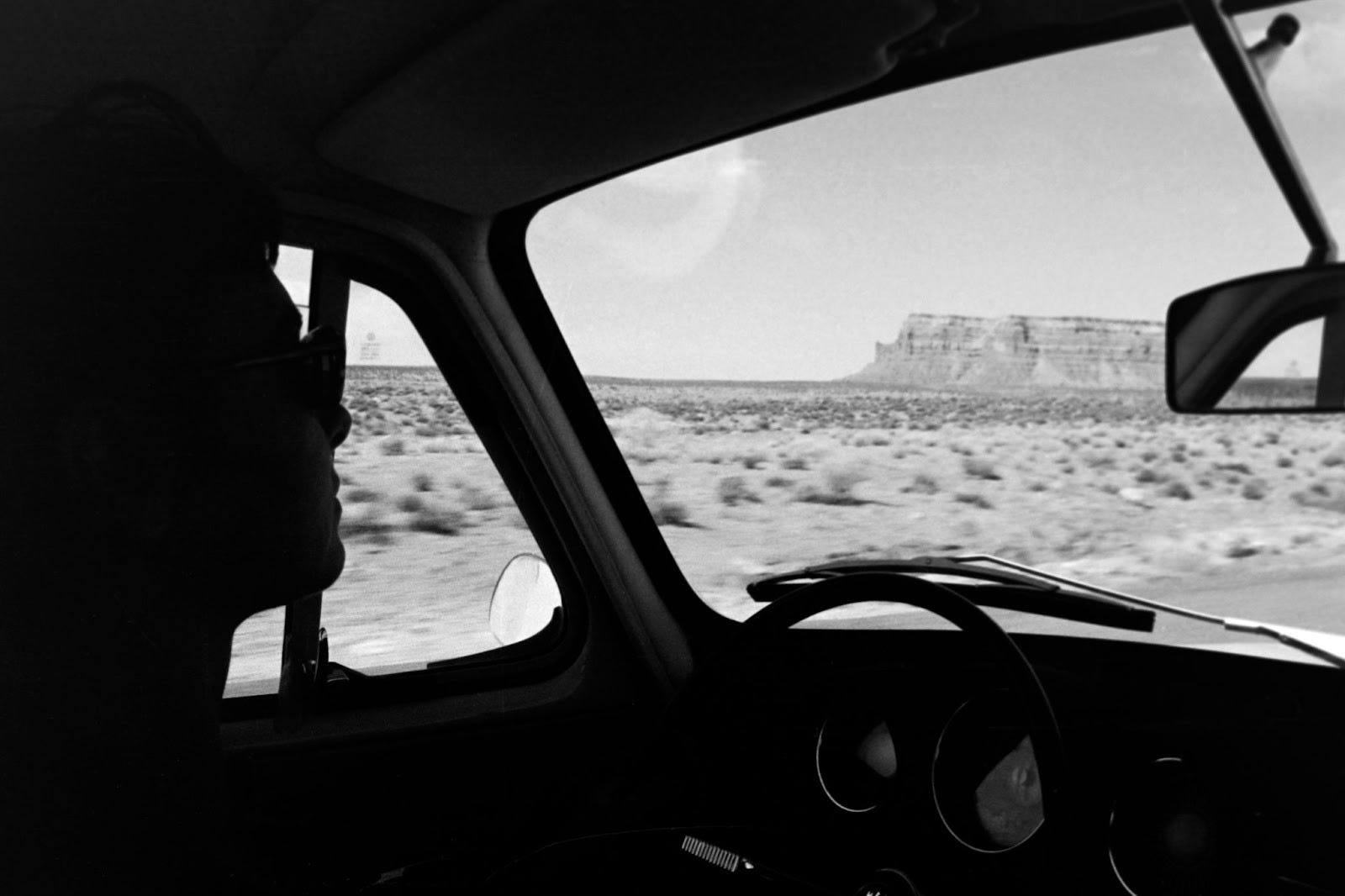
Road trips are an American pastime. In our culture, the car and the open road are not just symbols of freedom and adventure; they deliver both of these things, in spades, in real life. To take a cross-country road trip is almost a rite of passage, necessary if you ever want to truly appreciate not only our country’s size and geographic diversity but also its weird, amazing inhabitants.
Pete, my lifelong friend, and I embarked on a Great American Road trip from Connecticut to California in June of 2019. Our plan was tenuous, hashed out in my dining room a day or two before we left, using an old school road map. Seven stops, seven nights – a sprint through what has sadly become known as “flyover” country: all the rural counties in the middle of the country considered unequal to coastal metros. Anyone who lives in or has visited “flyover country” knows that these lands are among the most beautiful, intriguing, and wistful in America, that the people there are among the most kind, generous, and weird – in the best possible way – that this country has to offer. You miss a whole lot when you fly over.
Seven stops, seven nights, a National Park summer pass, and no time for real tourism, but time enough to see parts of the country we hadn’t seen before. Our plan was slapped together with some thought – we had a few stops firmly locked in – but not too much. We wanted some leeway for all the weird experiences and weird interactions that turn trips from Point A to Point B into adventures. Our mantra, however, was unwavering. In the words of Hunter S. Thompson, “When the going gets weird, the weird turn pro.”
Our trusted steed was a 2014 Honda Accord Sport, my old whip, also perhaps the worst vehicle to take across the entire country. I named him “Cormac,” after the titan of American literature, Cormac McCarthy. He was a faithful servant, a low-key missile, born from the reliability and typical practicality of the Japanese. But as a technical “Sport” vehicle (and he would be much better suited to ferrying Florida retirees to and from a Publix), his suspension was quite low, and his tires were annoyingly thin. The Japanese might not have nailed the practical aspect of this design, though they usually do with other models. A deep pothole was his Achilles heel. Gunning it down a poorly-maintained urban byway, Cormac had a 50% chance of blowing his back right tire.
Spoilers: he made it without any mechanical or engine snags or a blown-out tire, even as we took him through some rough terrain at points, including the rocky dirt roads in Badlands National Park of South Dakota. He held up, which, looking back now, still surprises me.
No, we did not encounter car problems. Rather, we encountered bison and hungry bears, beasts of America, clueless Chinese tourists and angry environmentalists, a clogged toilet and a breakup text, Las Vegas hustlers and blackjack dealers. Weirdos and misfits and Christian families of seven – all blonde boys with crew cuts. Grandmas doing near 100 on empty stretches of South Dakota highway. A journey into the beautiful and sometimes savage American heartland, with its rugged terrain and colorful cast of characters.
Chicago
We set off from suburban Connecticut to Chicago, where Pete’s brother lived – a nearly 900-mile, 14-hour journey that sliced through the middle of Pennsylvania, Northern Ohio, and Northern Indiana. If you want to start a road trip right, you grow some hair on your chest, slug some Folger’s black gold, and stop only to empty your biological tank and fill up the one in your car.
Gary, Indiana, the old steel town, was the most memorable part of this first leg. When you pass Gary via Interstate 90, you will see the vast, rusted skeletons of shuttered steel factories on either side of the road. Industry is still chugging along in Gary, but the city was once a steel-making powerhouse. No longer. Seeing all these abandoned factories was eerie, even dystopian. They were graveyards of globalization. I had seen the remnants of an old industrial age before, in parts of the Northeast, the Hudson Valley, and Connecticut, which was once considered the Silicon Valley of its day. Factories that were likely abandoned even before NAFTA. But the death of a mid-20th-century city—which, like Detroit, was once bustling, solid, civic, and middle-class—hit me harder. The slow declines of places such as Gary, Indiana, aren’t captured by the economic statistics that goofy pundits cite on cable news.

As for Chicago, I cannot speak to it much. We didn’t get shot or carjacked – that was the positive. We only walked through a neighborhood later at night to grab food and a beer, and early in the morning for coffee and a bagel. Another day would have been necessary to get a feel for it, but we had places to drive through, strangers to meet, and bears to fend off in flyover country.