


Being a White House correspondent is funny. One day you’re writing about Trump’s strategy for the 2026 midterms, and the next day you’re thrown into covering a war. Whatever the topic, you have to be ready to dig through your rolodex of sources to dig up information and deliver the story.
I woke up Saturday morning to dozens of notifications. Trump had struck Iran.
The first moments of a major breaking story are chaos. As a reporter, I started texting everyone I knew who was relevant to the strikes. That’s White House, State Department, War Department officials etc. The goal is to just get something. Any new piece of information that can help inform people about what’s going on.
Sometimes when a big story is breaking, nuggets of new information are plentiful. When we launch strikes on another country, not so much.
After some poking around, I was able to connect with some sources who told me how Secretary of State Marco Rubio prepared Congress for the strikes on Iran.
You can read that here: How Rubio Prepared Congress For US Campaign Against Iran
But there was still a lot of unknown information. About 12 hours after the strikes began, a White House official alerted me that in 20 minutes some senior administration officials were going to get on the phone with a handful of reporters and fill them in on those missing details.
These are “background calls,” and they serve to fill the press in on big news topics from the perspective of the administration. They often feature senior officials, but are put “on background” — meaning the sources on the calls are not to be named, instead referred to as “senior Trump administration officials.”
My parents were in town last weekend, so it was a less than ideal time for Trump to strike Iran and send me to work on a Saturday. So as we strolled through the Museum of the Bible, I popped my headphones in, got on the call and scrambled to write notes about what the officials were communicating about the war.
What the officials told us is that they had no choice but to strike Iran. They believed the country was going to strike U.S. troops. The officials also added that Iran was negotiating in bad faith.
That story is here: ‘No Choice’ — US Officials Say Iran Forced Their Hand After Rebuilding Nuclear Program
On Sunday, as I was just about to head to bed, a War Department official called. Secretary Hegseth would be holding a press briefing at 8AM the next morning and they wanted to know if I could attend.
In a few minutes, I shuffled around some of my morning meetings and RSVP’d for the presser. I texted my editors and we started drafting questions.
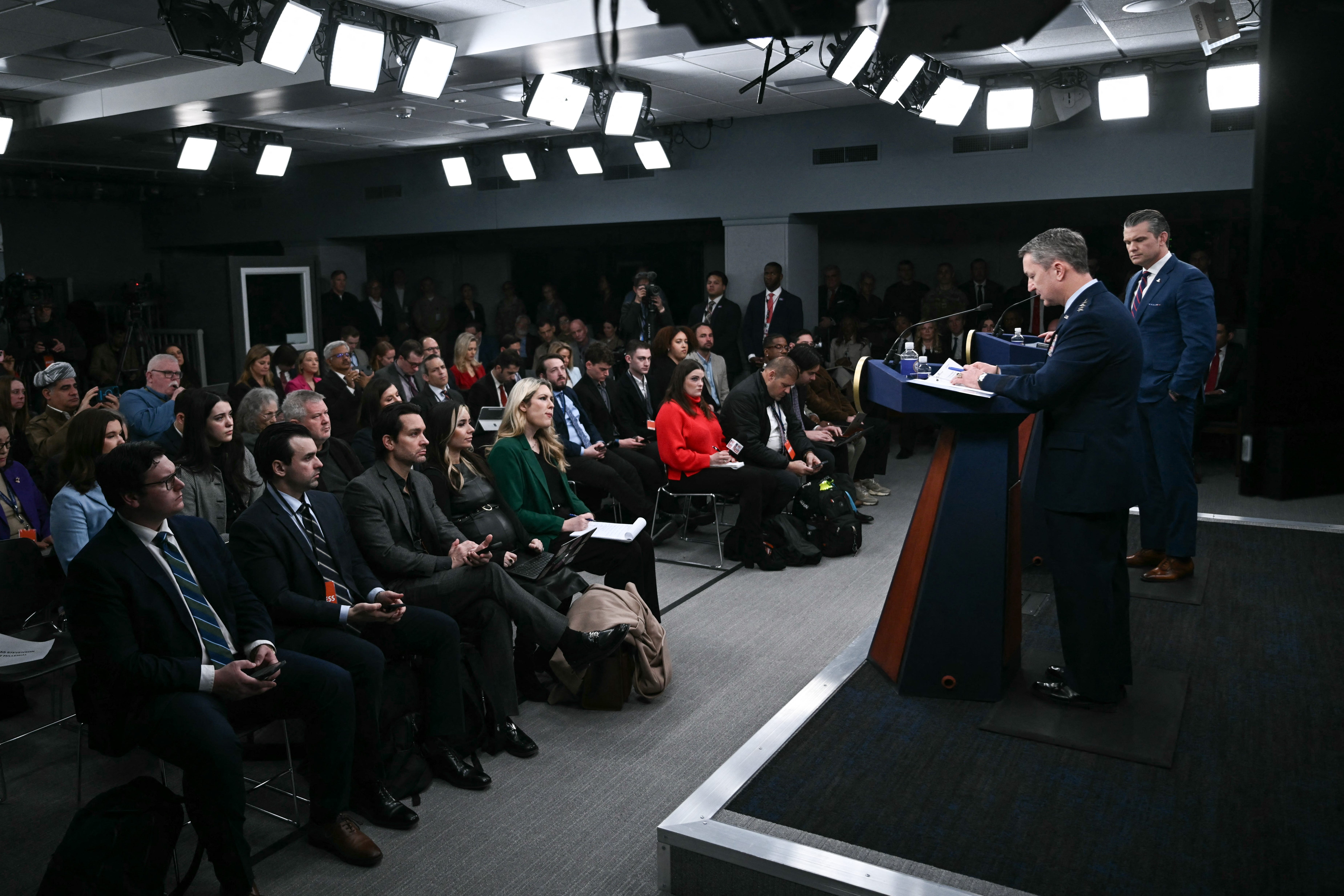
I was the second question at Secretary Hegseth’s presser on Monday. The president had released a video the night before saying the U.S. would leave Iran when its objectives were achieved. I asked Hegseth exactly what those objectives were.