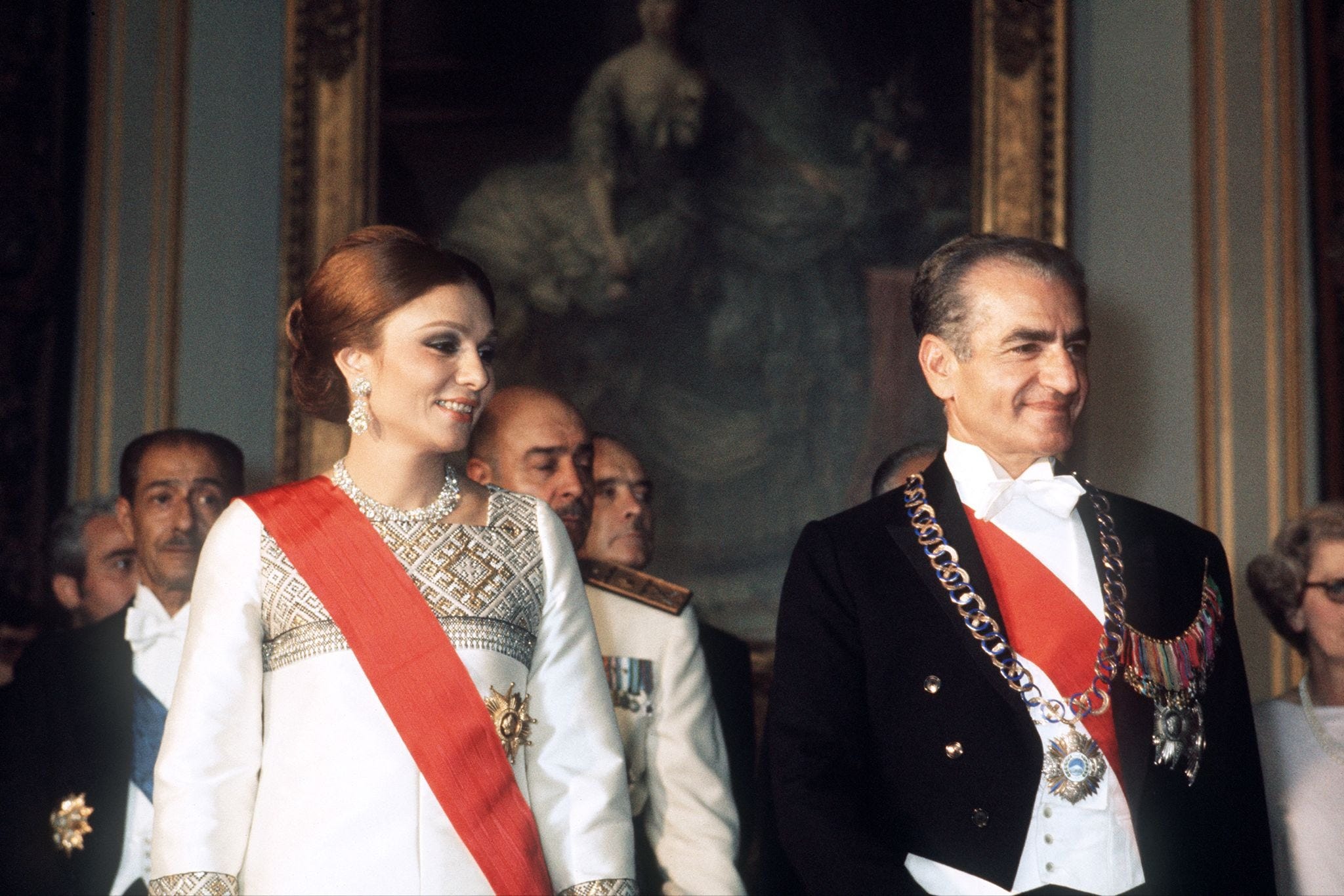
The year is 1980 …
And the last shah of Iran, the “king of kings,” is on his deathbed, repeating the same phrase over and over – “Iran is Iran” – before slipping into a coma and passing away at 9:15 a.m. July 27. He was 60 years old.
After the Iranian Revolution of 1979, Mohammad Reza Pahlavi was sent into exile, bouncing from country to country in what he hoped would be temporary stays. He first flew to Aswan, Egypt, where President Anwar El-Sadat warmly received him. He later stayed in Morocco, a guest of King Hassan II, before briefly settling in a private house in the Bahamas. He then moved on to Cuernavaca, Mexico, where Mexican President José López Portillo hosted him. There, he received a visit from former U.S. President Richard Nixon.
At this point, the Shah was in very poor health. An American doctor who examined the Shah in Mexico later said his appearance had grown “stunningly worse”, that he was “jaundiced”, “emaciated”, and “suffering from hard tumor nodes in the neck and a swollen spleen.” The Shah was offered treatment in Switzerland, but insisted on coming to America instead. After behind-the-scenes politicking and deliberation among government officials — they feared the new Iranian regime would retaliate if the Shah was allowed to enter the U.S. — President Jimmy Carter reluctantly granted permission for the Shah to receive surgical treatment at the Weill Cornell Medical Center in New York City.
According to a 2018 documentary, “A Dying King: The Shah of Iran,” the Shah was a victim of medical malpractice, which included a series of misdiagnoses, botched surgeries, and the complications stemming from an abscess and later an infection.
“The whole thing is a book of malpractice,” Dr. Jorge Cervantes, a surgeon and former medical advisor to the U.S. Embassy in Mexico, said in the documentary.
Another doctor, Oncologist Morton Coleman, treated the Shah in New York. But he said there were “too many cooks boiling the broth and there were huge political ramifications,” referring to the countless government officials, diplomats, and doctors jockeying for influence over the Shah in his final year of life.
Even the Shah’s wife, Empress Farah, described his constant travels and medical interventions amid exile as a “chain of disasters.”
The Shah would succumb to an infection after a splenectomy operation. Shockingly, he did not receive any intravenous antibiotics after the surgery. A French surgeon was called in to do it, but by the time he arrived, it was too late: the Shah had entered a coma.
Like what you’re reading? If so, please consider subscribing to State of the Day or sharing this with a friend. You’d be supporting this newsletter and helping keep independent journalism alive.
If you are already a paid subscriber, make sure to join the conversation in our subscribers-only chat below.


