


Hey y’all, welcome back.
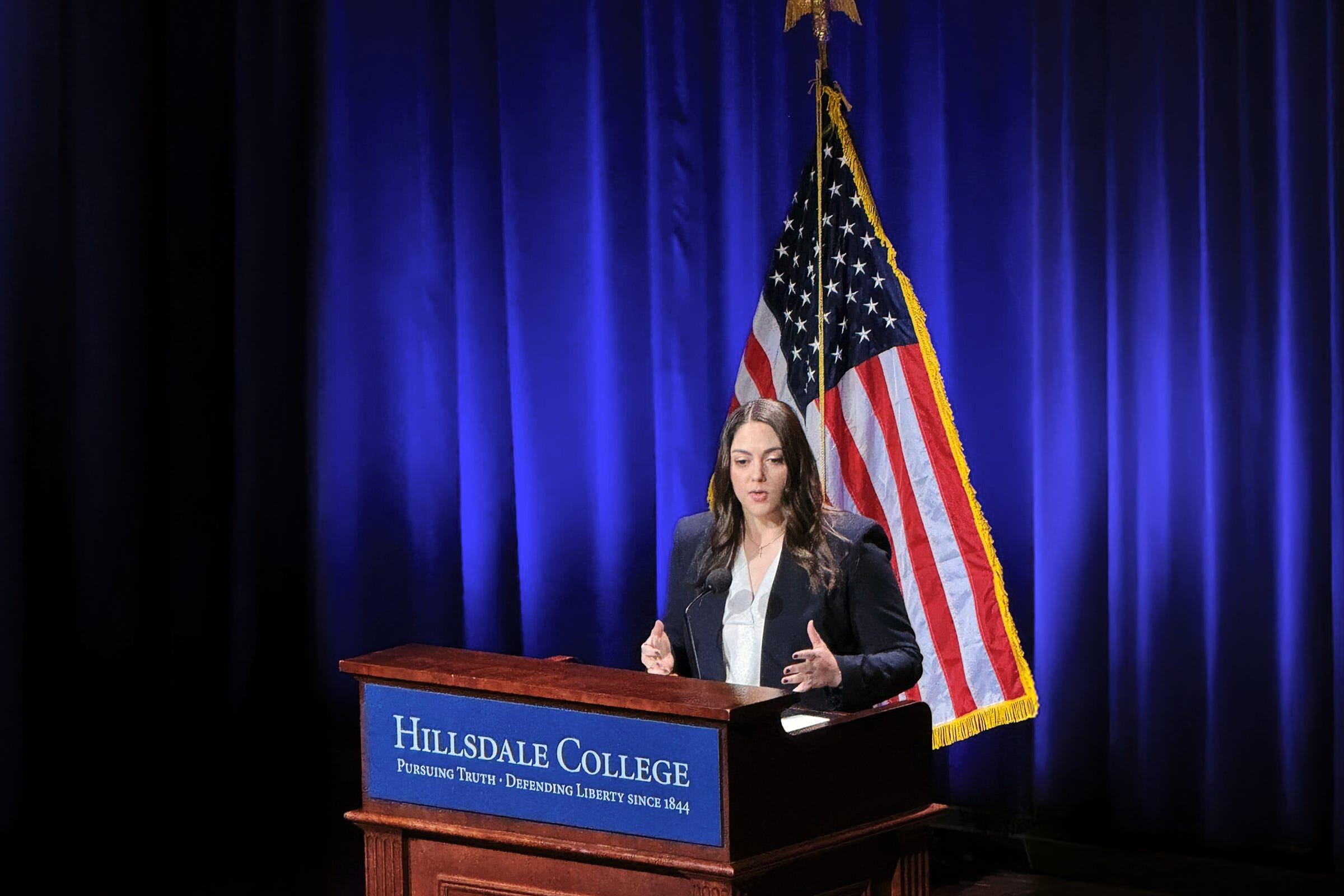
On Tuesday of this week, I had the privilege to speak at Hillsdale College’s Center for Constructive Alternatives (CCA). The CCA hosts approximately four seminars a year on different topics; undergraduate students are required to take one seminar to graduate.
This seminar was on “Journalism and American Democracy.”
I am sharing my 30-minute prepared remarks on “The Rise of New Media,” which were delivered on the final night of the seminar. Enjoy.
THE RISE OF NEW MEDIA
I want to start tonight by taking you back to 2016.
No, not the 2016 election or really anything to do with Donald Trump. I was here for Mark’s speech last night, and I can assure you he has far better Trump stories than I do (although the president did once call me the next Barbara Walters — still not sure if that was a compliment or not).
Instead, I am going to start by telling you a story about my senior year at Georgetown University.
During the spring semester, a student-run organization invited Cecile Richards, then the president of Planned Parenthood, to speak on campus.
This was a massive scandal for the oldest Catholic university in the country. There were endless debates as to whether the university’s stated commitment to free speech necessitated giving a platform to one of the most prominent pro-choice activists in the world — or if contravention of the Church’s official stance on abortion required them to reject Richards’ appearance.
Georgetown proceeded with the Cecile Richards event — even promoted it via official email channels — and Catholics around the country were eager to see what was said and how the campus responded.
But the event was closed to the traditional press. No cameras from accredited news outlets. No outside reporters in the back taking notes. No university-sanctioned livestream. If you weren’t a member of the campus community, you were reliant on a half-baked recap from the hopelessly liberal student newspaper.
But I was there. And I had my phone.
So I did what students do without thinking twice: I opened Twitter and started live-tweeting. I posted quotes. I described what was happening. I added context and color where I could. And within minutes, people who weren’t in the room — alumni, Catholic groups, national pro-life organizations, and media outlets — were following along in real time.
If I hadn’t been there, there would be no record of the event’s organizer declaring that God is “pro-choice,” that pro-life activists outside the event were threatened with removal, or that Georgetown’s official pro-life group was allowed just one question from their entire membership.
It wasn’t until years later, when I became a “real journalist,” that it hit me that what I had done was journalism. I didn’t have a press pass. An editor hadn’t assigned me the story. I wasn’t getting paid by the Washington Post. I didn’t have any training. And yet I was using a platform to provide real-time information to an audience that otherwise couldn’t access it.
Without realizing it, I stepped into a role that used to be reserved for big corporations. Before the world of broad internet access, smartphones and social media, you needed a printing press, a broadcast license, or a radio tower to deliver information to the masses.
The average citizen was entirely reliant on a handful of wealthy, elite, and very liberal institutions to understand what was happening in the country and in the world. That system has been totally disrupted by the “rise of new media.”
