


By Daniel DePetris, a fellow at Defense Priorities and a syndicated foreign affairs columnist for the Chicago Tribune.
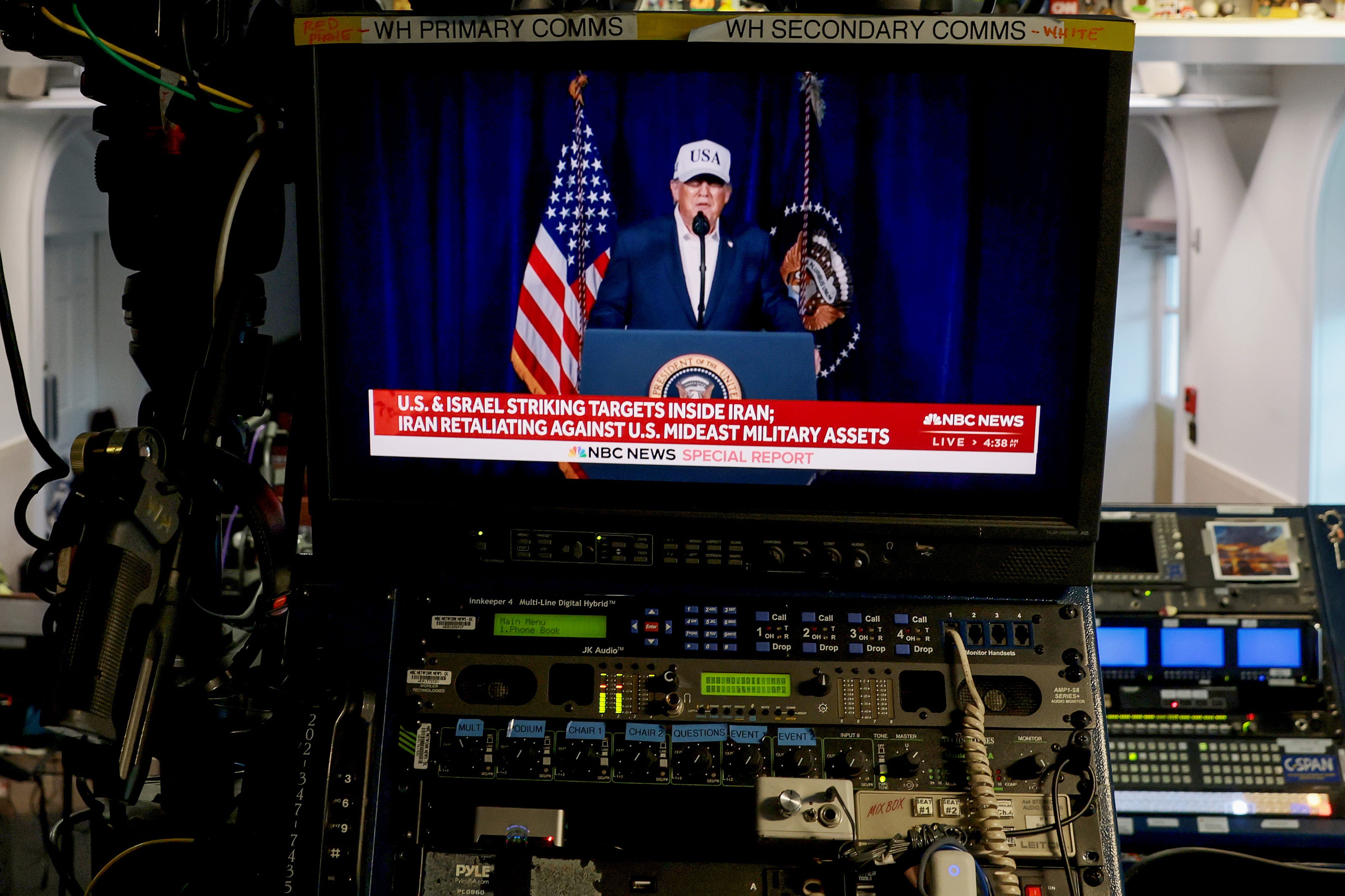
If anybody thought President Trump was going to mimic his military operation last June by retargeting Iran’s major nuclear facilities and then declaring victory, they were quickly mistaken.
The ongoing U.S. air campaign against Iran is far bigger and more comprehensive than Trump’s first bite at the apple eight months earlier. Partnering with Israel, a variety of targets have been set in the initial hours: Iran’s military chain-of-command and political leadership; ballistic missile facilities; the Islamic Revolutionary Guard Corps-Navy; and Iranian government facilities like the parliament, the president’s office and the feared Ministry of Intelligence. Even Iranian Supreme Leader Ayatollah Ali Khamenei’s compound wasn’t spared.
What’s the U.S. objective in all of this? According to Trump, i’’s none other than to gut Iran’s military power, weaken its government and create the circumstances in which the Iranian people can take back their country.
“Now is the time to seize control of your destiny and to unleash the prosperous and glorious future that is close within your reach,” Trump told the Iranian people an hour after the first U.S. bombs dropped. “This is the moment for action.”
Yet it would have been nice if Trump made a persuasive case, or any case at all, before hostilities commenced.
Why, at this particular moment, did Trump feel the urgency to wage yet another war in the Middle East? What threat did Iran really pose to U.S. security interests in the region or to the American people? And why does he believe military force was a better option than continuing the diplomatic talks his officials re-started with Tehran in early February?
The Trump administration’s arguments to date have leaned on hyperbole and threat-inflation.
Nobody is disputing that Iran is a security threat to countries in the region, many of whom have firsthand experience with Tehran’s asymmetric capability. Israel, for instance, has long been concerned about Iran’s stockpile of medium-range ballistic missiles, all of which can cause damage to civilian population centers and indeed did cause such damage last June, when nearly 30 Israelis were killed during the so-called “12-Day War.” The Saudis, too, have been targeted by the Iranians before — in September 2019, Iranian cruise missiles struck the kingdom’s main oil facilities and shut down about half of daily crude production for several days.
But we shouldn’t overstate Iran’s capabilities either.
Its conventional military might as well be in a museum, with some aircraft dating back to the era of the former Shah. Iranian ground forces haven’t fought a war in nearly 40 years. Its navy depends on small attack boats and, while they could cause trouble for civilian tankers transiting the narrow Strait of Hormuz, Iran’s ability to close the strategic waterway for any length of time is doubtful. And even if the IRGC-Navy could pull it off for a few weeks, they would expose themselves to U.S. and Israeli air power in the process.
Iran’s missiles are formidable and can reach U.S. bases in the Middle East as we’re presently seeing, but it’s important to note that those missiles wouldn’t be flying into U.S. military facilities if Trump didn’t set the precedent. As far as the potential resurgence of an Iranian intercontinental ballistic missile that could strike the United States, Tehran is nowhere near that capability and it would take years of research to get there, including miniaturizing a nuclear warhead the Iranians don’t have and developing a vehicle that could allow a missile to re-enter the Earth’s atmosphere.
Ask the Trump administration why they gave up on diplomacy and you’ll receive a generic answer: the Iranians weren’t serious in reaching a deal. But what kind of deal was the administration looking for? How credible is this argument when the Omanis, who mediated the negotiations between the United States and Iran, claimed on American television that Tehran was willing to not only dilute all of the highly-enriched uranium it currently possesses, agree (again) to a strict international inspection regime over its entire nuclear program and apparently sign up to a deal that would forbid any accumulation of Iranian enriched uranium?
It seems the issue wasn’t Iran’s propensity to come to terms but rather Trump’s unwillingness to agree to anything that wasn’t akin to Iranian surrender.
Trump’s diplomacy with Iran wasn’t serious. Diplomacy requires actually negotiating with the other side and being open to settling for terms that give the other party the ability to walk away reasonably pleased with the outcome — or at least more pleased than they would be if an agreement wasn’t possible.
An agreement was possible here but Trump couldn’t comprehend not getting everything on his checklist. Now, as this unconstitutional war drones on and the Iranians continue to use the full spectrum of their power to resist a U.S. regime change campaign, the prospects of real diplomacy are pushed even further into the distance.
Like what you’re reading? If so, please consider subscribing to State of the Day or sharing this with a friend. You’d be supporting this newsletter and helping keep independent journalism alive.
If you are already a paid subscriber, make sure to join the conversation in our subscribers-only chat below.

Iran has been, at best, a huge pain in the ass for 47 years. Is this operation going to have downside consequences? Probably, and they could be severe. Nonetheless, I have lived through these 47 years and am somehow gratified today.