


Joseph de Maistre, an exiled Frenchman and counter-Enlightenment reactionary, often considered a godfather of conservatism, viciously mocked the radical intellectuals who fueled the French Revolution – and its subsequent regime of terror – and believed that the revolution’s ideals could be exported across Europe and the globe.
“They show the profound imbecility (it is certainly permissible to speak like Plato, who never loses his temper), I say, of those poor men who imagine that lawgivers are men, that laws are a piece of paper, and that nations may be constituted with ink,” he wrote his “Essay on the Generative Principle of Political Constitutions,” published in 1810.
Maistre argued that it is impossible, foolish, and dangerous to take abstract ideas, use them to form a “constitution” for a new type of government, and then force that government upon an unwitting population that may not be culturally suited to adapt. Liberal democracies or republics cannot spring forth overnight by mere “ink,” he argues; they are slowly built up over time, through historical traditions, customs, rituals, and the everyday behaviors of citizens.
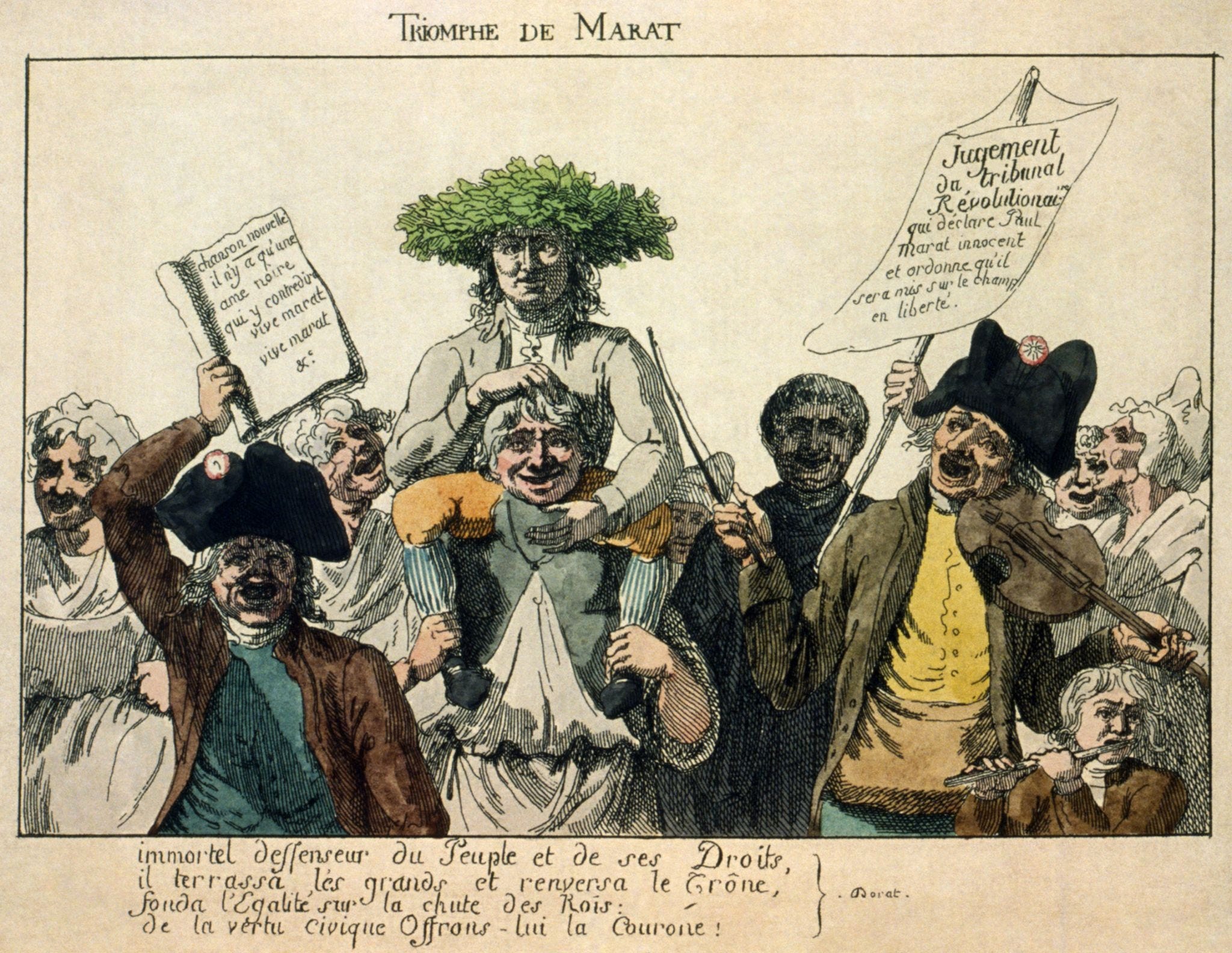
He was attacking the Jacobins of the late 18th century. The Jacobins were a radical and influential political club that overthrew the French monarchy in the French Revolution, attempted to remake the nation in a new, secular image, and executed thousands for “political crimes” because they opposed the bloodshed and terror, the Jacobins’ revolutionary “ideals,” or else were loyal to the monarchy, the Catholic Church, and the Ancien régime. They were divided between two factions: the more moderate Girondins, who believed the French should fight wars with other European monarchies to spread their revolution, and the Montagnards, the radicals led by Maximilien Robespierre. Jacques Pierre Brissot, a Girondin, believed France’s war with Austria at the time “would carry liberation to the oppressed peoples of Europe, groaning still under the despotism France had thrown off.” Robespierre took the opposite view. Despite his utopian vision for France, he recognized that the revolution’s ideas would undoubtedly fail in another kingdom if they were exported using war. “One can encourage freedom, never create it by an invading force,” he remarked.

Use code STATEOFTHEDAY for your first month free.
Maistre’s ruthless criticisms of Brissot’s warmongering and Robespierre’s reign of terror are just as timely today as they were in the 1790s. All around us, in plain sight, supposedly moderate and tempered foreign policy experts, politicians, cable news pundits, and intellectuals are channeling the Jacobin impulse to remake a society in their own image. The delicious (but also alarming) irony is that they often portray themselves as the serious and pragmatic adults in the room, yet cannot even begin to grasp the idea that they are inheritors not of a sophisticated foreign policy doctrine born during the Reagan administration, but a revolutionary zeal that made the Jacobins one of the most violent and notorious groups in history. They are the neo-Jacobins, running America’s foreign policy and military with the unshakeable belief that they can build entire regimes through “ink” and blood.