We Pay For Their Military, Now Europeans Want Some Of Our Culture And Prosperity
Who wouldn’t?
The Economist – a high-brow cosmopolitan magazine, the center-left Wall Street Journal of the U.K. and European Union – ran an article earlier in June drawing attention to one of America’s more impressive qualities, recently discovered by World Cup tourists: its suburbs.
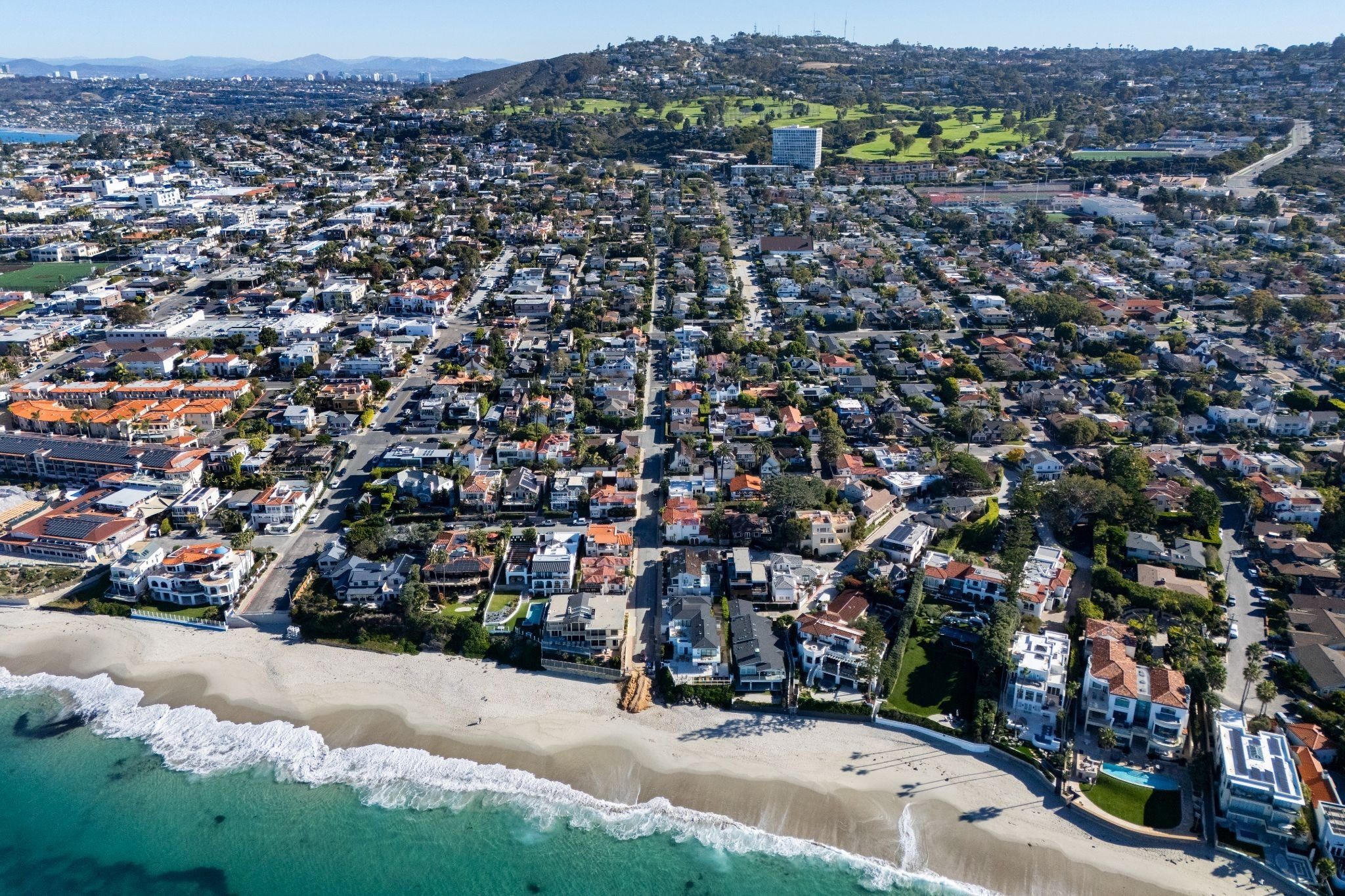
“As fans chase their sides across America this summer,” the article says, “they are discovering country music, ranch dressing and–most strikingly of all–the mass affluence of America’s suburbs.
This wealth is “troubling” European elites, The Economist notes, because their countries are suffocating under stagnation regimes, with little to no economic growth, a rapidly aging population, young people who aren’t having children, and, of course, a dire lack of modern air-conditioning. Meanwhile, top economists are debating how best to measure Europe’s economic output – which is a very arcane and boring debate, frankly – but they agree on one thing: Europe is growing slower than the U.S. And, even if Europe were to grow by coasting off America’s dynamism, that is still no way to run a giant political and economic union.
SHOP OUR NEW USA 250 MERCH
Our newest merch collection is packed with bold, patriotic designs made for July 4 and beyond.
Celebrate America’s 250th the right way.
This article continues below
“The European fans road-tripping across America, jaws agape at Buc-ee’s, know who they think is ahead,” The Economist writes.
Indeed, tourists are finally seeing America’s culture and prosperity, and might begin to question whether European economic and social policies, its rules and regulations, and its slowly crumbling welfare programs and migration crisis, may not be so great after all.
Despite the earnest amazement from our World Cup guests, America’s suburbs have long gotten a bad reputation in media, books, movies and television. There is an entire subgenre of literature about middle-class and upper-middle-class men and women languishing in these oppressive suburban enclaves, suffering ennui and existential crises, drinking themselves into oblivion, having affairs, and blowing up their households because they cannot handle the mundane aspects of daily life. John Updike, one of the most popular novelists of the 20th century, wrote of these kinds of characters, as did John Cheever, Philip Roth, Jonathan Franzen, Richard Ford, and Richard Yates. The 2008 movie “Revolutionary Road,” adapted from Yates’ book of the same name and starring Kate Winslet and Leonardo DiCaprio, follows a married couple whose lives fall apart because one wants to escape the suburbs and move to Paris, while the other wants to stay and climb the corporate ladder in New York City. “Mad Men,” one of the greatest television shows of all time, is about a midlife crisis of a Madison Avenue advertising executive who lives in the suburbs. Cheever’s short stories heavily inspired the show, with references to the author and his works peppered throughout episodes.
Other attacks against the suburbs usually come from angsty teenagers who dream of one day leaving for the Big City, or from snobby people who already live in the Big City and look down upon the plebs who traded the excitement and energy of a dense metropolis for the sleepiness and tranquility of a cul-de-sac. To them, the suburbs are where culture goes to die. The sameness of the streets, the homes, the people, represents soul-crushing conformity. The more extreme critics tend to invoke “capitalism” or “fascism” or other “-isms” to describe communities widely seen as quaint, perfectly normal, and even enviable.
Yes, America’s best suburbs are the envy of many a normal American – even the world. Whereas the urban hater might see the rows of homes on “Cherry Street” as prison boxes designed to torture you and keep you enslaved to the proverbial “Man,” Europeans and others from poorer parts of the globe see beautiful, air-conditioned palaces that make their hometowns feel like medieval backwaters.
In fact, some parts of Europe really do feel like medieval backwaters, which explains why so many Europeans are smitten by Main Street, USA. Take France, for example. Yet again, the French are trapped under a sweltering heat dome, as many homes, apartments, public buildings, and transportation systems are not modernized with the air-conditioning units we are all familiar with in America. People are dropping dead like flies. People are getting trapped in cars. People are drowning because they are trying to escape the heat. Suffice it to say, you do not want to be stuck in France during a record-shattering heatwave. We Americans living in areas subject to extreme heat in the summer months have a very simple solution some Frenchmen cannot even fathom: cranking the AC to arctic levels of freezing cold.
But it’s not only the lack of widespread central AC units. Normal European suburbs, at least from what I have seen, do not hold a candle to America’s. When I took a train recently from Bruges, Belgium, to the E.U. capital of Brussels, I was shocked by the rural towns I passed that looked dreadful, ramshackle, utterly dead. The city of Bruges is a jewel, one of the prettiest and most enchanting places in all of Europe, but once you get out into the country a bit, into the rural farmlands, the “suburbs” tended to be woeful. Most people appeared to live in drab apartment buildings. The few homes were on the verge of crumbling. Unlike America’s suburbs, it actually felt soul-crushing.
It is no wonder that European elites are a little queasy about their citizens falling in love with America. The sheer affluence of our country’s suburbs is as alluring as a newly-waxed Ferrari, and anyone who catches a glimpse feels, deep down, the slightest pang of envy. Though some Americans may take it for granted, the World Cup tourists see the crown jewel. It’s not a charming city with medieval architecture and world-class dining. It’s not Paris or London. It’s not the French countryside of the Amalfi Coast. It’s the American suburbs, where the people are friendly, the homes are big, the grass is green, the pools are blue, the streets are clean, and the countless families are quietly living the dream – a dream that, in Europe, is all but impossible to even imagine.
Like what you’re reading? If so, please consider subscribing to State of the Day or sharing this with a friend. You’d be supporting this newsletter and helping keep independent journalism alive.
If you are already a paid subscriber, make sure to join the conversation in our subscribers-only chat below.


