



The “WASP” (White Anglo-Saxon Protestant) establishment has been dead for some time, now diminished to a culture war cudgel.
“Tried to go to Easter mass but they ran out of seats and standing room,” wrote Mid Thirties Manhattan Guy on Easter Sunday.
“Next best thing: soho house brunch with a jazz quartet”
“The libs have lost. Being WASPy is cool again[.]”


Manhattan Guy’s post merited a mocking community note, reading, “The ‘p’ in WASPy stands for Protestant. Mass is a Catholic tradition not Protestant,” followed by a link to the Wikipedia entry for “WASP.”
Manhattan Guy attached two images to his post. The first: A line of people standing outside St Joseph’s Church in Greenwich Village. The second: A frankly upsetting jumble of oysters, greek salad, shrimp making direct contact with sliced cantaloupe, some salami, and cheese. It reminded me of that picture designed to simulate what having a stroke is like.


“The P in WASP now stands for Papist,” one observant X user declared.
In fairness, Manhattan Guy did qualify his Easter as “WASPy,” the “y” doing some heavy lifting. Regardless, I take his post as indicative of WASP becoming estranged from its original denotation (the White Anglo-Saxon Protestants who constituted America’s establishment for roughly sixty years) and becoming a gesture towards an aesthetic.
What Is A “WASP”?
Digby Baltzell is generally credited with coining the term “WASP” in his 1964 treatise, “The Protestant Establishment.” A former classmate claims Baltzell “didn’t make up that term, he popularized it. It was used before that.”
Baltzell’s niece told Philadelphia Magazine in 2005, “My father will tell you that the way the word ‘Wasp’ was coined was that Uncle Digby was writing ‘White Anglo-Saxon Protestant’ repeatedly. He got tired of writing it out. …White Anglo-Saxon Protestant, it’s a marketing tool now. People like to have an identification of sorts. What goes along with it is good manners; I think it’s funny that people associate ‘Wasp’ with money.”
In any case, “WASP” stuck.
T. Greer argues that “Eastern Establishment” is a more fitting description for “the class of governing elites that dominated American industry in the six decades between 1870 and 1930.” Greer offers several examples of white, Anglo-Saxon Protestants of the period who did not belong to that governing class (Woodrow Wilson, Sam Rayburn, Lyndon B. Johnson). On the other hand, says Greer, men of Jewish German origin like Robert Moses and Walter Lippmann did belong to that governing class.
WASP Was Always An Aesthetic
As Greer notes, people started talking about “WASPs” when the establishment was in grave decline, if not defunct.
“Displaced from his central role in the national pageant, at mid-century the Establishment man was distinguished mostly by his cultural pretensions—pretensions he clung to until J.Crew repackaged them as weekend wear.”
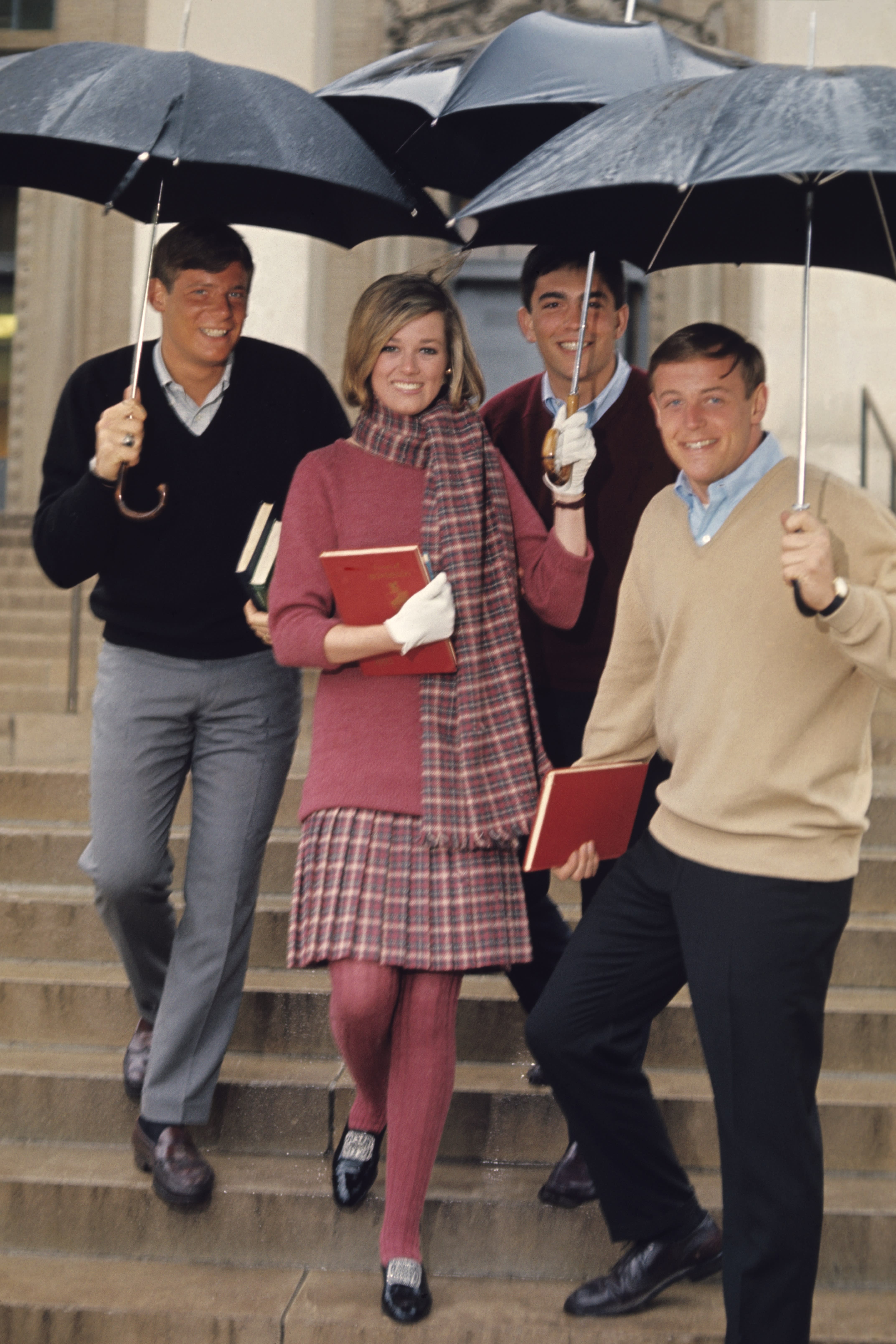
Imagine the second or third or fifth generation immigrant who desperately distances himself from American culture. He usually gravitates towards obvious, if shallow, signs of otherness. This often takes the form of dress.
For instance: Wearing a sari to one’s college school graduation. Or, as I noticed many women doing during the COVID-19 lockdowns, wearing a face mask with Mexican embroidery.
This behavior is annoying, of course, because it’s equivalent to spitting in the face of assimilation. But the second generation immigrant is ultimately alienated from his ethnic roots. All that remains are tacos, dresses, jokes about “la chancla.”
In the same way, Americans are largely alienated from WASP culture. All that remains are “old money” TikTok influencers, wearing a sweater over one’s shoulders, cocktail hour, golfing.
Those essential WASPy ways — as Balzell’s niece put it, “good manners” — are lost.
If current projections hold (usually a dangerous assumption), whites will be a minority in America long before the end of the century. There is an emerging nostalgia for WASPs in the vein of nostalgia for the Cherokee: A longing for an imagined past, untethered to historical accuracy, governed by Romantic fantasies.