


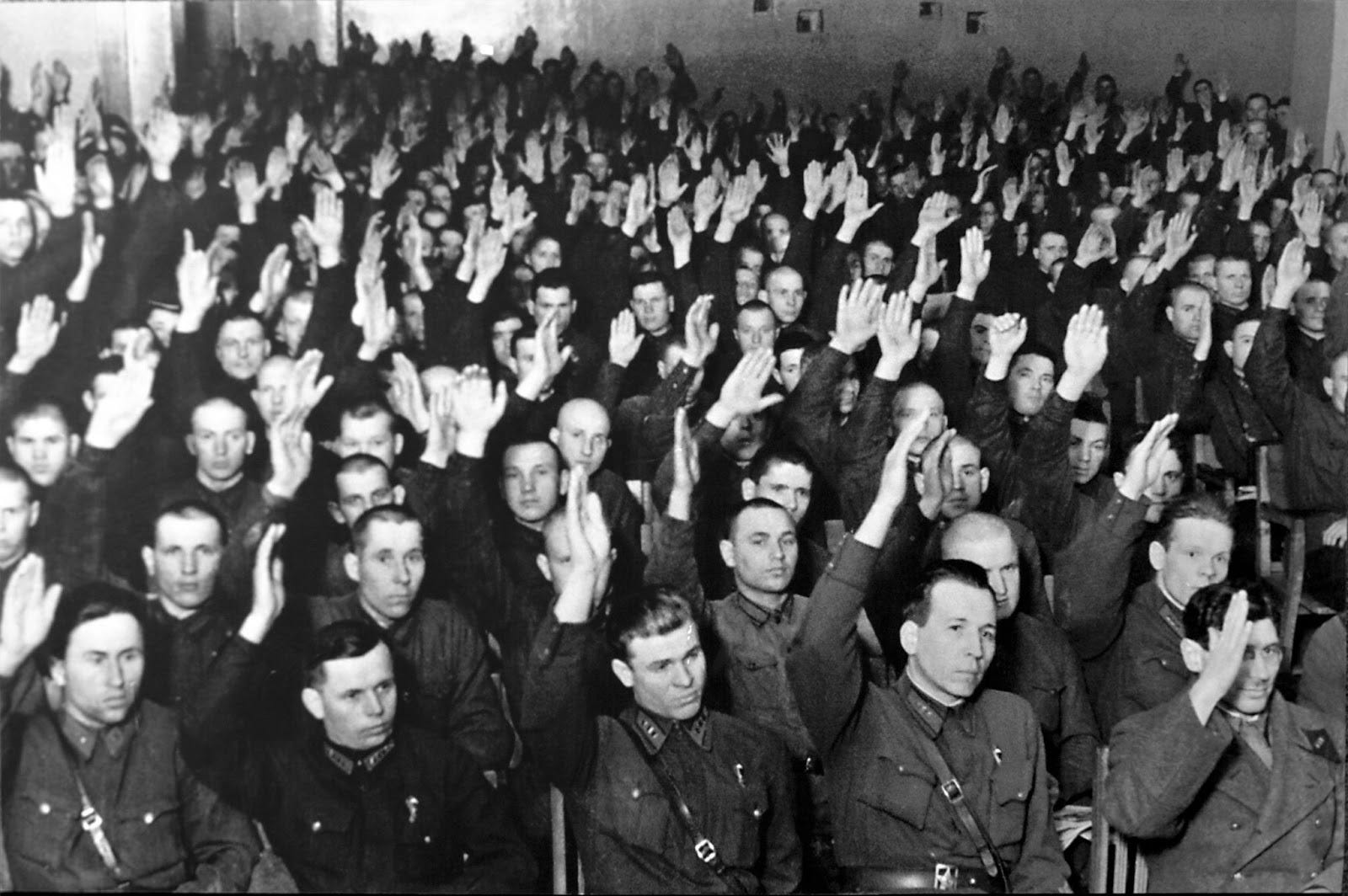
There are many infamous stories about The New York Times and the infamous stories it published that later turned out to be false, not without first seriously influencing public opinion and the opinions of very powerful people in the U.S. government. WMDs, anyone? One of which is the story of Walter Duranty, a charismatic, careerist Times correspondent who served in the paper’s Moscow bureau in the 1930s during Josef Stalin’s rise to power.
To borrow Gen Z slang, Duranty built up his career by glazing Stalin, which is to say, he showered praise on the ruthless dictator and debased himself as an unofficial mouthpiece for the Soviet regime. Duranty, in fact, is credited with coining the phrase “Stalinism” and popularizing the slogan often deployed by utopian radicals to justify political violence and coercion, “You can’t make an omelet without breaking eggs.”
Duranty reported glowingly on Stalin and his “collectivization” plans, which ultimately triggered a horrific famine that killed millions of Ukrainians and Russians. He was unwavering, despite the ample evidence that Stalin’s brutal central planning amounted to mass murder. Writing in a front-page story published in August of 1933, Duranty reported, “The excellent harvest about to be gathered shows that any report of a famine in Russia is today an exaggeration or malignant propaganda.” A month later, a British diplomat noted that Duranty had acknowledged to him the extent and devastation of Stalin’s policies and that “as many as 10 million people may have died directly or indirectly from lack of food in the past year.” Of course, that assessment, shared only privately by Duranty, was never made public in his Times dispatches.
In 1932, Duranty was awarded a Pulitzer Prize for his “dispassionate interpretive reporting” published in 1931. One of those front-page reports began with the line, “Russia today cannot be judged by Western standards or interpreted in Western terms.” Shockingly, to this day, the Pulitzer board has not retracted his prize. They concluded in 2003 “that there was not clear and convincing evidence of deliberate deception, the relevant standard in this case.” In 2018, The Times released a spineless statement admitting that Duranty had solely relied on Soviet officials as his primary sources, and that his dispatches “had to pass Soviet censorship, and Stalin’s propaganda machine was powerful and omnipresent.”
Duranty’s cowardice and famine cover-up might be, perhaps, the most famous of The Times’s journalistic scandals. However, a lesser-known story is how the “paper of record” reported on Stalin’s infamous show trials, and, in particular, the trial of the Bolshevik Nikolai Bukharin. Bukharin was once considered a golden boy of the Bolshevik movement. Vladimir Lenin even praised him in 1922 as the “most valuable and major theorist” in the entire Communist Party. But, like so many other Russian revolutionaries of his time, Bukharin fell victim to Stalin’s bloodlust and paranoia and was swept up in the Great Purge, imprisoned for, and falsely accused of, plotting a coup.
The New York Times covered his trial, breathlessly but no less erroneously. The easy answer as to why they believed Stalin’s show trial was legitimate is that, like Duranty, the bulk of their reporters who covered the USSR were sympathetic to the entire project. Perhaps they were secretly socialists or communists themselves. Perhaps they wished to usher in a similar revolution here in the United States, with FDR as their benevolent leader instead of Stalin. But I think the real answer goes deeper. It was not just about quietly playing political favorites, lacing their coverage with Soviet propaganda and euphemisms, and hoping their side, the left, was vindicated in the end.