


The problem is intractable. It is nuanced. It requires a light touch, empathy, listening, learning, the perspectives of the variously marginalized, genius.
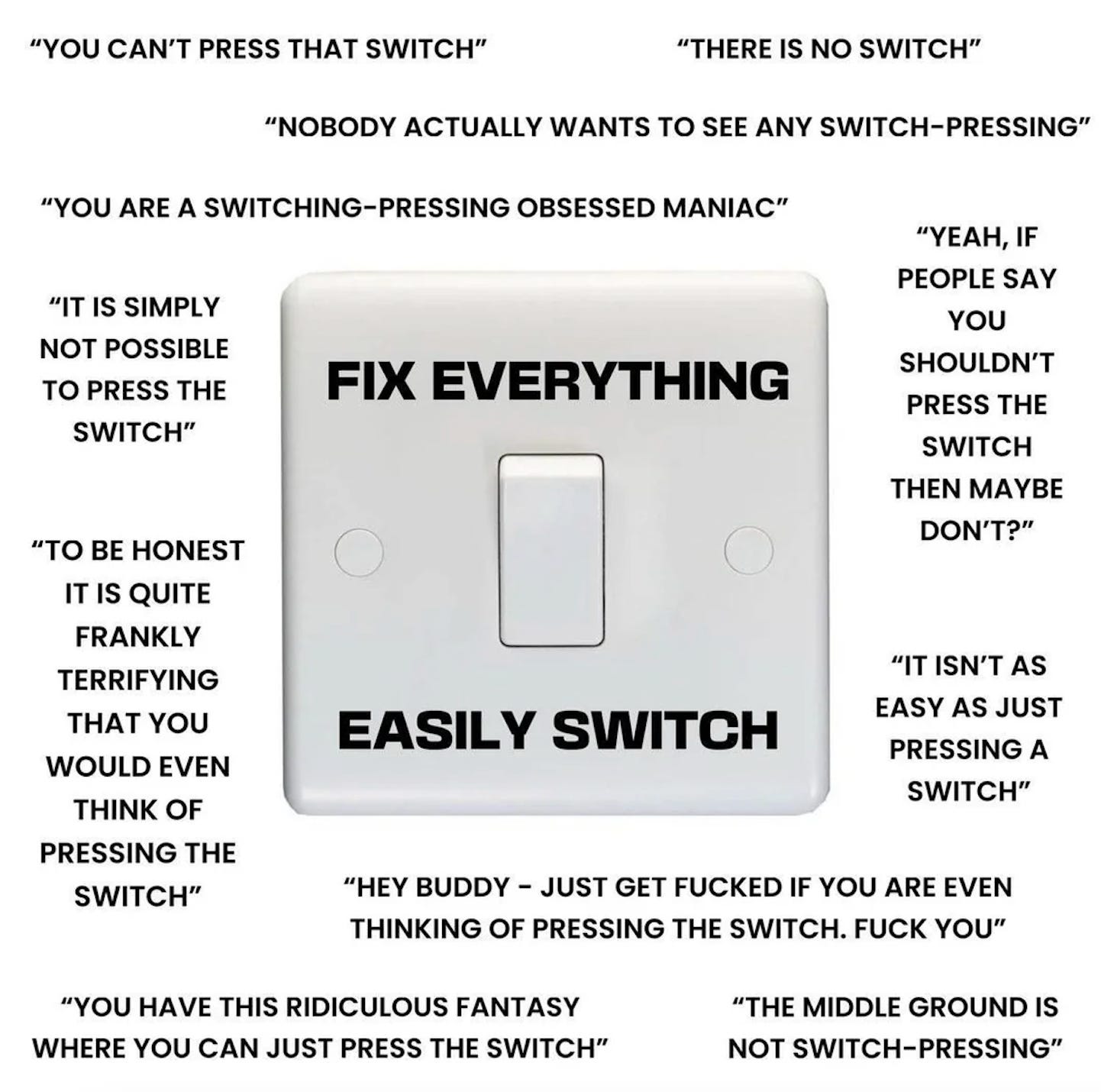
Alternatively, you might consider flipping the “Fix Everything Easily” switch.
A Case Study In Switch-Flipping
Bay Area Rapid Transit (BART) opted to do just that by installing “NEXTGEN Fare Gate[s],” i.e., tall fare gates.
BART says it has “replaced all 700+ fare gates” and that the new gates “are bringing in $10M annually of new revenue.”
The figures boggle the mind. There was $10 million waiting to be collected from fare evaders who were willing to pay all along, provided a barrier to fare evasion.
The average BART fare in 2025 was $4.88. Let’s assume the $10 million in revenue gained was purely due to (some portion of) former fare evaders now paying for their rides. Those former fare evaders passengers took a collective 5,600 plus fare-free rides per day.
But we still don’t know the total revenue lost to fare evasion per annum in years past, given that a significant portion of former fare evaders seem to have stopped taking BART entirely.
How do we know this?
Since installing the new gates, BART has seen an enormous reduction in “[h]ours spent on patron related Corrective Maintenance … within the paid area of stations.”
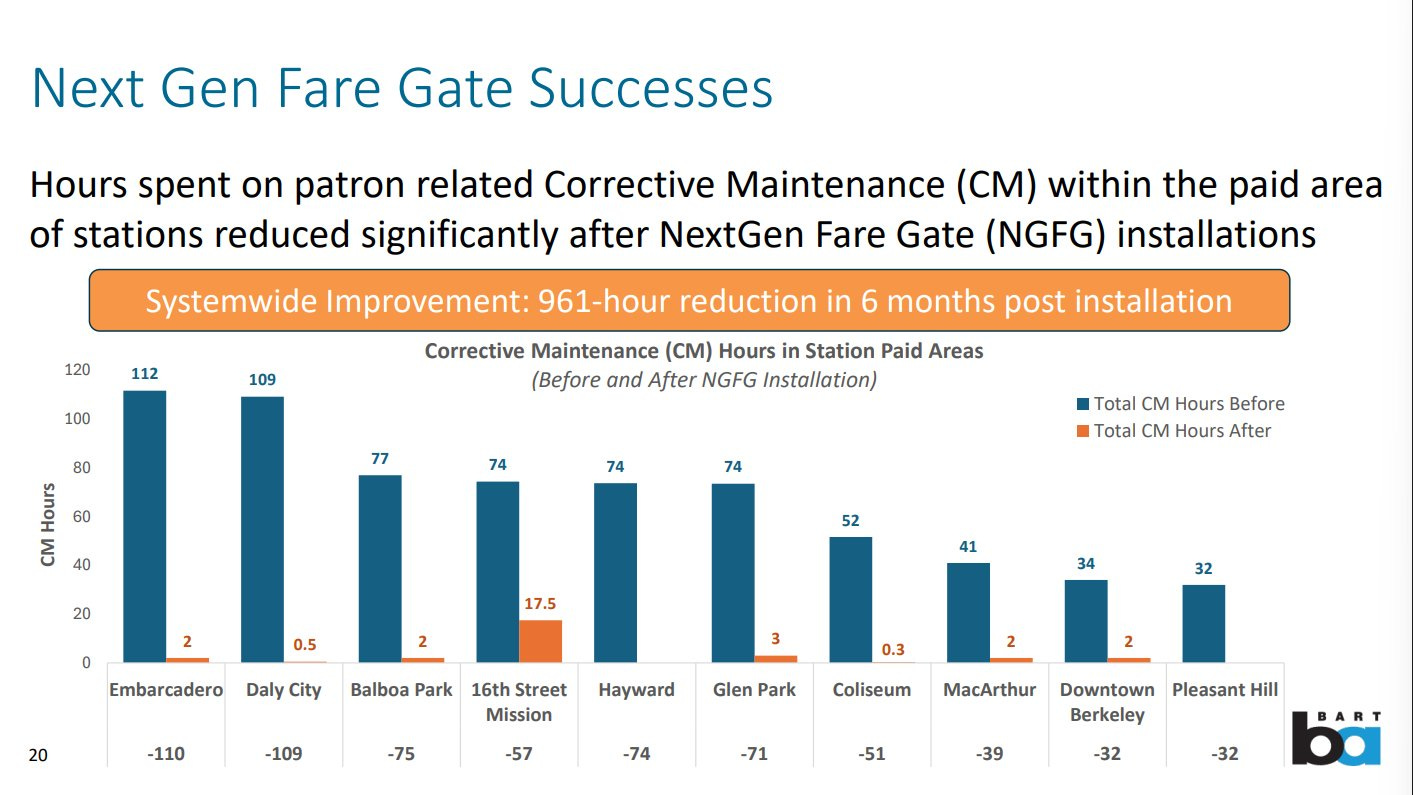
A 95.7% decrease in hours, to be specific.
So it seems obvious that the people most intent on evading fares are the same people most intent on making the subway dirty and unpleasant.
There are two lessons to be learned from this BART saga.