Yankees And Confederates Finally Face Reality: A Long, Bloody Tragedy Awaits
This day in history
The year is 1861 …
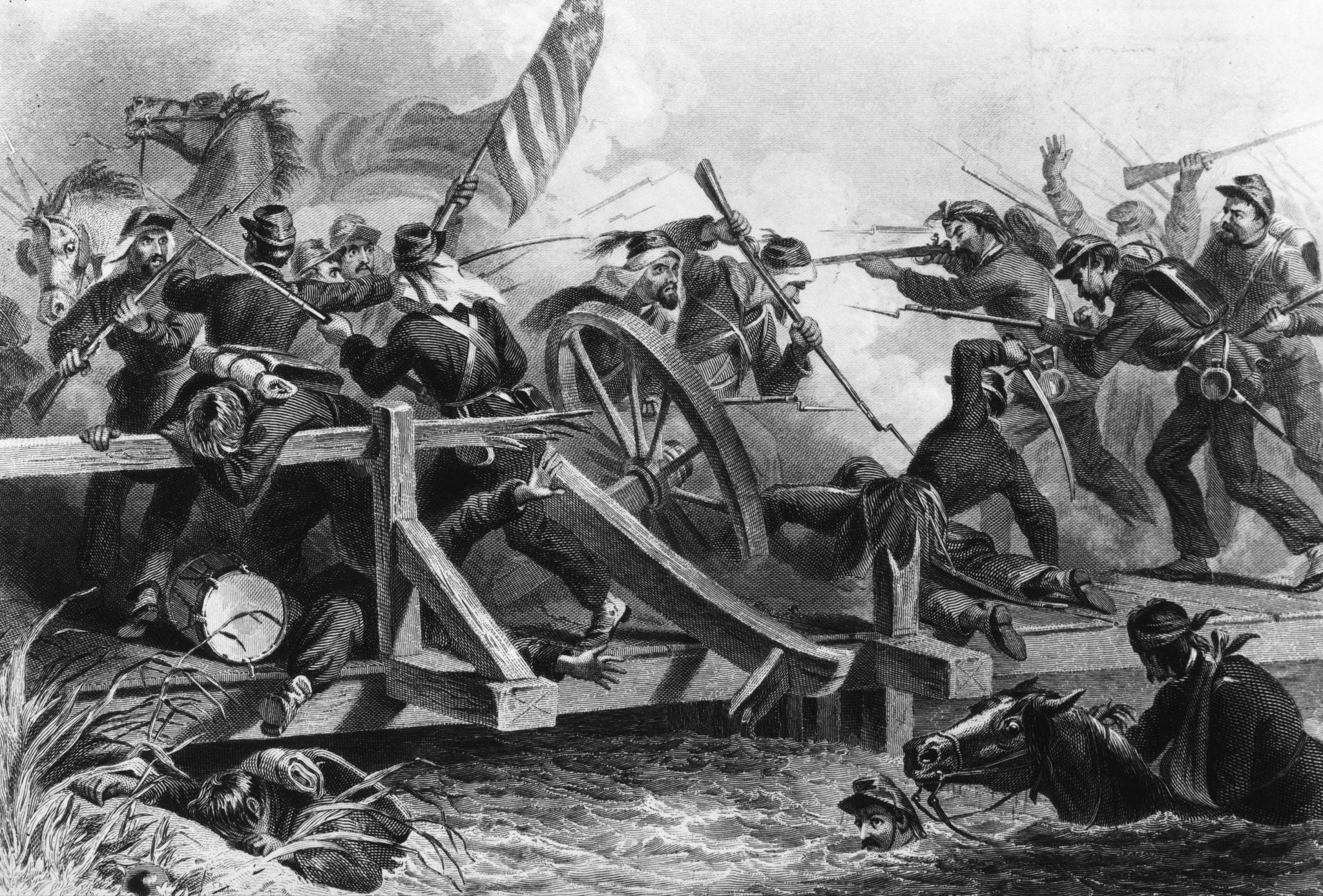
And though the Civil War officially began when the Confederates attacked Fort Sumter on April 12, July 21 marks the first major land battle of what will become a long, bloody, and tragic war: the First Battle of Bull Run, only 25 miles south of Washington, D.C.
President Abraham Lincoln had been under intense pressure from the Northern public to end the war within 90 days, so he ordered a more cautious Union Brig. Gen. Irvin McDowell, commander of the Union Army of Northeastern Virginia, to march on the Confederate capital of Richmond and crush the rebellion as quickly as possible. But the plan failed, even though the Union had the upper hand throughout the morning and pushed back the Confederates to Matthews Hill. Confederate Brig. Gen. P.G.T. Beauregard’s troops were able to force a retreat with the help of regiments under the command of Brig. Gen. Thomas “Stonewall” Jackson, whose men formed a line of artillery guns on the eastern slope of the hill. McDowell made the mistake of moving two rifled artillery batteries within 300 yards of Jackson’s guns, and soon enough, Union infantrymen were shelled into oblivion. The two sides wreaked havoc on each other, but Jackson and his men did not budge. It is believed that at one point during the battle Confederate Brig. Gen. Barnard Bee rallied his own men to join Jackson’s brigade, and observed that Jackson was standing like a “stone wall,” hence the famous nickname.
The Union troops would retreat to the safety of D.C. by July 22 – the Confederate forces were not in good enough shape to pursue them – and McDowell would later be relieved of his duties. It was a stinging defeat for Lincoln and the Union, as they believed the war could be ended with one swift march on Richmond. Like all wars, everyone knows when it starts, but no one ever knows when it ends. Lincoln and the U.S. government would now have to prepare and strategize for a long war that would cost countless lives, take an immense financial toll, and scar the nation forever.
In 1986, Gore Vidal explained why he had written a play about the Civil War in 1960, which captured the tragedy of Americans torn apart by a brutal war. “My mother’s family had fought for the Confederacy and my father’s for the Union,” he wrote. “The Civil War was – and is – to the United States what the Trojan War was to the Greeks, the great single tragic event that continues to give resonance to our Republic.”
Like what you’re reading? If so, please consider subscribing to State of the Day or sharing this with a friend. You’d be supporting this newsletter and helping keep independent journalism alive.
If you are already a paid subscriber, make sure to join the conversation in our subscribers-only chat below.


