Attorneys give their clients advice. Sometimes, those clients are people of questionable moral character. Sometimes, they’re models of moral excellence.
The attorney’s responsibility to his client is the same. He owes his client loyalty and confidentiality. He must act with dedication to the interests of the client, representing him with competence. Furthermore, in California, attorneys are supposed to be “zealous” advocates for their clients.
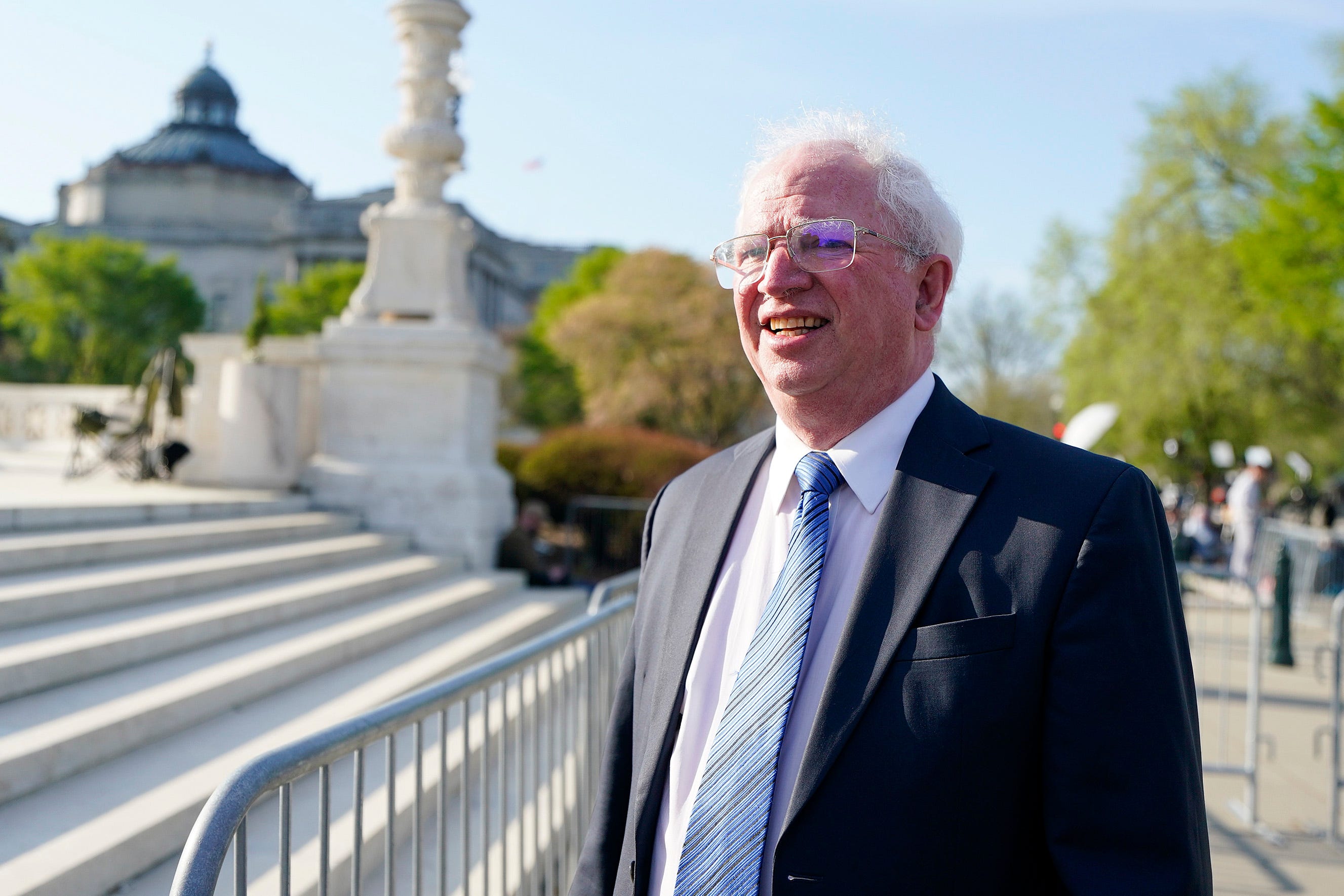
The California Supreme Court disbarred attorney John Eastman on Wednesday. Eastman acted with loyalty, competence, and zeal on behalf of his client (in my view).
His principal misstep, again, in my view, was acting on behalf of the wrong client: The president of the United States.
Eastman, who clerked for Justice Clarence Thomas and is currently a senior fellow at the Claremont Institute, served as President Donald Trump’s lawyer on several legal challenges related to the 2020 election.
Those included Trump’s motion to intervene in the U.S. Supreme Court in Texas v. Pennsylvania et al. and Trump’s petition in Trump v. Boockvar.
Eastman “advised the President about constitutional ways to prevent illegal conduct of the election from determining the results, and he spoke before the president at the “Save America” rally Jan. 6,” according to Eastman’s GiveSendGo.
Eastman catalogues his institutional fall from grace. He “was ‘retired’ from his tenured faculty position at Chapman University’s law school, where he had previously served as dean, and had his classes and speaking responsibilities cancelled at the University of Colorado Boulder, where he was serving as the visiting professor of conservative thought and policy.”
“He has been targeted by hard core leftist activists who have filed a bar complaint against him, seeking to have him disbarred and thereby lose his source of income.”
Eastman was subpoenaed by, in his words, the “hyper-partisan” January 6 Committee in the House of Representatives. I agree with his assessment. Then-House Speaker Nancy Pelosi rejected two GOP picks for the committee in 2021. As then-House Minority Leader Kevin McCarthy pointed out at the time, Pelosi took unprecedented action in rejecting members to a select committee.
Federal Bureau of Investigation agents reportedly seized Eastman’s phone as he was leaving a restaurant in 2022.
Eastman told the Daily Caller he was “de-banked twice in the span of several months by two prominent financial institutions, Bank of America and USAA[.]” Those incidents reportedly occurred in September and November 2023. Eastman believes the decisions were made for political reasons.
“I’m 99.9% confident,” he told the Daily Caller. “What I don’t know is whether they didn’t want to do business with me, or whether they didn’t want to continue to be hassled by federal regulators for doing business with me. I don’t know which of those two it is, either one of them is rather despicable.”
Eastman and his wife “have endured death threats, spikes in their driveway and threatening graffiti in their neighborhood,” according to Eastman’s friend Josh Hammer.
The California State Bar’s Case
I’ll review (some of) the California State Bar’s closing brief detailing Eastman’s supposed misconduct. You can read the California Bar’s case in full here.
The California Bar asserts that Eastman “conspired with then President Donald Trump to develop and implement a strategy to obstruct the counting of electoral votes on January 6, 2021, and to illegally disrupt the peaceful transfer of power to President-elect Joseph Biden, knowing that there was no plausible evidence, and no good faith theory or argument, to lawfully undo or delay the January 6 electoral count.”
The California Bar notes that courts in the seven key states had rejected claims that the election was invalid, that the Department of Justice (DOJ) and the Department of Homeland Security (DHS) had rejected those claims, and that the seven key states had “certified Biden’s victory.”
“By the time respondent wrote his December 23 and January 3 memoranda, therefore, he knew that there could be no true dispute about who had won the election.”
“Therefore” suggests that California Bar’s second statement follows logically from their earlier statements. It does not.
A reasonable person might believe that the conclusions of those seven states, the DOJ, and DHS, were erroneous. An attorney might come up with a legal argument and/or strategy to counter those conclusions. The California Bar appears, from my amateur perspective, offended by dissent.
As attorney Mike Davis notes, “The 2020 election was razor-close. If approximately 20,000 votes in three states—Georgia, Pennsylvania and Wisconsin—had switched, President Trump would have defeated Joe Biden, according to official results.”
Davis details the “unprecedented rewriting of election laws by courts in many states” due to the COVID-19 lockdowns.
“States began mailing ballots to addresses even when no one at the addresses had asked for a ballot. This led to ballots that were mailed to homes long after the addressees had left. States also scrapped signature verification requirements … States allowed random people to drop off votes in so-called drop boxes that were publicly accessible.”
You may believe there were no irregularities affecting election results in the 2020 election. The question remains: Can a reasonable person believe there were irregularities affecting election results in the 2020 election? I think so. The California Bar appears to disagree.
The California Bar takes issue with Eastman for advising former Vice President Mike Pence to “unilaterally refuse to count or delay counting seven properly certified slates of electoral votes for Biden. Such an unprecedented exercise of unilateral authority would violate the federal Electoral Count Act (‘ECA’), which has governed electoral counts for more than a century.”
The California Bar lobs plenty of other accusations against Eastman. It claims Eastman holds “truth and democracy in contempt” because Eastman “deliberately disregard[ed] facts that demonstrate the validity of Biden’s victory to further a false narrative that would ignore the Constitution, disenfranchise millions of voters, and undermine a democratic election for President of the United States in favor of his allegiance to Trump.”
The logic here is maddening. The California Bar assumes the premise: That Eastman knew full well Biden’s election was legitimate and tried to undermine it because he was some sort of Trump fanatic.
If one assumes the opposite — that Eastman earnestly believed there were facts which might dispute the legitimacy of Biden’s victory — then one must conclude that Eastman holds truth and democracy in rather high regard.
If you had any remaining doubt as to the California Bar’s political leanings, the brief states, “[Eastman] demonstrably contributed to the gravest threat to our democracy in modern history—the violent attack on the Capitol on January 6, 2021.”
For further evidence of the California Bar’s political leanings, refer to their “strategic plan” to promote internal “diversity, equity, and inclusion.” That plan includes a goal to recruit “diverse” applicants. This would likely mean hiring less white men, given employment is a zero sum game for applicants. The State Bar of California appears to be engaging in what critics might label employment discrimination. This is probably a bad sign.
“Though the State Bar began its internal DEI journey in 2018, the events of 2020 created a paradigm shift. The calls for racial justice in the wake of the murder of George Floyd and the onset of the COVID-19 pandemic created a greater sense of urgency and context for the State Bar’s work,” writes the California Bar.
Selective Enforcement?
American presidential elections have been contested before. For many years, lefties were fond of claiming George W. Bush stole the election from Al Gore. They probably still do. Democrats questioned the results of the 2016 presidential election.
Failed presidential candidate Hillary Clinton said to a crowd in 2019, “You can run the best campaign. You can even become the nominee. And you can have the election stolen from you.” Clinton also referred to Trump as an “illegitimate president.”
That is to say, those who contested the results of the 2020 presidential election — including Eastman — were not pushing the Overton window by virtue of contesting those results. Except insofar as they were aligned with Trump.
I don’t believe Eastman’s actions merit disbarment. But, if you do, you might ask whether his actions were more egregious than those taken by attorney Kevin Clinesmith.
Clinesmith, a former senior FBI lawyer, pleaded guilty to making a false statement in a surveillance document in the Trump-Russia investigation. He was restored as a member in “good standing” by the District of Columbia Bar Association before he had finished serving his parole, according to RealClearInvestigations.
Or, consider attorney Marc Elias, the man who helped fund the opposition research that led to the infamous Steele dossier. Elias was the “point person to fund opposition research that produced salacious — but ultimately largely debunked — claims about Mr. Trump’s ties to Russia,” according to The New York Times (NYT). He currently serves as the firm chair of Elias Law Group.
Eastman’s case will likely go to the Supreme Court.
Regardless, the California Bar’s actions should frighten every Californian and probably every American. When bar associations are weaponized against lawyers representing disfavored clients, the right to legal representation itself is jeopardized. Even the appearance of weaponization might nudge attorneys away from representing certain clients, for fear of losing their license.. This is the stuff of a banana republic.
Like what you’re reading? If so, please consider subscribing to State of the Day or sharing this with a friend. You’d be supporting this newsletter and helping keep independent journalism alive.
If you are already a paid subscriber, make sure to join the conversation in our subscribers-only chat below.


