


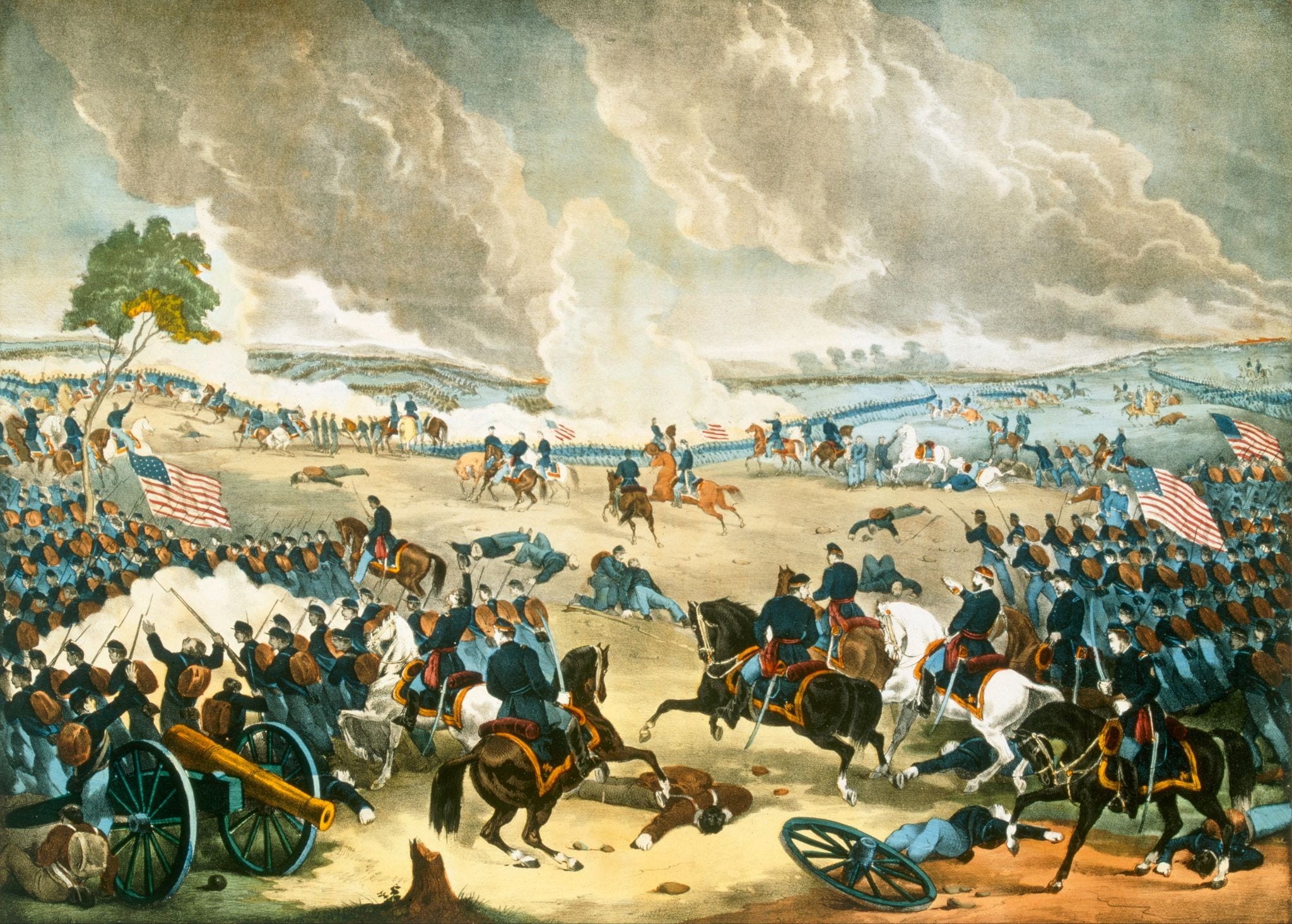
The year is 1863 … America is torn apart … the Civil War is raging …
… And on July 1, the Battle of Gettysburg begins. Union Major General George Meade leads the Army of the Potomac. The legendary Confederate General Robert E. Lee commands the Army of Northern Virginia. It is the single bloodiest battle of the entire Civil War. The carnage lasts three days and is staggering. An estimated 51,000 soldiers from both sides are killed, wounded, captured, or missing. The Union prevails.
Shelby Foote, one of America’s finest historians who chronicled the Civil War in an epic three-volume history, argued that Lee lost by ordering two divisions to charge the Union’s position in what is now known, infamously, as “Pickett’s Charge.”
“The single greatest mistake of the war by any general on either side was made by Robert E. Lee at Gettysburg,” Foote said in a 1999 interview, “when he sent Pickett’s and Pettigrew’s divisions across that open field, nearly a mile wide, against guns placed on a high ridge and troops down below them, with skirmishers out front. There was no chance it would succeed.”
Memorializing the battle four and a half months later, President Abraham Lincoln delivered a two-minute address that remains today the greatest speech ever delivered by a U.S. president: the Gettysburg Address.
“Four score and seven years ago, ” it began.
Like what you’re reading? If so, please consider subscribing to State of the Day or sharing this with a friend. You’d be supporting this newsletter and helping keep independent journalism alive.
If you are already a paid subscriber, make sure to join the conversation in our subscribers-only chat below.


