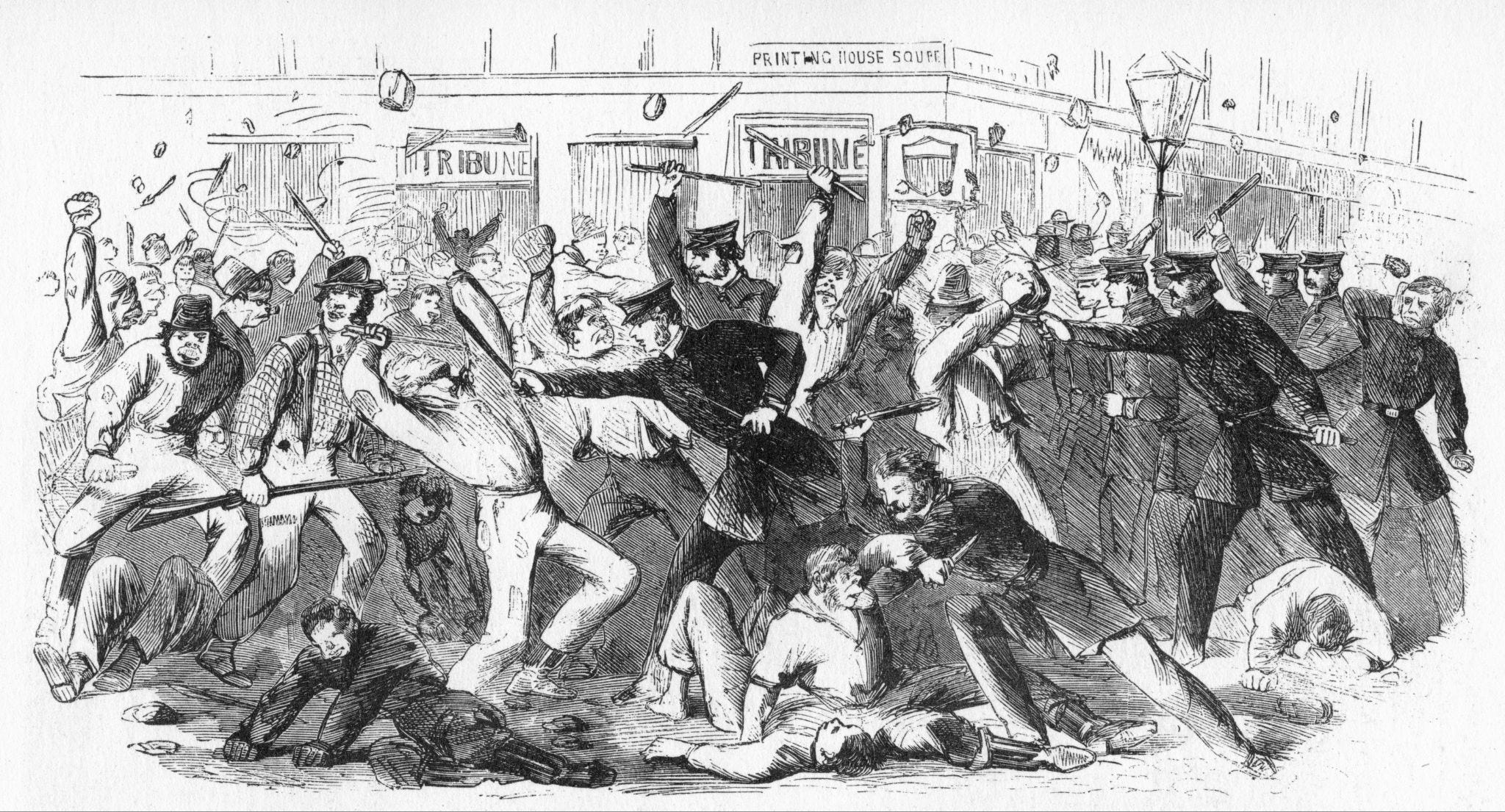
The year is 1863 …
And as the Civil War rages on, anger begins to simmer among Irish New Yorkers who are fresh off the boat from their home country. The Enrollment Act of 1863, America’s first national draft, had been enacted in March, and unless one was wealthy enough to afford the $300 commutation fee to keep oneself at home, any able-bodied male or immigrant seeking citizenship between the ages of 20 and 45 would be registered to fight in the Union Army. Unsurprisingly, Irish immigrants who had just arrived in New York were livid that guns had been thrust into their hands the moment they stepped ashore, while Democratic Irish were afraid that the Emancipation Proclamation of 1862 would eventually free so many slaves that their jobs would be threatened.
On July 13, a mob burned down a New York City draft office, sparking five days of violent rioting. Other targets and victims included local newspapers, men who were well dressed at the wrong place at the wrong time, posh houses, and police officers. Several black New Yorkers were lynched, while several businesses that had employed black workers were burned to the ground. Even a black orphanage was torched by a mob. The city resembled a war zone, with mobs procuring federal weapons and taking over entire neighborhoods.
It wasn’t until July 17 that Union troops were able to quell the riots and retake parts of the city. Over 1,000 people were killed over the course of those days. The property damages totaled around $2 million. The riots also temporarily ended the draft, which was followed by a revised conscription in August.
The riots were famously depicted in Martin Scorsese’s 2002 movie, “The Gangs of New York.”
PRESENTED BY
Insurance premiums up. Coverage down. Sound familiar?
America’s HealthShare offers a different way to handle medical costs — member to member, without the insurance company markup.
Use code STATEOFTHEDAY to get your first month for free.
Like what you’re reading? If so, please consider subscribing to State of the Day or sharing this with a friend. You’d be supporting this newsletter and helping keep independent journalism alive.
If you are already a paid subscriber, make sure to join the conversation in our subscribers-only chat below.


