


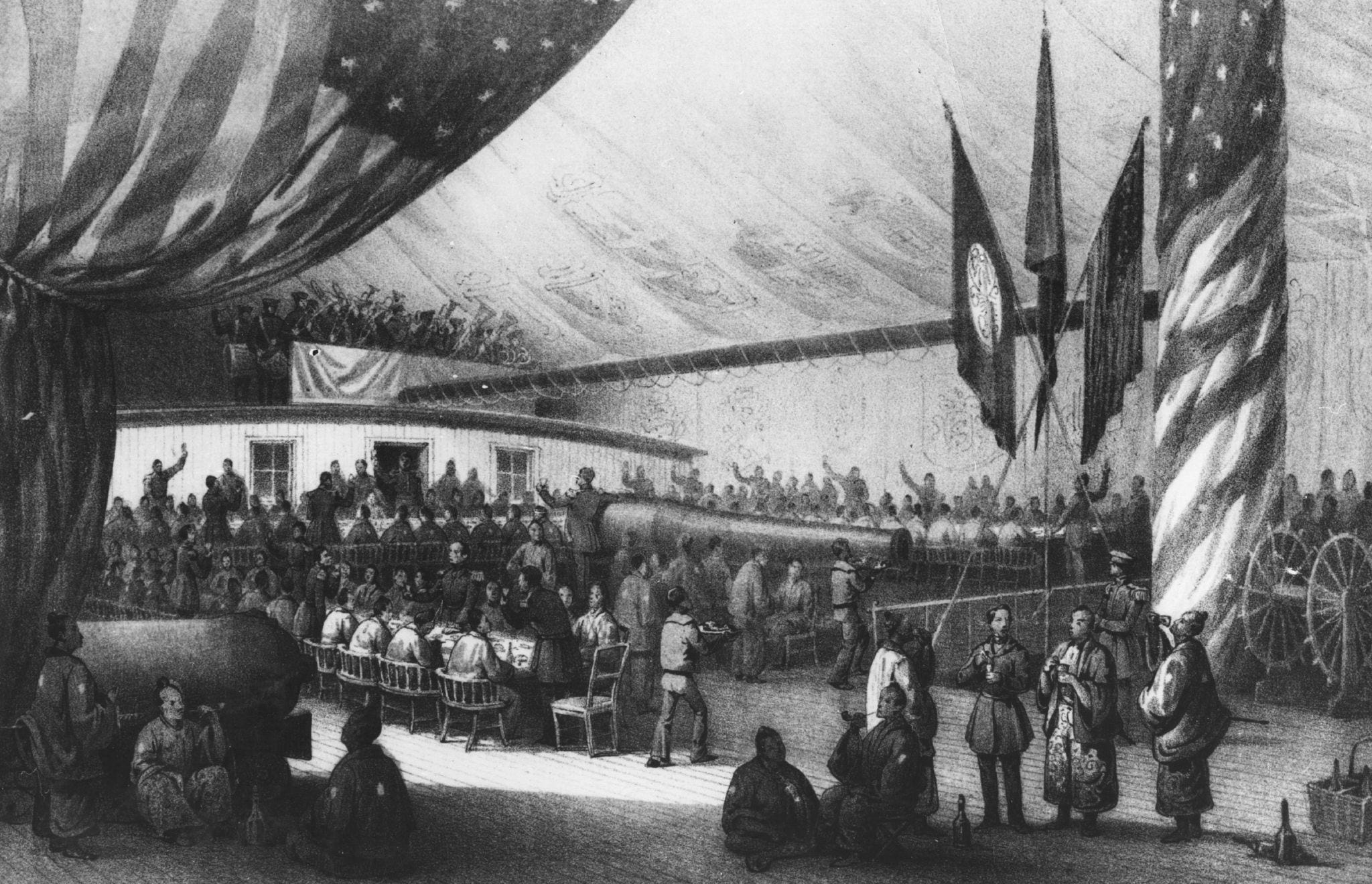
The year is 1853 …
… And Commodore Matthew Perry’s famous expedition to establish a formal trade treaty with the Japanese arrives in Edo Bay. Under orders from President Millard Fillmore, Perry has led U.S. Navy warships across the globe to once and for all break the Tokugawa Shogunate’s 220 years of complete isolation from the Western world, build diplomatic ties, and open their closed market to American goods. Previous attempts had been made by Americans to gain a foothold in Japan for trading purposes, but those were by and large failures. In 1849, Captain James Glynn was the first American to successfully negotiate with the Japanese, paving the way for Perry’s more formal expedition at the behest of the federal government.
Upon arriving in Edo Bay on July 8, Perry’s ships fired several blank warning shots as they were surrounded by Japanese guard boats, and refused to allow anyone to board his ships. After some negotiation, Nakajima Saburosuke, a Tokugawa Shogunate official, along with a translator, boarded Perry’s ship, but Perry refused to meet them and remained in his cabin. In a famous act of “gunboat diplomacy,” Perry would go on to threaten and intimidate the Japanese with military force until they finally allowed the expedition to land on shore July 14.
Ultimately, Perry’s expedition was a success despite seemingly endless negotiations that required him to visit Japan twice. The stakes were also high, as the British, French, and Russians all sought to jockey for position and secure trade treaties with the Shogunate. But on March 31, 1854, Perry finally signed the Convention of Kanagawa, thus opening Shimoda and Hakodate ports to American ships and establishing an American consulate in Shimoda.

Use code STATEOFTHEDAY for your first month free.
The Perry Expedition shows us that the U.S. has always been “globalized” in a sense, or rather, that the country, as well as other nations, goes through endless and evolving stages of “globalization.” Trade ties are established, and then they collapse, and then they are built anew, over and over, with different alliances and partnerships, different products and commodities, and different means by which to trade them all. This period of globalization we have witnessed in the 21st century is but one iteration that will soon collapse – if it hasn’t already – and be replaced by something entirely new.
In a darkly ironic but beautiful twist of history, on this same day in 2022, Shinzo Abe, the great former prime minister of Japan and a close friend of President Donald Trump, was assassinated. These two July 8 events put into perspective just how far America and Japan have come in their relationship. From Perry’s first ships sailing into Edo Bay, all the way through World War II and the dropping of the atomic bombs, to a beautiful partnership between two world leaders that ended in a bloody tragedy – the forces of history can be dark and are often out of our control, but sometimes they bring together strangers and help forge unlikely friendships that, however brief, prove humans are capable of good will and charity toward each other.
Editor’s note: The year has been corrected from 1863 to 1853.
Like what you’re reading? If so, please consider subscribing to State of the Day or sharing this with a friend. You’d be supporting this newsletter and helping keep independent journalism alive.
If you are already a paid subscriber, make sure to join the conversation in our subscribers-only chat below.


