


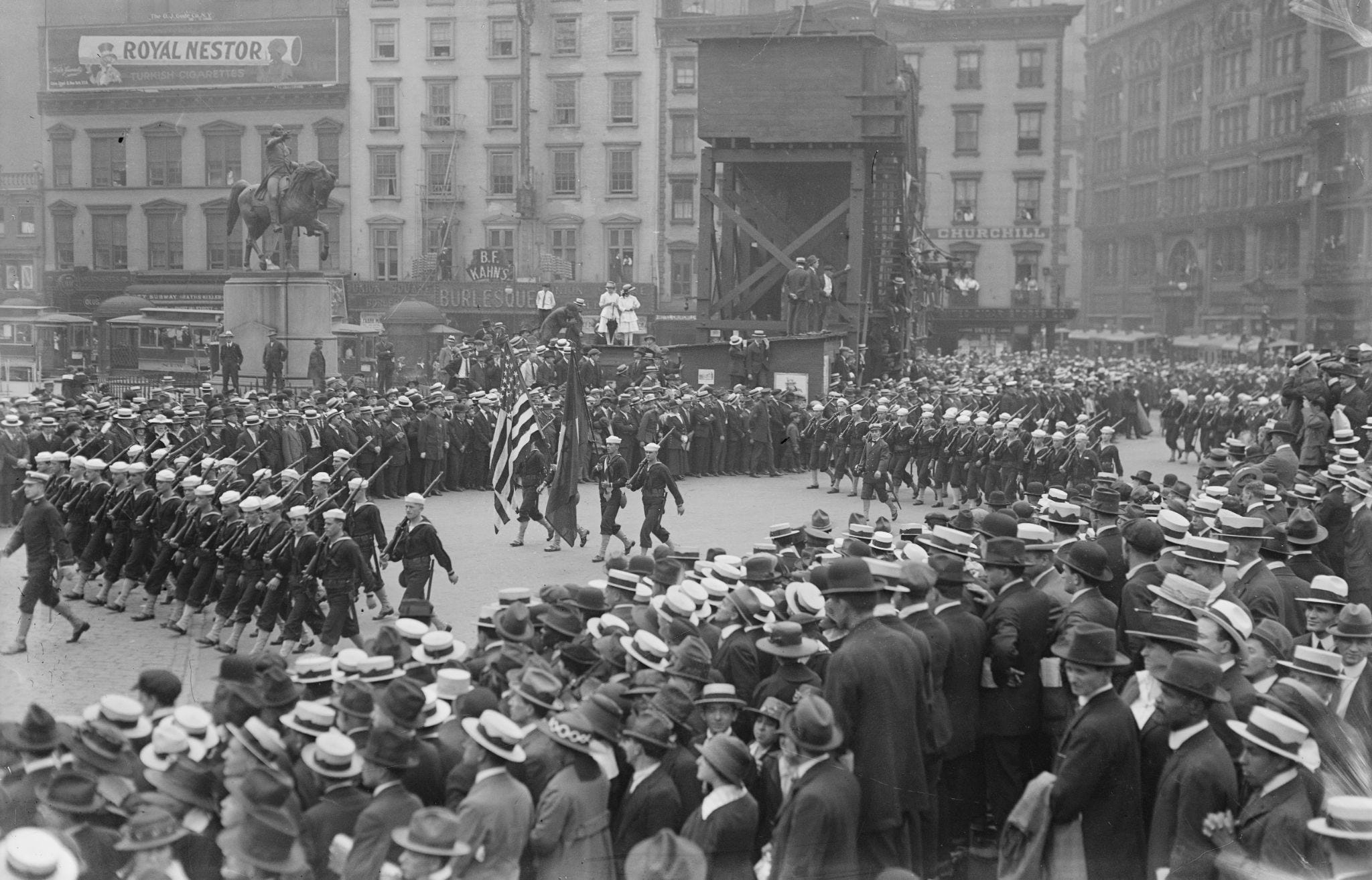
The year is 1916 …
And the city of San Francisco is about to experience its worst ever terrorist attack.
After the outbreak of World War I in Europe, a campaign was launched in America to advocate for a stronger and bigger U.S. military and naval presence around the world: the “Preparedness Movement.” Led by former President Theodore Roosevelt and Leonard Wood, a former chief of staff of the U.S. Army, the Preparedness Movement tried to galvanize Americans and push President Woodrow Wilson, who at first wanted to maintain American neutrality, into joining the conflict by organizing pro-war parades throughout major cities.
Of course, not all Americans were happy about it. The Preparedness Movement drew fierce opposition from primarily socialist groups, but also pacifists and antimilitarists, many of whom were members of Protestant churches and women’s groups. These groups believed that financiers and factory owners only wanted to go to war out of pure self-interest, because, namely, they would benefit from the increased production of munitions and military equipment. Although many Americans who opposed U.S. involvement in World War I were peaceful and protested in good faith, some were not, and resorted to violence and terrorism to get their message across, as was the case in San Francisco.

New ways to create start with new ways to solve problems. Joe Bacus and Leef Armontrout, founders of BLA Studios in St. Louis, are doing both with Claude—from welding machinery, to a steel-saving program, to community improvements.
This newsletter continues below
Just as it is today, San Francisco at the time was home to radical politics, pro-labor groups, and more fringe groups made up of self-declared anarchists and Bolsheviks, which alarmed the city’s business community, including its Chamber of Commerce. In mid-July of 1916, it is believed that an unsigned anti-war pamphlet was circulating throughout the city stating that “direct action” would be taken. “We are going to use a little direct action on the 22nd to show that militarism can’t be forced on us and our children without a violent protest,” it read. July 22 was the day of a massive Preparedness Parade, organized, in part, by the Chamber of Commerce.
Around 2 p.m., as tens of thousands were marching throughout the city, a bomb concealed in a suitcase exploded on Steuart Street, killing 10 bystanders and wounding 40. It was the worst terrorist attack the city had ever seen.
Authorities later arrested two well-known and radical labor leaders: Thomas Mooney and Warren K. Billings. The city was incensed and distraught, so their trial proceeded hastily. Both Mooney and Billings were convicted, but it was later revealed that several witnesses had perjured themselves and provided false testimony. Mooney had been sentenced to death, but a commission set up by President Wilson determined there was insufficient evidence proving his guilt, so his sentence was reduced to life imprisonment. Years later, in 1939, California Gov. Culbert Olson pardoned both men. The identities of the terrorist culprits remain unknown to this day.
The July 22 bombing is a timely reminder that Americans have always been divided over the country’s foreign policy, whether it should have a large and robust military, a small one, or none at all, and whether it should get involved in global conflicts that do not appear to be immediate threats to the nation’s security. And, at a time when the State Department is bringing attention to radical politics through its new report on Cuba’s alleged foreign influence campaign, it also serves as a reminder that America has always been home to socialists and radicals, some of whom have been willing to use violence as a means to a political end. A U.S. Army veteran was recently charged for igniting a fire outside an ICE facility in New York City, an act which the FBI says appears “to have been motivated by his anti-Government and anti-ICE beliefs.” Although it may seem unprecedented in 2026 – as do the other protests and attacks on ICE agents and government facilities – this latest incident is but a minor, minor blip in America’s long history of political violence.
Like what you’re reading? If so, please consider subscribing to State of the Day or sharing this with a friend. You’d be supporting this newsletter and helping keep independent journalism alive.
If you are already a paid subscriber, make sure to join the conversation in our subscribers-only chat below.


By bombing the demonstration, guess the lefties showed that they supported "peace". What an interesting yet deadly, position to take.