


Natural gas and electricity. Apartments and homes. Groceries: fruits, vegetables, beef, coffee. New cars. Used cars. Healthcare. Airline fares. College tuition. Apparel.
These are goods and services that help build a life. Some are bare necessities. Some are necessities that allow us to enjoy luxuries. Others are luxuries in and of themselves. But they all make life, as we know it today, possible.
We need energy to survive. Gas to go places – to work, to school, to visit loved ones – and electricity to keep the lights on at home. We need food. We need nutritious food. Food that doesn’t make us sick. Enough of it to feed ourselves and our families. We need the clothes on our backs. We need doctors and nurses, hospitals and urgent care centers. We need physicals and surgeries, chemo and root canals. We need to fly sometimes. To visit family. Attend a wedding. Attend a funeral. Take a vacation.
Across the board, they have all gotten more expensive. I remember in 2019 buying a week’s worth of groceries for myself for about $40. I was on a budget and shopped frugally (I was also looking to lose some weight), but to buy that same amount of food now, seven years later, would likely cost at least $20 extra, maybe more.
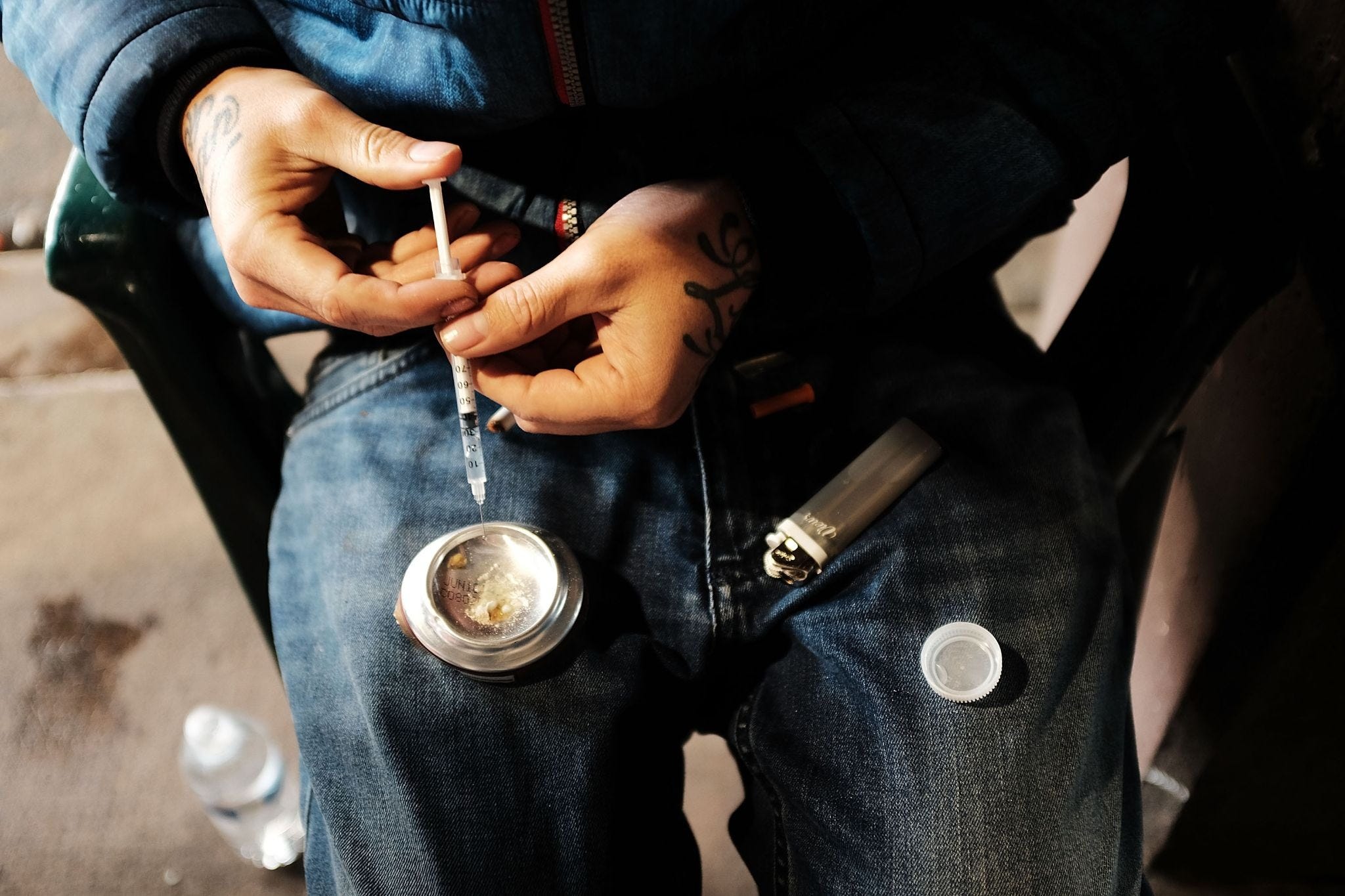
But one thing that hasn’t gotten more expensive over the past several decades is not helping Americans build or maintain a life – it’s, quite literally, doing the opposite. It is killing life, sending Americans to the morgue, and leaving in its wake unimaginable emotional wreckage.
To the general public, and in the political discourse, the opioid crisis has quietly faded into the background of our daily lives – certainly not for its victims, but for the vast majority of the country. Rarely does it make major headlines because of its slow, creeping, progressive, but silently deadly nature, and rarely does it grab the attention of social media users who are too busy sniping at each other on X, spreading conspiracy theories, or discussing lurid murder trials on TikTok. Most lawmakers in Washington are too busy to care, because they are pleasing donors, lobbyists, and special interest groups, or because they are wrapped up in global affairs and foreign wars.
It may have also faded into the background because overdose deaths are dropping after hitting a staggering high of nearly 110,000 in 2022. Many of those deaths were certainly driven by despair even though the country finally began to emerge from the COVID-19 pandemic. The long months of social isolation during lockdowns, the economic uncertainty, the difficulty getting addiction treatment because of lockdowns and poor economic conditions — all of these things played a role.
Since then, the number has declined for three consecutive years. The government released preliminary data in May showing that about 70,000 Americans died of overdoses in 2025. Although that number is still shockingly too high, it is now back to pre-pandemic levels last seen in 2019.
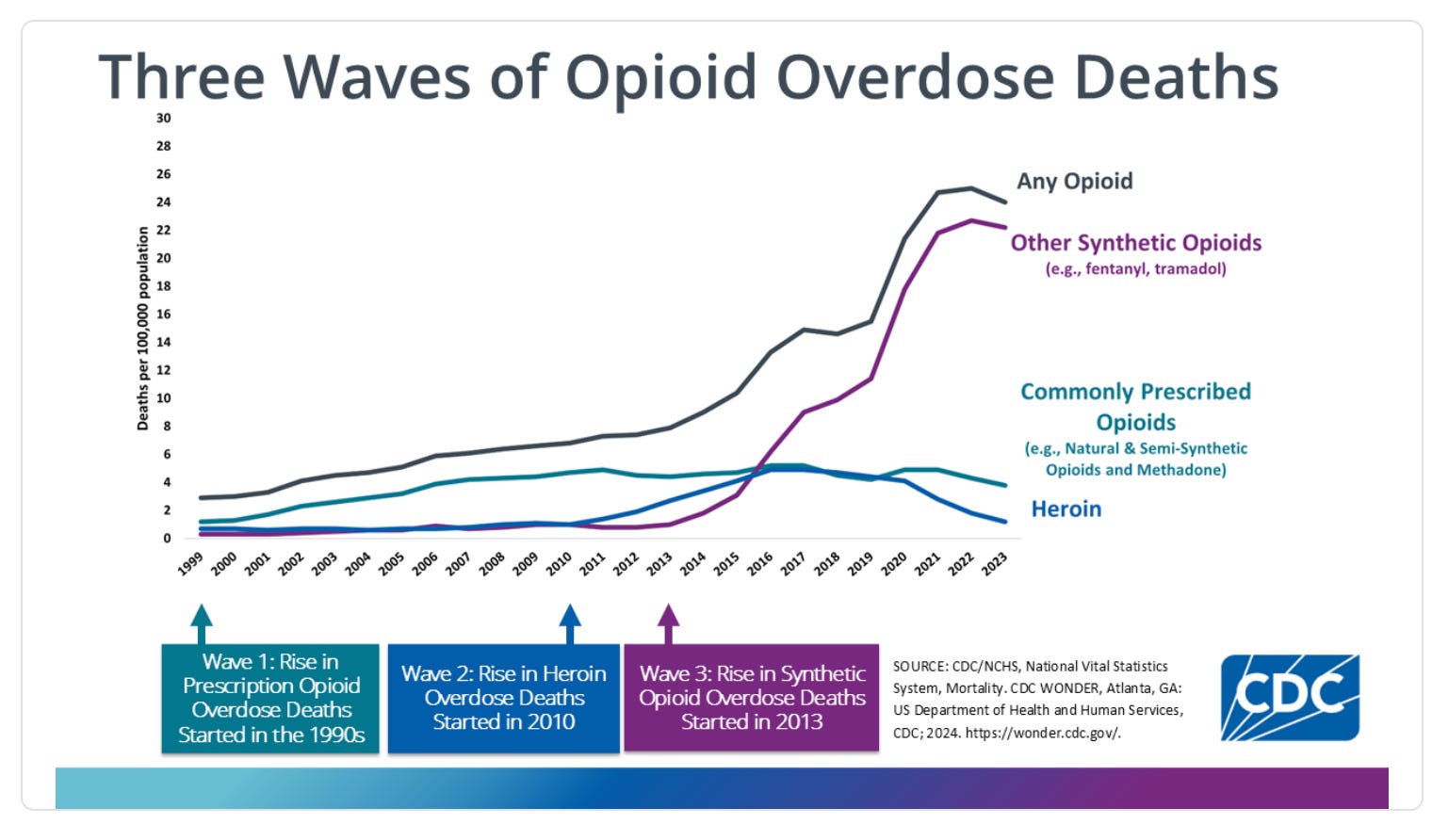
Researchers have floated several theories to explain the drop. Naloxone, a drug used to reverse overdoses, is more widely available. Lawsuits have chipped away at the gross Opioid Industrial Complex that ensnared and poisoned countless Americans. Tragically, because so many drug users have died in recent years, there are now fewer regular drug users, which means fewer overdoses. Another theory points to regulatory changes in China, which has tightened controls on fentanyl-type drugs and chemical precursors – a move that marked a concession from Beijing. U.S. Ambassador David Perdue met with a top Chinese official to discuss opioids before the new changes were announced, and fentanyl trafficking was a driver behind Trump’s February 2025 tariffs, which targeted China.
However, there is still cause for concern.
Seventy-thousand overdose deaths a year is horrific, but it is hard to wrap our heads around a number — especially a number as high as that one. It brings to mind the (in)famous quote (mis)attributed to Stalin: “One death is a tragedy, a million is a statistic.” Think about the social costs, the emotional costs, of a single mother, an estranged teenage son, a homeless veteran, that reverberate within a family or local community when they tragically drop off the face of the earth. These unnecessary deaths trigger unforeseen consequences researchers cannot even begin to measure.
Meanwhile, the number of overdose deaths might have decreased nationally, but seven states saw slight increases, and three states, Arizona, Colorado, and New Mexico, saw jumps of 10% or more. In those states, it is believed an ungodly combination of fentanyl and methamphetamine contributed to the spikes. Other substances, such as cychlorphine, a potent synthetic opioid 10 times stronger than fentanyl, are beginning to crop up in the illicit drug supply chain.
Yet another concern stems from the dirt-cheap prices of available drugs, many of which are now made in laboratories. Yes, all of the things in the United States that have escaped the Great Inflation of the past several decades are things that are literally killing people and destroying lives: drugs.
When the United States government launched its “War on Drugs” in the early 1970s, the feds wanted to increase the price of drugs by going after the drug supply, according to a recent New York Times report. The idea was that if the price of, say, heroin or crack cocaine exploded astronomically, then drug-use habits would become far too expensive.
It makes sense, but didn’t work out as planned. In fact, although the price of heroin did increase for several years, over time the price dropped. Then dropped some more. Then kept dropping. According to the Office of National Drug Control Policy, the price of a milligram of pure heroin decreased by 50% between the 1980s and 2007.
But as the price of heroin plummeted, opioids and their synthetic version, fentanyl, skyrocketed in popularity. These drugs got much, much cheaper — the cost of getting high on opioids dropped by 90% over the past 20 years! — but they also got more lethal.
Fentanyl, as we know, is incredibly potent. To put it into perspective, 2 milligrams of fentanyl is equivalent to 60 milligrams of heroin, according to Jonathan Caulkins, a Carnegie Mellon professor who studies drug prices. What it cost to buy a pill with 2 milligrams of fentanyl in 2025 ($2) would have gotten you 60 milligrams of heroin for $46 in 1983.
It’s a pretty simple calculus as to why cheaper drugs are a problem. As Caulkins told The New York Times, when the prices go down, more people use, and when more people use, more people overdose. The overdose numbers hint at this, as well; 6,700 Americans died of overdoses in 1972. About 11 times more people died of overdoses in 2025, The New York Times reported.
So while the McDonald’s dollar menu disappeared before our eyes, Americans were offered a new menu of discounted heroin and the more dangerous option of synthetic opioid pills for two dollars a pop. Combine cheaper drugs with the previous decades’ wave of deindustrialization, which erased good-paying jobs and hollowed out communities, and you can begin to understand why tens of thousands of Americans die every year from overdoses.
Building a life got more expensive; destroying a life got cheaper. It is a terrible, albeit silent, tragedy. A gross national perversion.
Like what you’re reading? If so, please consider subscribing to State of the Day or sharing this with a friend. You’d be supporting this newsletter and helping keep independent journalism alive.
If you are already a paid subscriber, make sure to join the conversation in our subscribers-only chat below.


